


Open-Source Light Calibration System for Hyperbilirubinemia Phototherapy Treatments


| Location | London, ON |
|---|---|
| Status | Designed Modelled Prototyped Verified |
| Verified by | FAST |
| Uses | 3D Printing |
| Links | https://doi.org/10.37349/edht.2026.101184 |
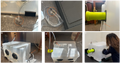
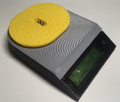
Aim: Neonatal jaundice or neonatal hyperbilirubinemia is a common medical condition impacting newborns and pathological jaundice if left untreated, leads to neurological encephalopathy and/or death. The majority of pathological jaundice cases occur in low and middle- income countries (LMIC). Phototherapy has been determined to be the safest and most effective treatment for jaundice. Although inexpensive light-emitting diodes are available on the market, commercial phototherapy devices are expensive (~US$2,000), which creates a barrier to access for these devices in LMIC. Efforts to construct cost-effective phototherapy units have been implemented in the past, but need a method to validate the intensity and wavelength of light received by the infant at a distance away from the source.
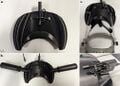
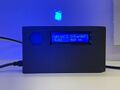
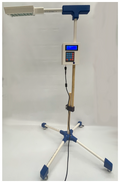
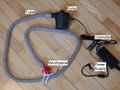
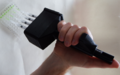
Methods: To enable low-cost phototherapy units to be used clinically, this study provides an open-source, low-cost, distributed manufacturing approach to create a light sensor to calibrate phototherapy units. This instrument is a necessary component of any open-source phototherapy treatment used in a clinical setting. This novel instrument was validated by comparing its irradiance and wavelength reading to the commercially calibrated Ocean Insight UV-VIS spectrometer under varying lighting conditions, including that of the existing Datex-Ohmeda Giraffe Spot PT Lite phototherapy equipment accessible through Victoria Children’s Hospital Neonatal Care Ward in London, Ontario, and Kiambu County Hospital in Kenya.
Results: The results of this study have demonstrated that for under US$150, a phototherapy calibration device can be constructed capable of measuring up to 200 uW/cm2/nm with an accuracy of 98.6% and detect the peak wavelength within ±12.5 nm.
Conclusions: It can be concluded that 3D printed open-source irradiance meters are a viable option for calibrating phototherapy units in LMIC to treat hyperbilirubinemia.
- Source code: https://osf.io/7dqp6/,
- Impact Project



Keywords
[edit | edit source]light therapy, LED, severe neonatal jaundice, jaundice, hyperbilirubinemia, phototherapy, appropriate medical, 3D printing, additive manufacturing, open hardware, open-source hardware, frugal innovation, frugal biomed, biomedical engineering, light sensor, open hardware
See also
[edit | edit source]Open Source Devices



Health Policy





- Open Source Neonatal Light Therapy Device
- Emergence of Home Manufacturing in the Developed World: Return on Investment for Open-Source 3-D Printers
- Life-cycle economic analysis of distributed manufacturing with open-source 3-D printers
- Quantifying the Value of Open Source Hardware Development
| Authors | Joshua Givans, Augustine Waswa, June Madete, and User:J.M.Pearce |
|---|---|
| License | CC-BY-SA-4.0 |
| Organizations | Free Appropriate Sustainable Technology, Western |
| Cite as | Joshua Givans, Augustine Waswa, June Madete, and User:J.M.Pearce (2026). "Open-Source Light Calibration System for Hyperbilirubinemia Phototherapy Treatments". Appropedia. Retrieved October 3, 2026. |