


Development and Evaluation of a Low-Cost Open-Source Nasometer


| Location | London, ON |
|---|---|
| Status | Designed Modelled Prototyped Verified |
| Verified by | FAST |
| Uses | 3D Printing |
| Links | https://doi.org/10.3390/s26092739 |
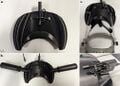
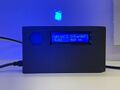
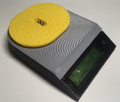
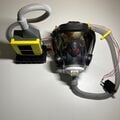
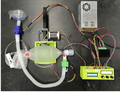
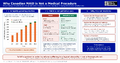
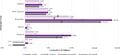
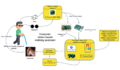
Hypernasality is a common characteristic of several speech disorders and can significantly affect perceived speech intelligibility and quality. Nasometry quantifies nasalance by calculating the proportion of acoustic energy emitted from the nasal cavity relative to the combined nasal and oral acoustic output during speech production and is commonly used in clinical assessment and research. However, commercially available nasometers are costly and limited in portability, restricting their use in resource-limited or remote settings. The primary purpose of this study was to design and build a low-cost, open-source mobile nasometer prototype (“mNasometer”) by leveraging advances in 3D printing, off-the-shelf electronic components, and a custom open-source mobile application. A secondary aim was to compare the electroacoustic and subjective performance of mNasometer with that of a gold-standard commercial nasometer. Electroacoustic analyses focused on comparing long-term averaged spectra and the oral/nasal acoustic isolation between the gold-standard commercial nasometer and the proposed mNasometer, which incorporates a 3D-printed nasal separation plate. In addition, nasalance scores were collected from ten healthy young adult participants using both systems during structured speech production tasks (i.e., reading standard passages or nasal sentences). Agreement between devices was evaluated using correlational analyses and comparative statistical procedures. Long-term averaged spectra exhibited similar profiles between the commercial nasometer and the mNasometer across different test stimuli, indicating comparable capture of stimulus energy distributions. Although the mNasometer demonstrated reduced oral–nasal acoustic isolation relative to the commercial system, objective nasalance scores followed similar overall trends between devices, with statistically significant stimulus-dependent differences observed. Frame-wise correlational analyses revealed significant correlations between nasalance measures obtained from the commercial nasometer and the mNasometer across most of the speech production tasks, suggesting that the reduced isolation did not critically compromise measurement correspondence. In summary, the low-cost, open-source mNasometer prototype provides nasalance measurements that show promising agreement with those of a gold-standard commercial device. Its reduced cost and increased portability suggest potential for expanded research and field-based applications in the objective assessment of nasalance.
- Source code: The repository for continuous development can be accessed on GitHub
at https://github.com/LarryWangCA/mNasometer, under the ‘development’ branch.
- The static repository supporting this publication is available on Open Science
Framework at https://osf.io/9qsrw/overview,
- Additionally, the mNasometer hardware design has been officially certified as Open-Source Hardware by the Open Source Hardware Association (OSHWA) and can be viewed at https://certification.oshwa.org/ca000074.html


Keywords
[edit | edit source]nasalance, audio signal processing, mobile device, speech analysis, open source, 3D printing, appropriate medical, additive manufacturing, open hardware, open-source hardware, frugal innovation, frugal biomed, biomedical engineering, open hardware


See also
[edit | edit source]Open Source Devices









Health Policy







- Life-cycle economic analysis of distributed manufacturing with open-source 3-D printers
- Quantifying the Value of Open Source Hardware Development
| Authors | L. Wang, A. Romani, S. Adams, Joshua M. Pearce, and V. Parsa |
|---|---|
| License | CC-BY-SA-4.0 |
| Organizations | Free Appropriate Sustainable Technology, Western |
| Cite as | L. Wang, A. Romani, S. Adams, Joshua M. Pearce, and V. Parsa (2026). "Development and Evaluation of a Low-Cost Open-Source Nasometer". Appropedia. Retrieved October 18, 2026. |