


Community action/United Kingdom/Democratic housing
.jpg)
This page provides a UK overview for CANs (community agency networks) and community groups with an interest in democratic ways of meeting housing need within planetary boundaries. Including for example the many communities across the whole of Southern and Eastern England who feel under threat from inappropriate development, or anyone with an interest in community led housing solutions respectful of planetary boundaries. This article is the current main article for Housing and land UK community action.
- Land activism UK and Housing UK community action resources are separate articles.
Housing news
[edit | edit source] Andy Burnham announces thousands of new homes, but is the government much closer to its target?, theconversation.com (Sep 02, 2026)
 - Share offer for UK’s biggest community development passes first target, thenews.coop (Aug 20, 2026)
- From grey water to cool spaces: 10 climate crisis policies Britain needs right now, theguardian.com (Aug 12, 2026) — Rejecting North Sea drilling licences and protecting nature are just some measures Andy Burnham must implement to ready country
- England risks building new ‘death traps’ as experts warn of overheating crisis, theguardian.com (Jul 14, 2026) — Vulnerable people more at risk as research finds only half of local authority plans require cooling strategies
- Homes need more renewable energy tech – here’s how to make sure retrofits avoid creating e‑waste, theconversation.com (Jul 08, 2026)
- The most beautiful act of resistance I’ve seen: Madrid tenants fighting landlords with art [The Guardian], Daily Alternative (Jul 16, 2026)
- We Don’t Have a Housing Crisis. We Have Something Worse, digbyhall.substack.com (Jun 28, 2026) — The way we’re solving the housing crisis will become our future cities crisis, Digby Hall
- Europe needs affordable, low‑carbon homes – here’s how Barcelona is reimagining its housing system, theconversation.com (Apr 08, 2026)
- New York Cooks Up a Plan to Boost Energy Efficiency in Public Housing, insideclimatenews.org (Mar 16, 2026)
- Community land trusts: Building a different kind of wealth, thenews.coop (Feb 03, 2026) — How the model is protecting US neighbourhoods from property speculation and gentrification
Alternative visions
[edit | edit source]

- Planning Democracy (Scotland), have launched in Autumn 2025 their manifesto calling "for a radical overhaul of Scotland’s planning system and a shift from private profit to public good, putting people, nature, and climate first". "meaningful change requires whole-system transformation. Our manifesto, maps out what that could look like: broadening the conversation beyond planning law and policy, and addressing the wider forces that shape development decisions such as the relentless focus on economic growth and the erosion of democratic accountability".
"We believe the planning and development of Scotland’s land should:
- Deepen democratic control over the ways places and communities change
- Foster and value the contributions of citizen action and engagement, ensuring that people are listened to not left feeling alienated and confused
- Tackle the pressing crises of climate change and biodiversity,
- Promote environmentally just outcomes
- Put the needs of Scotland’s diverse citizens above private profits
- Value and enhance the quality of the built and natural environment ·
- Provide healthy and safe places for people to live.
Planning Democracy is a "movement of citizens who value Scotland’s people, places and environment" and campaign "to ensure that decisions about how Scotland’s land is developed are fair, inclusive, locally accountable, and promote just outcomes driven by community needs rather than profit". In late November 2025 they launched their manifesto "to a hugely engaged audience in Edinburgh." From their summary:
- Strengthening democracy, Put power where it belongs
- Protecting nature, Ending ecocide through planning reform
- Ending the housing crisis, Homes for people not profit
- Protecting rights, Justice for people and planet
- Wider systems change, Bigger bolder reform
- Open and honest planning, Making planning work for everyone, planningdemocracy.org.uk, November 28, 2025
Video
[edit | edit source]



more video on: Housing UK community action resources
Networks
[edit | edit source]- Community planning alliance, the grass roots group, "aim to bring together grassroots campaigns to do two things:- to lobby to improve the planning system and to support each other so that more of us can win our campaigns", added 16:22, 5 November 2021 (UTC)
- Data for Democracy, consider joining a network such as this to work on transparency of data and fair and reasonable estimates or projections of local housing need across the UK, particularly if concerned about Overdevelopment across the South, imbalance between North/South. If anyone interested... I'd love to hear from you Philralph (talk) 07:12, 5 January 2019 (PST)
- Student Co-op Homes, national member led co-operative controlled by student housing co-ops and investor supporter members, established to promote, enable and scale-up student co-operative housing in the UK. added 15:54, 17 December 2021 (UTC)
- BuildHUB, social network aimed at the self-build community, link checked 11:58, 5 August 2023 (UTC)
see also: Campaigns
What communities can do
[edit | edit source]Climate first in housing and planning!
- demand that government and politicians at all levels of government tell the truth about the carbon cost of new housing development.
- demand a more democratic system of meeting housing need
- demand a system which allows local communities to consider environmental carrying capacity and carbon costs of development, and enables them to influence the level of development to align with national and local carbon reduction targets
- support and encourage local politicians and other commentators who speak up against the undemocratic nature of the existing planning system
- form alliances to advocate for a more democratic and climate friendly planning system, for example of all areas concerned about overdevelopment, or regional alliances
- find and work with developers who explicitly concern themselves with the needs and wishes of local communities as determined and expressed by those local communities themselves, and more sustainable forms of housing
- advocate that 'objectively assessed housing need', a phrase designed to impart a false and inappropriate sense of 'authority', and to cover up what are essentially political choices, be replaced with 'democratically assessed housing need'.
- demand better data, more transparency and better exposition of relevant data, such as the size and age composition of migration flows, and better measures of genuinely affordable and sustainable housing.
see also: Community action projects
The carbon costs of new housing developments
[edit | edit source]- England’s housing strategy carries a high carbon cost – unless politicians are willing to change plans, The Conversation (Nov 10, 2022) — "our research demonstrates that, based on current trends, England’s housing strategy could consume our entire carbon budget by 2050."
New housing development has carbon costs from both the construction and use of the development.
It is arguable that the present system of carbon accounting does not adequately show, and make transparent, particularly to local communities affected, these carbon costs.
Given that Local plans cover several future years, this is especially of concern in the 2020's decade when as a nation, and as local communities, we should be reducing carbon costs.
The carbon costs associated with use of new housing developments has typically in recent years continued to lock us into, for the 2020's decade, yet more car dependency, when its clear we should be and should have been, promoting more sustainable means of transport.
National and local carbon costs of new housing development
[edit | edit source]A recent (Sep 2020) article[1] by Julian Stringer of Action on Climate in Teignbridge, in response to "Changes to The Current Planning System",[2] as well as extensive investigation into the likely local effects includes a paragraph on how this might play out nationally: "Building 300,000 houses a year, rather than 160,000 means that 140,000 extra houses will be built. Using 60t per house, embedded emissions from these additional houses will be 8.4Mt, UK GHG emissions in 2019 were 351.5Mt, so this is unnecessary housebuilding could add 2.4% to UK emissions each year."
Across a range of local areas eg the whole of the South of England, for some areas the percentage addition attributable to embedded emissions will of course be higher than a national average, and further additional percentages will be attributable to transport and travel implications of the new developments.
In addition to the many negative consequences that some are aware of, eg CPRE Kent supports county MPs in attack on 'inherently unreasonable' new housing targets,[3] it seems unlikely that many people are fully aware of the extent to which proposed changes would also be locking us into higher and higher, year on year carbon costs throughout the next decade when of course we should instead be reducing carbon costs.
Embodied carbon
[edit | edit source]

Greenhouse gas emissions caused by the construction of new buildings and infrastructure, known as 'embodied carbon emissions', are a significant driver of climate change.
- These emissions amount to just under 50MtCO2e per year in the UK, a shocking figure that is vastly in excess of 10% of our national emissions.[4]
- Embodied carbon emissions account for up to 75% of a building's total emissions over its lifespan.[5]
- More than half the countries in the world have a smaller carbon footprint than the UK construction industry alone.[6]
Despite this, embodied carbon emissions are unregulated in the UK. Current policy and regulation focuses solely on operational energy use, as distinct from embodied carbon, and there are currently no national planning policy or Building Regulation requirements to assess, report or reduce embodied carbon emissions.
This must change. So ACAN is calling for the urgent introduction of legislation to regulate embodied carbon emissions in the UK.[7] You can help by reading ACAN's report or its summary, and by signing their petition, via architectscan.org
Food security threatened by poor planning?
[edit | edit source]
Threats to water reserves from unrealistic housing targets?
[edit | edit source]- Revealed: Europe’s water reserves drying up due to climate breakdown, theguardian.com (Nov 29, 2025) — Exclusive: UCL scientists find large swathes of southern Europe are drying up, with ‘far-reaching’ implications
- England facing drastic measures due to extreme drought next year, theguardian.com (Nov 08, 2025) — Government and water companies are devising emergency plans for worst water shortage in decades. Comment: It surely then doesn't make sense to plan for and enable such a high proportion of new build in the most water stressed parts of England such as the South East?
In July 2025, the Public Accounts Committee warned that England’s water supply could run out in 20 years...independent.co.uk.
Their report also draws upon work by the National Audit Office (NAO), which warns parts of the south and southeast of England are at the highest risk of running dry in the next 20 years. An earlier study identifies 10 areas across east and south-east England where housing targets will be 'undeliverable' due to a shortage of water reserves...inews.co.uk
In November 2025 it was reported that England was facing drastic measures due to extreme drought next year, with Government and water companies devising emergency plans for the worst water shortage in decades...theguardian.com. It surely then doesn't make sense to plan for and enable such a high proportion of new build in the most water stressed parts of England such as the South East?
Development one of the causes of flooding and urgent need for stronger planning reforms
[edit | edit source]- Over the past decade, 110,000 new homes were built in the highest risk flood zones, equivalent to one in 13 of the new homes built. Aviva calculates that if this trend were to continue, 115,000 of the government’s planned 1.5m new homes would also be in the highest-risk flood zones... theguardian.com, Oct 14, 2025.
Flooding is one of the most pressing emergencies facing the UK today. More than 6m properties in England alone are already at risk from rivers, the sea, sewage or surface water.
About 4.6m homes and businesses in towns and suburbs across England are threatened by surface-water flooding, caused by heavy rain and overwhelmed drains. That makes surface water the largest single contributor to flood risk, surpassing traditional river and coastal flooding. Heather Shepherd, co-founder Flooded People UK.
What needs to be recognised is that flooding is a nationwide problem. “Because it’s hard to do anything about climate change in the short term, we need to address the other three causes – development, lack of defences and poor maintenance – as a matter of urgency.” William Wareing, chair of the Witney flood group in West Oxfordshire.
“The urgency could not be greater. Without stronger planning reforms, investment in infrastructure and a meaningful national strategy to deal with sewage and drainage failures, more families risk being left living in constant fear of the next deluge – and paying with their homes, their health and their peace of mind.” Heather Shepherd, co-founder Flooded People UK. ...theguardian.com, Jan 12, 2026.
Disempowered communities?
[edit | edit source]Under the present (eg as at Jan 2020) planning system local authorities and communities are effectively dictated to by central government over the housing provision they are required to make via Local Plans. Not only this but those that refuse to plan for the central government numbers are threatened with even higher numbers being imposed.
Concerning the level of housing provision local communities are expected to make, any climate concerns local communities may have are not in any way catered for in the Local plan system. Central governments position that climate concerns are irrelevant looks particularly perverse, especially in the light of its own climate change legislation.
Overdevelopment in the South East and the North-South divide
[edit | edit source]
Take a look at the Community planning alliance, grass roots map: google.com/maps, and zoom in a little to see how communities in the South East are disproportionately affected by overdevelopment threats.
Reducing pressure on the South East would give greater opportunity to the rest of the UK...londongreenbeltcouncil.org.uk
see also: Towards a more democratic and climate friendly way of meeting housing need across England
Currently there is zero democratic opportunity for local communities to influence the appropriate balance between those regions of the country areas plagued by overdevelopement and those suffering in the opposite way through lack of investment. As part of a system of citizens assemblies, a national citizens assembly could consider this in the context of a multifunctional land use framework.
Centrally set targets, versus democratic assessment within a Multifunctional Land Use Framework
[edit | edit source]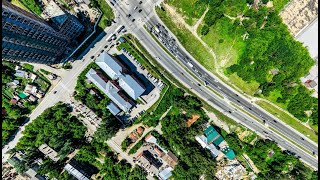


Overdevelopment is real!
- Behind the scenes as GPs face 'tidal wave of demand', BBC News (Jan 22, 2026)
- What happens when the taps run dry? England is about to find out, Aditya Chakrabortty, theguardian.com (Jan 22, 2026)
- England facing drastic measures due to extreme drought next year, theguardian.com (Nov 08, 2025) — Government and water companies are devising emergency plans for worst water shortage in decades. Comment: It surely then doesn't make sense to plan for and enable such a high proportion of new build in the most water stressed parts of England such as the South East?
- UK fifth-worst country in Europe for loss of green space to development, theguardian.com (Oct 02, 2025) — Nature and farmland equivalent in size to that of the New Forest – 604 sq km – lost to concrete and bricks and mortar in the UK between 2018 and 2023
- Green to Grey, How Europe is squandering the little nature it has left, greentogrey.eu (Oct 01, 2025)
more to follow / needed
Citizens assemblies focused on housing
[edit | edit source]In recent years citizen's assemblies have been proposed as a potential solution to dealing with divisive and highly-politicised issues such as same-sex marriage, abortion, and decarbonisation measures.
The citizens' assembly aims to reinstall trust in the political process by taking direct ownership of decision-making. To that end, citizens' assemblies intend to remedy the "divergence of interests" that arises between elected representatives and the electorate, as well as "a lack in deliberation in legislatures."
The global environmental movement Extinction Rebellion has called for citizen's assemblies on climate change to be used by governments to make decisions on climate and environmental justice. In the UK, Extinction Rebellion's 3rd demand is: 'government must create and be led by the decisions of a citizens' assembly on climate and ecological justice.' W
Citizens assemblies focused on housing would aim to tackle housing need and fair, equitable and sustainable housing provision consistent with both carbon reduction targets and environmental carrying capacity of regions.
An England citizens assembly
[edit | edit source]An England citizens assembly could, with appropriate expert advice, consider national and regional housing need, fair and proportionate carbon reduction targets for housebuilding, ways of meeting housing need more sustainably at less carbon cost, and the environmental carrying capacity of regions.
Citizens, communities and government must insist that the housebuilding sector take full responsibility for its fair and proportionate share of carbon reduction as this is the best way to ensure that the transition to zero carbon is as fair as possible to all sections of society.
Regional citizens assemblies
[edit | edit source]Regional citizens assemblies could then follow a similar process to determine fair and reasonable targets for housebuilding across their region, again informed by carbon reduction targets and environmental carrying capacity of bioregions. In subsequent iterations of the planning cycle, the experience, concerns and expertise of regional citizens assemblies would feed back into the next national citizens assembly.
Affordable housing
[edit | edit source]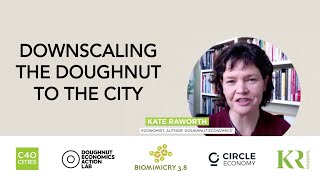
"... but policy makers know that if they simply allow more housing to be built the ways its always been done it will result in more carbon emissions, deepening the city's contribution to the climate crisis." Kate Raworth
Some great questions about affordable housing from just after 7 mins into this video.
Community action projects
[edit | edit source]

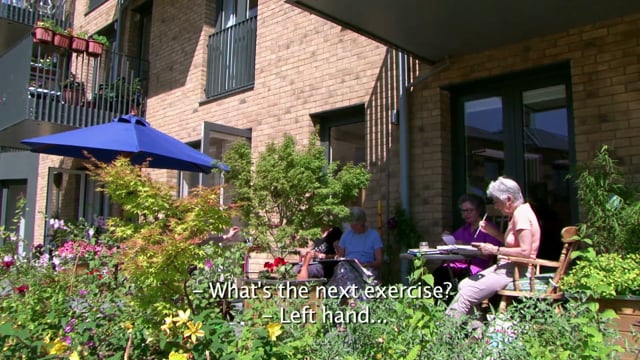

Hull community action, Brighton community activism news, Barnet community action
Community-led housing in the UK
[edit | edit source]
- Planning housing and development through a neighbourhood forum, Episode 4 of 'How neighbourhood governance can unlock community power', a Four-part animation series from We're Right Here, building on their blueprint for community-powered neighbourhood governance co-written with Locality, HOPE Not Hate, Local Trust, and Power to Change. added 17:56, 8 July 2026 (UTC)
- Mayday Saxonvale, "The UK’s First Community Led Masterplan", added 15:08, 30 January 2025 (UTC)
- Community Led Homes - "...community-led homes" across the UK. Your systems in your hands", The Alternative UK, Feb 13, 2019
- How to do it, communityledhomes.org.uk, added 16:27, 18 May 2021 (UTC)
- Taking action: co-production in housing and regeneration, futureoflondon.org.uk, 11 April 2019 by Charli

Community-led housing (baugruppen: Germany, projets d'habitat participatif: France, habitat groupé: Belgium. social production of habitat: Latin America) is a method of forming future residents into a 'building group' who contribute to the design and development of new housing to meet their longer term needs, rather than leaving all design decisions to a developer looking to maximise the immediate financial return.
Working together in advance of construction helps to create a sense of community as members collaborate to identify their own priorities when designing their homes and shared spaces.
Groups of this sort were developing housing in Berlin in the early 2000s as the city was rebuilt following German reunification and emerging from a long tradition of self-initiated, community-oriented living and the shared responsibility of building in Germany.
Community land trust
[edit | edit source]Main article: Community land trust
A community land trust (CLT) is a nonprofit, community-based corporation that owns land in trust for the benefit of a defined geographic area and manages that land over the long term on behalf of the community. CLTs typically retain ownership of the land and convey long-term ground leases to individual homeowners, housing cooperatives, nonprofit organizations or other entities that own the buildings and improvements. By separating the ownership of land from the ownership of housing and other structures, CLTs seek to preserve long-term affordability and protect community assets from speculative increases in land value.
CLTs have been used to steward a variety of community assets, including affordable owner-occupied and rental housing, community gardens, civic and cultural facilities and commercial spaces. Many CLTs describe their purpose as balancing the interests of individual leaseholders, who seek secure tenure and limited equity, with the interests of the wider community, such as maintaining affordable housing, preventing displacement and promoting racial and economic inclusion. A commonly cited structure for a "classic" CLT is a membership-based nonprofit with a tripartite board in which leaseholders, other community residents and public or professional stakeholders each hold one-third of the seats.
Since the late 20th century, CLTs have been adopted in urban, suburban and rural settings in the United States, Canada, Europe and the United Kingdom, and, more recently, parts of Latin America, Africa, Asia and Oceania. A 2024 survey cited by the Lincoln Institute of Land Policy reported more than 300 CLTs in the United States, including 308 CLTs in 48 states, the District of Columbia and Puerto Rico, up from 289 in 2021.
Cohousing
[edit | edit source]
Cohousing is a way of sharing resources and space, and allowing for greater community and collaboration, while still giving individuals their own private space - though less private space is needed than in conventional, isolated housing.
Several housing innovations are closely related to cohousing, including:
- co-working facilities, shared workshops and tools, and shared office space
- tool, resource, and skill sharing, in sharing communities, ecovillages, and other intentional communities.
- buildings that employ flexible designs that are easy to adjust as living situations change
- Domicology (which is a name for buildings designed for disassembly and materials recovery, recycling, or upcycling at the end of their useful lives).
Several comprehensive design guidelines and frameworks are available to facilitate including sustainable, restorative, and regenerative communities, that can include cohousing.
Housing cooperative
[edit | edit source]Main article: Housing cooperative
A housing cooperative, or housing co-op, is a legal entity which owns real estate consisting of one or more residential buildings. The entity is usually a cooperative or a corporation and constitutes a form of housing tenure. Typically, housing cooperatives are owned by shareholders, but in some cases they can be owned by a non-profit organization. They are a distinctive form of home ownership that have many characteristics that differ from other residential arrangements such as single family home ownership, condominiums and renting.
Housing cooperatives fall into two general tenure categories: non-ownership (referred to as non-equity or continuing) and ownership (referred to as equity or strata). In non-equity cooperatives, occupancy rights are sometimes granted subject to an occupancy or membership agreement, which is similar to a lease. In equity cooperatives, occupancy rights are sometimes granted by way of purchase agreements and legal instruments registered on the title. The corporation's articles of incorporation and bylaws together with the occupancy agreement specify the cooperative's rules.
Self-help housing in the UK
[edit | edit source]- Self-help housing, helpful information from communityledhomes.org.uk, added 15:12, 6 September 2024 (UTC)
Campaigns
[edit | edit source]- see also: Networks
- Halt the Houses. No water. No House building. haltthehouses.com/, Sign the petition. added 19:28, 13 July 2026 (UTC)
- saveyourgreenbelt.co.uk, added 15:04, 25 September 2023 (UTC), North Somerset and Bristol
- Farms, Fields & Fresh Air, on facebook.com, added 18:23, 5 December 2021 (UTC)
- Save Kent's Green Spaces, on facebook.com, Nonprofit organization, added 18:23, 5 December 2021 (UTC)
- Scheme for thousands of new houses near Sittingbourne would have devastating impact on countryside (and it's not even in the Local Plan), cprekent.org.uk, added 15:46, 24 September 2021 (UTC)
- Broadwater Action Group, based in East and West Malling,[8] added 12:35, 27 August 2021 (UTC)
- Save Capel, Tunbridge Wells, Kent
- STOP THE GREEN BELT GRAB! cpregravesham.org, added 18:17, 1 December 2020 (UTC)
- Protect Medway, medway.greenparty.org.uk, added 15:18, 19 October 2020 (UTC)
- Save Our South Coast Alliance an alliance of individuals and groups involved in promoting the environment, community, and economy of Chichester's coastal plain. "...excessive centrally allocated housing quotas handed down from government threaten our ability and ambition to protect our communities, environment, wildlife and economy from the inevitable impact of climate change on our low lying coastal plain." added 17:46, 24 August 2020 (UTC)
- Enough is enough - Maidstone's Housing & Infrastructure, petition against housebuilding levels in Maidstone via cprekent.org.uk, added 17:18, 18 February 2020 (UTC)
- CPRE, the countryside charity - local and regional groups, cpre.org.uk
- What gets built and where, cpre.org.uk
See also: Climate change solutions UK, Housing, Climate change solutions UK, Land use, Europe community action, Housing, Open spaces activism UK, Saving water in South East England, Rural sustainability UK, Urban sustainability UK, Neighbourhood Planning, Urban sustainability, Urban sustainability news, Housing, Housing affordability, Urbanization,, Citizens' assembly, XR and future democracy, Land use
local information can be found, or shared, via our many UK location pages
External links
Wikipedia: Drought in the United Kingdom W, 2009 Great Britain and Ireland floods W, Affordable housing W, Affordability of housing in the United Kingdom W
References
- ↑ New Government Proposals impose 1532 houses a year on Teignbridge, Summary of our concerns actionclimateteignbridge.org, Sep 22...Devon
- ↑ gov.uk, Aug 2020
- ↑ @protectkent, Sep 13, 2020
- ↑ architectscan.org
- ↑ The Carbon Footprint of Construction, The case for regulating embodied carbon emissions. ACAN Briefing note, Feb 2021 [1]
- ↑ actionnetwork.org
- ↑ architectscan.org
- ↑ Press release, broadwateractiongroup.co.uk
| Authors | Phil Green |
|---|---|
| License | CC-BY-SA-3.0 |
| Location | England, United Kingdom |
| Cite as | Philralph (2015–2026). "Community action/United Kingdom/Democratic housing". Appropedia. Retrieved September 16, 2026. |