


Open-Source Design and Economics of Manual Variable-Tilt Angle DIY Wood-Based Solar Photovoltaic Racking System


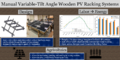
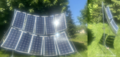
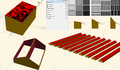
Fixed-tilt mechanical racking, consisting of proprietary aluminum extrusions, can dominate the capital costs of small-scale solar photovoltaic (PV) systems. Recent design research has shown that wood-racking can decrease the capital costs of small systems by more than 75% in North America. To determine if wood racking provides enough savings to enable labor to be exchanged profitably for higher solar electric output, this article develops a novel variable tilt angle open-source wood-based do-it-yourself (DIY) PV rack that can be built and adjusted at exceptionally low costs. A detailed levelized cost of electricity (LCOE) production analysis is performed after the optimal monthly tilt angles are determined for a range of latitudes. The results show the racking systems with an optimal variable seasonal tilt angle have the best lifetime energy production, with 5.2% more energy generated compared to the fixed-tilt system (or 4.8% more energy, if limited to a maximum tilt angle of 60°). Both fixed and variable wooden racking systems show similar LCOE, which is only 29% of the LCOE of commercial metal racking. The results of this study indicate that the novel variable tilt rack, whether used as a small-scale DIY project or scaled up to fulfill larger energy demands, provides both the lowest cost option even when modest labor costs are included and also may provide specific advantages for applications such as agrivoltaics. This design has been certified by OSHWA with CERN-OHL-S-2.0 licenses.
- For designs, drawings, and calculations: https://osf.io/yx8mq/
- For OSHWA Open Source Certification: https://certification.oshwa.org/ca000013.html




Keywords
[edit | edit source]Sustainable development; Open-source; Photovoltaic; racking; solar energy; biomaterials; wood; photovoltaic; mechanical design; balance of systems; renewable energy; open source; do-it-yourself
See also
[edit | edit source]- To Catch the Sun
- 3-D printable photovoltaic module spacer
- Open source DIY solar photovoltaic racking
- ---
- Circular PV panel
Open Source Photovoltaic Racking Approaches
[edit source]

- Ground-mounted
-
-
-
-

-
-
-
-
-
-
-
-
-
-
-
-
-


- Roof-mounted
-
-
-

- FPV
-
-

-

-
-

- Circular PV
-

| Authors | Nicholas.Vandewetering, Koami Soulemane Hayibo, Joshua M. Pearce |
|---|---|
| License | CC-BY-SA-4.0 |
| Organizations | FAST, Western University |
| Cite as | Nicholas.Vandewetering, Koami Soulemane Hayibo, Joshua M. Pearce (2022–2026). "Open-Source Design and Economics of Manual Variable-Tilt Angle DIY Wood-Based Solar Photovoltaic Racking System". Appropedia. Retrieved October 17, 2026. |
- Solar
- Papers
- Projects
- Photovoltaics
- FAST
- SDG07 Affordable and clean energy
- SDG08 Decent work and economic growth
- SDG09 Industry innovation and infrastructure
- SDG11 Sustainable cities and communities
- FAST Completed
- Solar power
- Solar energy
- Sustainable development
- Mechanical engineering
- Energy
- Wood
- Renewable energy
- DIY