


Community action/New York City

The aim of this page is to recognise, celebrate and encourage the self-empowerment of community agency networks (CANs) and community groups' activism across New York City. It's an introduction to local networks, groups, events, community resources and assets.
- New York City community climate action and ecological restoration is a separate page.
News
[edit | edit source] New York Cooks Up a Plan to Boost Energy Efficiency in Public Housing, insideclimatenews.org (Mar 16, 2026)
- Judge Rejects Trump Administration’s Plan to End NYC Congestion Pricing, insideclimatenews.org (Mar 04, 2026)
- Half the world’s 100 largest cities are in high water stress areas, analysis finds, theguardian.com (Jan 22, 2026) — Beijing, New York, Los Angeles, Rio de Janeiro and Delhi among those facing extreme stress, while London, Bangkok and Jakarta classed as being highly stressed
- New York Cooks Up a Plan to Boost Energy Efficiency in Public Housing, insideclimatenews.org (Mar 16, 2026)
- These US states want polluters to pay for the rising insurance costs of climate disasters, theguardian.com (Feb 08, 2026)
- How Two Teens in Niagara Falls Are Confronting Pollution and a Mental Health Crisis, insideclimatenews.org (Feb 04, 2026) — Finding hope and resilience in a city burdened with environmental pollution and generational trauma.
- Twenty years of Community Wealth Building, a rich global tapestry of cooperation, justice and local ambition [The Democracy Collaborative], Daily Alternative (Oct 22, 2026) — Twenty years on, Community Wealth Building is no longer an emerging conversation. It is an international movement of ideas and practice that continues to evolve in response to the crises and possibilities of our age. This compendium is both a reflection on that journey and an invitation to continue it
- Can Florida’s ‘coastal corridor’ project safeguard wildlife and boost economy?, theguardian.com (Aug 10, 2026)
- How Australia combines modern tech and Indigenous knowledge to fight wildfires, BBC News (Aug 01, 2026)
- Eva v Goliath: the 20-year-old climate activist taking on Trump and the fossil fuel industry, theguardian.com (May 20, 2026)
- US has caused $10tn worth of climate damage since 1990, research finds, theguardian.com (Mar 25, 2026)
- New York Cooks Up a Plan to Boost Energy Efficiency in Public Housing, insideclimatenews.org (Mar 16, 2026)
- Community wealth building and collaborative finance, CASwiki (Nov 05, 2026) — What is the intersection between community wealth building and collaborative finance, how do the two relate to each other and how best might the activism for each collaborate with the other to mutual advantage?
- Shrinking Giants, Part 6: Beyond Fossil Finance, growingcommons.substack.com (Nov 01, 2026) — Moving towards post-growth in a world where states must grow or lose their security, Ronan Murphy
- Throw the best party!, demnext.substack.com (Oct 22, 2026) — Programme Coordinator Hannah Terry on finding hope with 30 young democracy builders in Croatia
CDC video
[edit | edit source]Each week 3 different short videos from across the world.

Community action/Denmark, Community action/California, Cycling activism / ...This week's featured UK videos / ... read more about Cosmolocalism
International events
[edit | edit source]Global or International events
 Nov 05, 2026 (Thu) — Media Liberation Day, Change the Media, Change the Future, mediarevolution.org
- Nov 13, 2026 (Fri) — World Kindness Day, Nov 13, annually, highlighting good deeds in the community focusing on the positive power and the common thread of kindness for good which binds us, randomactsofkindness.org
- Nov 15, 2026 (Sun) — World Day of Remembrance for Road Traffic Victims, third Sunday in November each year, worlddayofremembrance.org
- Nov 16, 2026 (Mon) — International Day for Tolerance, Nov 16 each year, fostering respect, acceptance and appreciation of the rich diversity of our world's cultures, our forms of expression and ways of being human, unesco.org
- Nov 19, 2026 (Thu) — International Men's Day, Nov 19, annually
- Nov 27 & 28, 2026 — Buy Nothing Day, en.wikipedia.org
- Nov 27, 2026 (Fri) — Citizen Friday, actionism.space
2021-2030, UN Decade on Ecosystem Restoration, International community action events
Networks and sustainability initiatives
[edit | edit source]- The HOPE program, "Empowering New Yorkers To Build Sustainable Futures", added 15:28, 12 January 2026 (UTC)
- Change by Us NYC
- planyc, is an effort released by New York City Mayor Michael Bloomberg in 2007 to prepare the city for one million more residents, strengthen the economy, combat climate change, and enhance the quality of life for all New Yorkers. The Plan brought together over 25 City agencies to work toward the vision of a greener, greater New York. Since then, significant progress has been made towards the long-term goals set by the Plan.
- PlaNYC specifically targets ten areas of interest: Housing and Neighborhoods; Parks and Public Spaces; Brownfields; Waterways; Water Supply; Transportation; Energy; Air Quality; Solid Waste; and Climate Change.
- Over 97% of the 127 initiatives in PlaNYC were launched within one-year of its release and almost two-thirds of its 2009 milestones were achieved or mostly achieved. The plan was updated in 2011 and has been expanded to 132 initiatives and more than 400 specific milestones for December 31, 2013. (Wikipedia), GreeNYC
Ecovillages
- Ganas, "community started on Staten Island in 1979. The original founders came together to form a self-selected extended family based on an intention to care for each other while sharing the work, having fun and addressing whatever problems arise, together. Open minds make it possible to talk together and understand each other better. Ongoingly, they are learning how to cooperate, care for each other and share resources."
Video archive
- Stories of a Sustainable South Bronx: BEST Program Graduate José Pichardo, 2010, on youtube.com
Archive
- Sustainable South Bronx, no current website found 15:28, 12 January 2026 (UTC)
NYC video
[edit | edit source]


Community involvement
[edit | edit source]- BetaNYC, building a better tomorrow for all. "We are NYC's civic technology and open government vanguard. Since 2009, we have been leading elected officials to engage NYC's technology community, helping pass transformative open government legislation, and supporting NYC's civic oriented startups. We are America's largest civic technology and open government community."
- Participatory Budgeting in New York City
NYC video 2
[edit | edit source]


Food activism
[edit | edit source]
New York Restoration Project (NYRP) is a non-profit organization that has planted trees, renovated gardens, restored parks, and transformed open space for communities throughout New York City's five boroughs. It is the only citywide conservancy in New York City that brings private resources to spaces that lack adequate municipal support, with the goal to fortify the city's aging infrastructure and creating a healthier environment for those who live in the most densely populated and least green neighborhoods.
- New York Restoration Project, press releases: nyrp.org, added 17:06, 5 January 2024 (UTC)
- City Harvest exists to end hunger in communities throughout New York City, doing this through food rescue and distribution, education, and other practical, innovative solutions
- New Amsterdam Market
- Park Slope Food Coop, Brooklyn - Foodway at Concrete Plant Park on facebook
Improving community health through farmers' markets
Regular consumption of unhealthy foods and limited access to better options are two issues routinely affecting New York City's population. In order to address these, NYC has joined forces with the city's Department of Health, and together they have designed three key programs under their Farmers Markets strategy: Stellar Farmers Markets, Farmers Markets for Kids and Farm to Preschool.
The Stellar Farmers Markets program provides free, bilingual education workshops and cooking demonstrations and recipes at several farmers markets throughout the city, promoting the benefits of healthy eating and using locally grown, seasonal produce. As an incentive to attend the workshops, "Health Bucks" (coupons worth $2 each) are given to those participating in the National Supplemental Nutrition Assistance Program with Electronic Benefit Transfer (EBT) cards. These coupons can then be redeemed when buying fresh fruits and vegetables at all farmers markets across NYC.
In order to instill healthy eating habits in young consumers, NYC has two other initiatives: Farmers Markets for Kids and Farm to Preschool. The former focuses on bilingual, creative food workshops and hands-on activities, and the latter brings fresh, locally grown fruits and vegetables to participating New York City preschools, giving parents, staff and community members weekly access to fresh produce (which they can also pay for with Health Bucks and EBT cards). Farm to Preschool covers 11 locations across NYC, while Farmers Markets for Kids was hosted at two markets in South Bronx from July to October 2016. Stellar Farmers Markets is the largest municipal program providing access to fresh produce for low-income New Yorkers...Shareable, Sep 2018.
Wikipedia:
- Farmers Markets: In 1976 the Council on the Environment of New York City established the Greenmarket program, which provides regional small family farmers opportunities to sell their fruits, vegetables and other farm products at open-air markets in city public squares.
- The Greenmarket program manages 45 markets in the five boroughs. More than 100 New York City restaurants source their ingredients from Greenmarket farmers each week; Greenmarket farmers also annually donate about 500,000 pounds of food to City Harvest and other hunger relief organizations each year.
- In 2006 the City Council announced it would make farmers' markets the centerpiece of efforts to reduce hunger and increase awareness of nutrition in the city, especially in lower-income areas, and that 10 new farmers' markets would open serving low-income neighborhoods including public housing projects.
- Park Slope Food Coop (PSFC) is a food cooperative located in the Park Slope neighborhood of Brooklyn in New York City. It is one of the oldest and largest active food co-ops in the United States. As a food cooperative, one of its goals is to be a "buying agent to its members, not a selling agent to any industry." Non-members are welcome to visit the store, but may not shop.
- Formed in 1973, PSFC has grown to include over 15,000 members. The PSFC business model requires each of its adult members to contribute 2 hours and 45 minutes of work every four weeks, and that no member share a household with a non-member. In exchange, active members may shop at the store. The store sells a variety of foods and household goods, mostly environmentally friendly products, at a 21% markup (compared to 26-100% at a supermarket). The savings are possible because labor is contributed by its members. PSFC operates as a New York state cooperative corporation.
Farmers' Market (New York City) W


Community energy
[edit | edit source]Energy efficiency
The city's uniquely high density, encouraged by much of it being surrounded by water, facilitates the highest rate of mass transit use in the United States. New York is one of the most energy efficient cities in the United States as a result. Gasoline consumption in New York is at the rate the national average was in the 1920s. The city's mass transit system, multifamily housing, mixed neighborhoods and the fact that greenfield land is no longer available to development, make building in New York very energy efficient. New York City has a larger population than all but eleven states, and consumes less energy per-capita than any. The average New Yorker consumes a little more than half of the electricity of someone who lives in Chicago and nearly one-quarter the electricity consumed by someone who lives in Dallas.
Nevertheless, New York faces growing energy demands and limited space. The city has introduced a series of environmental policies since the 1990s to address these problems. Detailed measures included switching more than 11,000 traffic lights and pedestrian signals in the city to new energy-efficient light-emitting diodes that use 90% less energy than conventional fixtures. The city replaced 149,000 "cobra head" street lights with new energy-efficient designs by 2008. Over 180,000 inefficient refrigerators in public housing projects have been replaced with new ones that use a quarter of the power of the old ones. By law, the city government can purchase only the most efficient cars, air-conditioners and copy machines. The electricity used to power the Statue of Liberty, Ellis Island and 22 other federal buildings in New York City, an annual electricity demand of roughly 27 million kilowatt hours, is provided by wind power.
New York City is home to several clean energy projects. Two attempts to provide electricity to Roosevelt Island by installing underwater turbines in the East River failed when the turbine blades were torn off by currents. An improved turbine design proved to be successful and on January 23, 2012 FERC issued a 10-year pilot commercial license to Verdant Power's RITE Project – the first commercial license for tidal power in the United States. Under the license, Verdant Power expects to generate up to 1 megawatt after a staged installation of up to 30 turbines. Planning is also underway to construct windmills on a hill in the former Fresh Kills Landfill. The wind energy project would power 5,000 homes on Staten Island. W
Energy efficiency and transportation
New York is distinguished from other American cities by its extensive use of public transportation. While nearly 90% of Americans drive to their jobs, public transit is overwhelmingly dominant for New Yorkers. According to the 2000 U.S. Census, New York City is the only locality in the United States where more than half of all households do not own a car (the figure is even higher in Manhattan, over 75%; nationally, the rate is 8%). About one-third of users of mass transit in the United States and two-thirds of the nation's rail riders live in New York and its suburbs, and New York City's public transit system accounts for nearly four times as many passenger miles as the Washington, D.C., and Los Angeles metro regions combined. Only 6% of shopping trips by New Yorkers involve the use of a car. Congestion pricing in New York City was approved in March 2024 and is expected to be implemented in June, pending the outcome of lawsuits. [needs update]
New York City's high rate of transit use saved 1.8 billion US gallons (6,800,000 m3) of oil in 2006 and $4.6 billion in gasoline costs. New York saves half of all the oil saved by transit nationwide. The reduction in oil consumption meant 11.8 million metric tons of carbon dioxide pollution was kept out of the air. The city's extraordinary public transit use means that New Yorkers emit far fewer greenhouse gases on a per capita basis than the average American. New York City's greenhouse gas emissions are 7.1 metric tons per person compared with the national average of 24.5. New Yorkers are collectively responsible for one percent of the nation's total greenhouse gas emissions though comprising 2.7% of the nation's population. W
Energy efficiency and Green building
For years New York City was slow to embrace green building guidelines used in cities like San Francisco to promote environmentally friendly construction. In the post-World War II construction boom, changes in zoning regulations and the widespread use of air conditioning led to the design of sealed glass and steel towers. Without natural sources of light and ventilation, such buildings required large amounts of fossil fuels to operate.
This phase of building style is rapidly changing in New York, which has become a leader in energy-efficient green office buildings like 7 World Trade Center, which recycles rainwater and uses it in toilets and for irrigation, and computer-controlled heating and lighting. The United States Green Building Council estimates 3,000 new green apartments in New York City have been built since 2001.
In 2000 the state of New York introduced a green building tax credit, the first one of its kind in the United States, that has allowed some developers of environmentally friendly buildings to write off as much as $6 million on their tax bill. The city's Department of Design and Construction developed a set of guidelines in 1999 that encourage environmentally sound building methods for municipal projects. The guidelines had led to approximately $700 million in green city construction projects by the end of 2005. In 2005, New York City mandated that nonresidential public buildings costing $2 million or more be built to standards set by Leadership in Energy and Environmental Design (LEED), which grade buildings in areas like energy and water consumption, indoor air quality and use of renewable materials. The legislation also applies to private projects that receive $10 million or more in public funds or half of whose budgets come from public money. W
Land activism
[edit | edit source]Reclaiming Vacant Land in New York City
In 2010, in Brooklyn, New York, Paula Segal started to gather information about a vacant space in her neighborhood. It was empty for years, collecting garbage. After some research, it appeared the vacant, fenced lot was public, and had been planned as a public park — which was never built. After several community meetings and exchanges with the municipality, Myrtle Village Green was born as a community space. It includes a research and production farm, meeting space, and an open-air cinema.
Based on this first experience, Segal and other activists wanted to find out how many such vacant public lots existed. It turned out to be 596 acres, which became the name of Segal's initiative. Over the past six years, the grassroots organization reclaimed, remixed, and opened to the crowd public data about vacant lots through its Living Lots map. The map offers information about each lot and gives an avenue to chat with neighbors interested in doing something with it. "New community gardeners are contacting us because they are using the Living Lots map to explore what city-owned land is potentially available for community gardening," says Carlos Martinez, deputy director of Green Thumb, New York's program for community gardening that emerged to support civic use of land left vacant by the city's fiscal crisis in the 1970s.
However, the true strength of 596 Acres lies not only online: The organization also puts up signs calling neighbors to seize the land for their community. And it works. It has spurred the creation of 32 community gardens on previously vacant public land mostly in underprivileged neighborhoods that lack parks and community facilities. Another reason for the success of the organization lies in the productive relationship it has with local agencies for urban gardening: "With 596 Acres, we work closely with each other, they help us to find key people who have interest to be the steward or the leader of a community garden," says Martinez. As of January, more than 848 acres of vacant public land have been plotted on the map...@Shareable
- 596 acres, showing sites of potential community projects
Towards sustainable economies
[edit | edit source]

Solidarity economy and cooperatives
- SolidarityNYC
- SolidarityNYC: Transforming Our City through Economic Democracy, article from Shareable
- NYC Real Estate Investment Cooperative
- Up and Go, platform cooperative
How a series of disasters led one entrepreneur to a life of cooperatives
After a catastrophic earthquake devastated Guatemala on Feb. 4, 1976, Lorena Giron, who was just twelve years old at the time, was trapped under the rubble of her collapsed apartment for hours. She was eventually pulled out of the debris by a rescue team — but her family never made it out. "All of my siblings as well as my mother died," Giron says. "I was the only survivor." The earthquake claimed approximately 23,000 lives. It was during this time of crisis early on in her life that Giron first experienced the powerful forms of community-led relief efforts that tend to arise spontaneously during times of acute crisis — something that she would carry with her throughout her life. "I think that traumatic experiences make people stronger and more resilient," says Giron. "After the earthquake, we were completely isolated. But in that moment, despite all the losses, we all came together to move beyond that disaster."
Giron's connection to grassroots, community relief was strengthened throughout her subsequent experiences during the Guatemalan Civil War, which was a more chronic disaster that afflicted the country from 1960-1996. Giron's husband was killed in the war, which she says was politically motivated. She says she knew then that she had to leave Guatemala. She moved to the United States, eventually finding herself in New York City, New York. She was living in the Rockaways when, remarkably, she experienced yet another disaster: Hurricane Sandy. At the time Giron says she was commuting two hours a day to get to work as a domestic housekeeper. After the hurricane hit, the commute became impossible, she says, and she lost her job, leaving her unemployed for six months. But then something unexpected happened at the church that Giron attended.
As a center for community action in a heavily immigrant and low-income community, Giron's church regularly organized a number of events to address the local community's challenges, including things like health campaigns and clinics with immigration lawyers. After Hurricane Sandy hit, the church began forming partnerships with other organizations and activist groups to provide help for those affected.
"One of the first organizations that came in was Occupy Sandy," Giron says. "They came with the idea of inviting other churches into the mix and creating working groups." Occupy Sandy was a newly formed community-driven relief effort that grew out of the networks and strategies developed by the Occupy Wall Street movement. It filled a vacuum left by the official disaster response and made a significant impact in boroughs like the Rockaways and the Far Rockaways. At Giron's church, Occupy Sandy volunteers began setting up community kitchens and distributing food and supplies to those in need. What distinguished Occupy volunteers from other relief organizations was their style of relief work — it was always community-led and focused on community empowerment. "They were looking to collaborate with the community in order to provide this assistance." Giron says. "It was very beautiful to see the way that they went about it."
Occupy Sandy's slogan was "another world is possible," and their ultimate aim was to go beyond immediate disaster relief to begin addressing some of the systemic challenges afflicting the communities they worked with. It didn't take long for this broader vision to take hold of Giron and her community. Giron had been dreaming of opening up a restaurant for some time before Sandy hit, and when she shared this dream with Occupy volunteers, they sprung into action. With the support from The Working World, a local organization that builds cooperative businesses in low-income communities, they began to explore how to turn Giron's dream into reality in a way that would bring it under the framework of radical economic empowerment. In collaboration with the church, they began a twelve-week course that focused on launching a worker owned and managed cooperative. "One-hundred and fifty people showed up," Giron says. "It was exciting because I learned I wasn't alone in wanting to start a business."
Giron and her fellow church members were already accustomed to working together cooperatively in their church, so the idea of starting a cooperative business felt natural to them. "What I really liked about it was that I wouldn't be governed by any one individual, but that I would be a co-owner along with my co-collaborators," Giron says. "The thought of governing a business together in a democratic fashion was very new and exciting to me."
It wasn't long before they opened their first business: a cooperatively-owned and run bakery called La Mies Bakery in the Far Rockaways. Like a lot of new businesses, it didn't stay open for long, but for Giron, it was just the beginning of a new career in cooperative business development. "There were a lot of mistakes that we made with the bakery, and a lot of challenges that we faced where now, when I'm working with a business that is looking to start fresh, I can say, 'Oh, you know, you can avoid these pitfalls by doing such and such things.'"
Giron is now a coordinator for Worker-Owned Rockaway Cooperatives, an initiative that works to equip Far Rockaway residents with the skills and financing to launch small, worker-owned businesses that fill various needs in their community. According to the Democracy at Work Institute, Worker cooperatives have been shown to promote local economic development and to generate community wealth. In coops, profits go directly to workers instead of accumulating at the top or going to distant investors, and this makes a big difference in their impact on a community. This is especially true for underserved populations. Since most cooperatives are value-driven they tend to focus on the needs of their communities better than traditional, for-profit businesses.
Giron says the personal and community empowerment that comes with being involved in cooperatives is crucial to addressing the power imbalances that exist within the current economy. To date, her group has helped to launch four cooperatives, spanning from the sectors of construction to custom printing. There are two more in the works: a moving co-op and a childcare services co-op.
Moments of disaster and crisis often have silver linings. In this case, Hurricane Sandy awakened something in the community that had been dormant. And for Giron, the storm swept in a flood of solidarity and hope that has transformed her life for the better. "The most important thing for me has been the ability to help my community and to work with my community members," she says. "Before, when I had my prior job, I was earning money for myself and for my family, but that was only for us — that was only for me. Now with the work that I do I'm directly working with my fellow community members. And for me that's big because now I can help people to realize that their dreams don't only have to stay dreams, that they can be realized."...Shareable, Dec 3, 2018
Community resources
[edit | edit source]Maps
- SolidarityNYC
- Living Lots NYC
- DEP Green Infrastructure Program Map
- Vacant NYC, crowd-sourcing information about vacant buildings
- Farming Concrete, Harvest Map
- Garden Geography: NYC community gardens in 2009/2010
- NYC Street Trees by Species
- Privately owned public spaces, Mapping New York's hidden gems, how crowdsourcing is taking the city back, guardian.co.uk, Nov 2011
- SolidarityNYC's map
Research
Farming Concrete is an open, community-based research project started by gardeners to measure how much food is grown in New York City's community gardens. Third and final NYC Harvest Report released in March 2013.
- The American Community Garden Association defines a community garden as "any piece of land gardened by a group of people." These spaces - peaceful enclaves where one can reconnect with their soil, food, and fellow gardeners - are meaningful across age groups and cultures, and serve as valuable assets for community identity. Healthy food production in community gardens is especially relevant today, when the number of New York City residents who rely on emergency food and lack access to affordable fresh produce in grocery stores is increasing. In the context of a dysfunctional food system, urban agriculture is becoming evermore indispensable.
- No one knows just how much food NYC community gardeners are growing. That is what this project seeks to measure.
- "In the tradition of all open source projects, our hope is that communities will be able to build upon what we've created–both software and methodology–to achieve their own goals."
Citizens data initiative
Community currencies activism
Community Connections TimeBank, Visiting Nurse Service of New York
Health and wellbeing
[edit | edit source]- Free online therapy for NYC teens, talkspace.com, added 15:27, 9 December 2023 (UTC)
Reduce, reuse, repair and recycle
[edit | edit source]Earth Matter is a nonprofit organization dedicated to reducing the amount of organic waste that enters the garbage stream in New York City. By creating the local infrastructure needed for composting and encouraging community participation in events and education programs, the organization has gone from strength to strength over the past decade...Shareable Mar 19, 2019
About New York City
[edit | edit source]Past events
- May 11 -14, 2019 6th National Cultivating Community Composting Forum!
- Mar 4 - 10, 2019 Circular City Week
- May 4, 2014, TD Five Boro Bike Tour
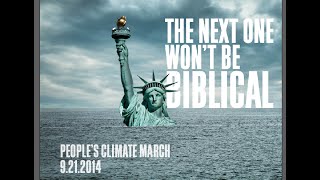
- September 20 - 21, 2014, People's Climate March
- September 22 - 28, 2014, Climate Week NYC
- August 25, 2013, Ecofest
New York, often called New York City (NYC), is the most populous city in the United States. It is located at the southern tip of New York State on New York Harbor, one of the world's largest natural harbors. The city comprises five boroughs—Manhattan, Brooklyn, Queens, the Bronx, and Staten Island—each being coextensive with its respective county. It is the geographical and demographic center of both the Northeast megalopolis and the New York metropolitan area, the largest metropolitan area in the United States by both population and urban area. New York is a global center of technology, finance, commerce, culture, entertainment and media, academics and scientific output, the arts and fashion—and as home to the headquarters of the United Nations, international diplomacy. New York City is known for its fast pace and continuous urban energy.
With an estimated population of 8,586,038 as of 2026, distributed over 300.46 square miles (778.2 km2), New York is the most densely populated major city in the United States. New York City has more than double the population of Los Angeles, the country's second-most populous city. More than 20.1 million people live in New York City's metropolitan statistical area, and approximately 22.5 million people live in its combined statistical area, both of which are the largest in the U.S. New York City is one of the world's most populous megacities. The city and its metropolitan area serve as the premier gateway for legal immigration to the United States. An estimated 800 languages are spoken in New York City, making it the most linguistically diverse city in the world. The New York City metropolitan region is home to the largest foreign-born population of any metropolitan region in the world, numbering approximately 5.9 million people as of 2023.
External links
- Wikipedia:New York City, Environmental issues in New York City, Food and water in New York City, NYC, Global outreach, Transportation in New York City,
- City of New York (facebook)
| Authors | Phil Green |
|---|---|
| License | CC-BY-SA-3.0 |
| Cite as | Phil Green (2014–2026). "Community action/New York City". Appropedia. Retrieved November 9, 2026. |