


Portable Solar-Integrated Open-Source Chemistry Lab for Water Treatment with Electrolysis


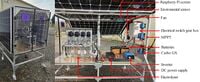
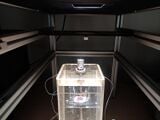
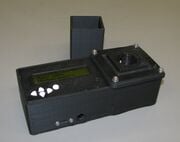
Harnessing solar energy offers a sustainable alternative for powering electrolysis for green hydrogen production as well as wastewater treatment. The high costs and logistical challenges of electrolysis have resulted in limited widespread investigation and implementation of electrochemical technologies on an industrial scale. To overcome these challenges, this study designs and tests a new approach to chemical experiments and wastewater treatment research using a portable standalone open-source solar photovoltaic (PV)-powered station that can be located onsite at a wastewater treatment plant with unreliable electrical power. The experimental system is equipped with an energy monitoring data acquisition system. In addition, sensors enable real-time monitoring of gases—CO, CO2, CH4, H2, H2S, and NH3—along with temperature, humidity, and volatile organic compounds, enhancing safety during electrochemical experiments on wastewater, which may release hazardous gases. SAMA software was used to evaluate energy-sharing scenarios under different grid-connected conditions, and the system can operate off the power grid for 98% of the year in Ontario, Canada. The complete system was tested utilizing a laboratory-scale electrolyzer (electrodes of SS316L, Duplex 2205, titanium grade II and graphite) with electrolyte solutions of potassium hydroxide, sulfuric acid, and secondary wastewater effluent. The electrolytic cell specifically developed for testing electrode materials and wastewater showed a Faraday efficiency up to 95% and an energy efficiency of 55% at STP, demonstrating the potential for use of this technology in future work.
Source code: https://osf.io/fbdgc/



Keywords
[edit | edit source]solar photovoltaic; electrolysis; electrochemistry; environmental sensor; water treatment; portable station; electrode material
See also
[edit | edit source]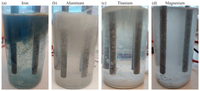
.jpg)



| Authors | Giorgio Antonini, Md Motakabbir Rahman, Cameron Brooks, Domenico Santoro, Christopher Muller, Ahmed Al-Omari, Katherine Bell, Joshua M. Pearce |
|---|---|
| License | CC-BY-SA-4.0 |
| Organizations | FAST, Western University |
| Cite as | Giorgio Antonini, Md Motakabbir Rahman, Cameron Brooks, Domenico Santoro, Christopher Muller, Ahmed Al-Omari, Katherine Bell, Joshua M. Pearce (2025). "Portable Solar-Integrated Open-Source Chemistry Lab for Water Treatment with Electrolysis". Appropedia. Retrieved October 18, 2026. |