


Community action/Tanzania
.jpg)
The aim of this page is to recognise, celebrate and encourage the self-empowerment of community agency networks (CANs) and community groups' activism for climate, environment and many other sustainability topics across Tanzania.
News
[edit | edit source] Where the wild things thrive: Finding and protecting nature’s climate change safe havens, theconversation.com (Dec 17, 2025)
 - Tanzanian community-led innovation wins global award for boosting conservation, news.mongabay.com (Dec 16, 2025)
- ‘Solar Mamas empower our people by giving them electricity’: the women lighting up Zanzibar, theguardian.com (Jan 15, 2025)
- Young South Africans take up sustainable agriculture for food security, climatechangenews.com (Jun 02, 2026) — Aquaponics is seeing a revival in South Africa’s schools, boosted by government support and climate concerns
- Introducing Katcha: An African Democratic Innovation Network, demnext.substack.com (Feb 19, 2026)
- One of Africa’s Most Important Water Sources Just Got Some Very Good News, insideclimatenews.org (Feb 05, 2026) — Angola’s vast highland wetlands feed rivers that deliver freshwater to millions. They just gained global recognition that could help keep it that way.
- Hunter Valley community group wins landmark high court climate change case over coalmine, theguardian.com (Oct 07, 2026) — Ruling on Mount Pleasant coalmine shows ‘we cannot continue to dig up coal … and pretend the consequences have nothing to do with us’, group says
- Citizens need to power Europe's future, demnext.substack.com (Oct 02, 2026) — The EU can enable new democratic institutions: in European countries; with a European Citizens’ Assembly as a 4th branch of government, and by legally enforcing the Global Citizens’ Assembly on AI, Claudia Chwalisz and Another Democratic Future
- Fifty Billion Seedlings: Can Ethiopia Replant Its Ravaged Forests?, e360.yale.edu (Oct 01, 2026)
International events
[edit | edit source]Global or International events
 Oct 01, 2026 (Thu) — World Vegetarian Day, Oct 1 each year, bringing awareness to the ethical, environmental, health, and humanitarian benefits of a vegetarian lifestyle, worldvegetarianday.navs-online.org
- Oct 02, 2026 (Fri) — International Day of Non-Violence, observed each year on 2 October, the birthday of Mahatma Gandhi, un.org
- Oct 07, 2026 (Wed) — World Day for Decent Work, October 7 is the World Day for Decent Work, ituc-csi.org
- Oct 10, 2026 (Sat) — World Migratory Bird Day, worldmigratorybirdday.org
- Oct 10, 2026 (Sat) — World Mental Health Day, Oct 10, annually, wmhdofficial.com
- Oct 10, 2026 (Sat) — World Homeless Day, Oct 10 each year, drawing attention to homeless people’s needs locally and provide opportunities for the community to get involved in responding to homelessness, worldhomelessday.org
- Oct 13, 2026 (Tue) — International Day for Disaster Risk Reduction, Oct 13, annually, promoting a global culture of natural disaster reduction, including prevention, mitigation, and preparedness, un.org
- Oct 16, 2026 (Fri) — World Food Day, celebrated every year around the world on 16 October, often with a focus on food security, fao.org
- Oct 17, 2026 (Sat) — International Day for the Eradication of Poverty, Oct 17 each year, honouring victims of poverty, hunger, violence and fear, with participation by the poorest of people an important aspect of the observance of the Day, un.org
- Oct 17, 2026 (Sat) — International Repair Day, annual celebration for everyone who makes repair happen in their communities around the world. "Repair for Everyone"., openrepair.org
2021-2030, UN Decade on Ecosystem Restoration, International community action events
Each week 3 different short videos from across the world.

Cycling activism, Food activism, Community climate action Scotland / ...This week's featured UK videos / ... read more about Cosmolocalism
Tanzania video
[edit | edit source]
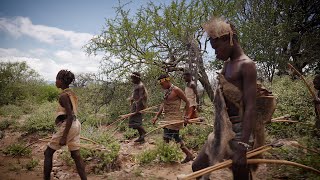
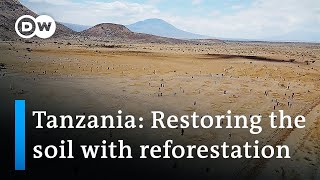

Community involvement
[edit | edit source]Daraja, aims to make positive changes to life in rural Tanzania by bringing people and government closer together
Community energy
[edit | edit source]Biodiversity
[edit | edit source]Approximately 38% of Tanzania's land area is set aside in protected areas for conservation. Tanzania has 16 national parks, plus a variety of game and forest reserves, including the Ngorongoro Conservation Area.
Tanzania is highly biodiverse and contains a wide variety of animal habitats. Tanzania has developed a Biodiversity Action Plan to address species conservation. [citation needed] W
Maps
[edit | edit source]Ramani Huria is community-based mapping project in Dar Es Salaam, Tanzania, training university students and local community members to create highly accurate maps of the most flood-prone areas of the city using OpenStreetMap.
The city of Dar es Salaam is on the coast of Tanzania and in the rainy season is vulnerable to large scale flooding. Additionally, there are no current or reliable maps which can be used by aid respondents in the event of flooding. Maps are created specifically in flood prone wards with the aim of providing information for flood resistance.
The project uses a number of mapping tools including OpenStreetMap, InaSAFE, drone imagery. W
News archive
[edit | edit source]#50MillionTrees: how young people are fighting deforestation in Tanzania, Jun 5, 2017...The Guardian
- Govt Hands Out Cash to Help Its Very Poorest Kickstart Businesses, Jul 24, 2016...@allafrica
- Off-grid Njoro Children's Library in Tanzania keeps naturally cool with compressed earth, Apr 15, 2016...Inhabitat
- Community Forests International Plants Trees and Livelihoods on Pemba Island, November 13, 2015...foodtank.com
- How Tanzania plans to light up a million homes with solar power, October 29, 2015...The Guardian
- Zanzibar's 'Solar Mamas' flip the switch on rural homes, gender roles, June 5, 2015...Public Radio International
Mobile money powers solar expansion in rural East Africa, 2014...Ashden
- Scientists: Snow on Mt. Kilimanjaro to melt in twenty years, Wikinews:Scientists: Snow on Mt. Kilimanjaro to melt in twenty years, November 3, 2009.
- 2009 SEED Award Winners, United Nations Environment Programme, May 12, 2009.
- "KOLCAFE - Smallholder coffee revenue enhancement". This initiative, involving national NGOs and a local research institution, aims to empower coffee farmers and increase coffee production by improving agronomic practices and adding value through building product processing infrastructure and selling products directly to export markets.
- Kenya, Malawi, Tanzania and Zambia: "Sunny Money - solar micro-franchising". International NGOs and community-based organizations in Kenya, Malawi, Tanzania and Zambia have created a micro-franchise named Sunny Money, which recruits, trains and supports a growing network of solar entrepreneurs in East Africa, especially deaf and disabled people, helping them build and sell solar kits to power lights, radios and mobile phones.
About Tanzania
[edit | edit source]
Tanzania, officially the United Republic of Tanzania, is a country in East Africa within the African Great Lakes region. It is bordered by Uganda to the northwest, Kenya to the northeast, the Indian Ocean to the east, Mozambique and Malawi to the south, Zambia to the southwest, and Rwanda, Burundi, and the Democratic Republic of the Congo to the west. According to a 2024 estimate, Tanzania has a population of around 67.5 million, making it the most populous African country located entirely south of the equator.
Many important hominid fossils have been found in Tanzania. In the Stone and Bronze Age, prehistoric migrations into Tanzania included Southern Cushitic speakers similar to modern day Iraqw people, who moved south from present-day Ethiopia; Eastern Cushitic people who moved into Tanzania from north of Lake Turkana about 2,000 and 4,000 years ago; and the Southern Nilotes, including the Datoog, who originated from the present-day South Sudan–Ethiopia border region between 2,900 and 2,400 years ago. These movements took place at about the same time as the settlement of the Mashariki Bantu from West Africa in the Lake Victoria and Lake Tanganyika areas. In the late 19th century, the mainland came under German rule as German East Africa. This was followed by British rule after World War I when it was governed as Tanganyika, with the Zanzibar Archipelago remaining a separate colonial jurisdiction. Following their gaining respective independence in 1961 and 1963, the two entities merged in 1964 to form the United Republic of Tanzania.
Tanganyika joined the Commonwealth on independence, becoming a republic a year later, with Tanzania remaining a Commonwealth member following unification with Zanzibar. Today, the country is a presidential constitutional republic with the federal capital located in Government City (Dodoma); the former capital, Dar es Salaam, retains most government offices and is the country's largest city, principal port, and leading commercial centre. For decades, Tanzania has been ruled by the Chama Cha Mapinduzi (CCM) as a de facto one-party state.
Tanzania's population comprises about 120 ethnic, linguistic, and religious groups. Christianity is the largest religion in Tanzania, with substantial Muslim and Animist minorities. Over 100 languages are spoken in Tanzania, making it the most linguistically diverse country in East Africa. The country does not have a de jure official language, although the national language is Swahili. English is used in foreign trade, in diplomacy, in higher courts, and as a medium of instruction in secondary and higher education. Arabic is widely spoken in Zanzibar, reflecting its history as a trading center dominated by Arabs.
Tanzania is mountainous and densely forested in the north-east, where Mount Kilimanjaro, the highest mountain in Africa and the highest single free-standing mountain above sea level in the world, is located. Three of the African Great Lakes are partly within Tanzania. To the north and west lie Lake Victoria, Africa's largest lake, and Lake Tanganyika, the continent's deepest lake, known for its unique species of fish. To the south lies Lake Malawi. The eastern shore is hot and humid, with the Zanzibar Archipelago just offshore. The Menai Bay Conservation Area is Zanzibar's largest marine protected area. The Kalambo Falls, located on the Kalambo River at the Zambian border, is the second-highest uninterrupted waterfall in Africa. Tanzania is one of the most visited tourist destinations for safaris. The country is an official member of the United Nations, Group of 77, African Union, East African Community, and the Non-Aligned Movement.
See also
[edit | edit source]- Topic overview and cosmolocal connections:
| Authors | Phil Green |
|---|---|
| License | CC-BY-SA-3.0 |
| Cite as | Phil Green (2014–2026). "Community action/Tanzania". Appropedia. Retrieved October 17, 2026. |