


Community action/Zambia

The aim of this page is to recognise, celebrate and encourage the self-empowerment of community agency networks (CANs) and community groups' activism for climate, environment and many other sustainability topics across Zambia.
News
[edit | edit source] The Woman Holding Chinese Mining Giants Accountable, insideclimatenews.org (Aug 24, 2025)
 - How Women Are Helping Their Neighbors Heal From Depression, reasonstobecheerful.world (May 16, 2024)
- Young South Africans take up sustainable agriculture for food security, climatechangenews.com (Jun 02, 2026) — Aquaponics is seeing a revival in South Africa’s schools, boosted by government support and climate concerns
- Introducing Katcha: An African Democratic Innovation Network, demnext.substack.com (Feb 19, 2026)
- One of Africa’s Most Important Water Sources Just Got Some Very Good News, insideclimatenews.org (Feb 05, 2026) — Angola’s vast highland wetlands feed rivers that deliver freshwater to millions. They just gained global recognition that could help keep it that way.
- Hunter Valley community group wins landmark high court climate change case over coalmine, theguardian.com (Oct 07, 2026) — Ruling on Mount Pleasant coalmine shows ‘we cannot continue to dig up coal … and pretend the consequences have nothing to do with us’, group says
- Citizens need to power Europe's future, demnext.substack.com (Oct 02, 2026) — The EU can enable new democratic institutions: in European countries; with a European Citizens’ Assembly as a 4th branch of government, and by legally enforcing the Global Citizens’ Assembly on AI, Claudia Chwalisz and Another Democratic Future
- Fifty Billion Seedlings: Can Ethiopia Replant Its Ravaged Forests?, e360.yale.edu (Oct 01, 2026)
International events
[edit | edit source]Global or International events
 Nov 05, 2026 (Thu) — Media Liberation Day, Change the Media, Change the Future, mediarevolution.org
- Nov 13, 2026 (Fri) — World Kindness Day, Nov 13, annually, highlighting good deeds in the community focusing on the positive power and the common thread of kindness for good which binds us, randomactsofkindness.org
- Nov 15, 2026 (Sun) — World Day of Remembrance for Road Traffic Victims, third Sunday in November each year, worlddayofremembrance.org
- Nov 16, 2026 (Mon) — International Day for Tolerance, Nov 16 each year, fostering respect, acceptance and appreciation of the rich diversity of our world's cultures, our forms of expression and ways of being human, unesco.org
- Nov 19, 2026 (Thu) — International Men's Day, Nov 19, annually
- Nov 27 & 28, 2026 — Buy Nothing Day, en.wikipedia.org
- Nov 27, 2026 (Fri) — Citizen Friday, actionism.space
2021-2030, UN Decade on Ecosystem Restoration, International community action events
Each week 3 different short videos from across the world.

Cycling activism, Food activism, Community climate action Scotland / ...This week's featured UK videos / ... read more about Cosmolocalism
Health and wellbeing
[edit | edit source]- strongminds.org/zambia/, "providing scalable, community- and school-based solutions to close the mental health treatment gap in Zambia"
Rural sustainability
[edit | edit source]Imagine Rural Development Initiative
Trees, woodland and forest
[edit | edit source]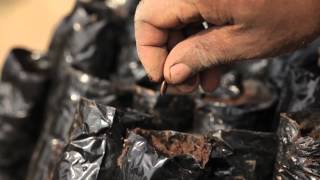
Wetlands
[edit | edit source]
Wetlands are vital ecosystems that provide livelihoods for the millions of people who live in and around them. The Millennium Development Goals (MDGs) called for different sectors to join forces to secure wetland environments in the context of sustainable development and improving human wellbeing.
A three-year project carried out by Wetlands International in partnership with the International Water Management Institute found that it is possible to conserve wetlands while improving the livelihoods of people living among them. Case studies conducted in Malawi and Zambia looked at how dambos – wet, grassy valleys or depressions where water seeps to the surface – can be farmed sustainably to improve livelihoods. Mismanaged or overused dambos often become degraded, however, using a knowledge exchange between local farmers and environmental managers, a protocol was developed using soil and water management practices. Project outcomes included a high yield of crops, development of sustainable farming techniques, and adequate water management generating enough water for use as irrigation. Before the project, there were cases where people had died from starvation due to food shortages. By the end of it, many more people had access to enough water to grow vegetables. A key achievement was that villagers had secure food supplies during long, dry months. They also benefited in other ways: nutrition was improved by growing a wider range of crops, and villagers could also invest in health and education by selling produce and saving money. W
News archive
[edit | edit source]- 2009 SEED Award Winners...United Nations Environment Programme, May 12, 2009.
- Kenya, Malawi, Tanzania and Zambia: "Sunny Money - solar micro-franchising". International NGOs and community-based organizations in Kenya, Malawi, Tanzania and Zambia have created a micro-franchise named Sunny Money, which recruits, trains and supports a growing network of solar entrepreneurs in East Africa, especially deaf and disabled people, helping them build and sell solar kits to power lights, radios and mobile phones.
About Zambia
[edit | edit source]
Zambia (), officially the Republic of Zambia, is a landlocked country in Southern Africa. It is bordered to the north by the Democratic Republic of the Congo, Tanzania to the northeast, Malawi to the east, Mozambique to the southeast, Botswana (via a tiny border of Chobe District) and Zimbabwe to the south, Namibia (via the Caprivi Strip) to the southwest, and Angola to the west. The capital city of Zambia is Lusaka, located in the south-central part of Zambia. The population is concentrated mainly around Lusaka in the south and the Copperbelt Province to the north, the core economic hubs of Zambia.
Originally inhabited by Khoisan peoples, the region was affected by the Bantu expansion of the thirteenth century. Following European expeditions in the eighteenth century, the British Empire began to consolidate control of the area following the 1890 British Ultimatum against the Portuguese, who had claimed the area between Angola and Mozambique in the 1885 Pink Map. Britain formed the British protectorates of Barotziland–North-Western Rhodesia and North-Eastern Rhodesia towards the end of the nineteenth century. These were merged in 1911 to form Northern Rhodesia. For most of the colonial period, Zambia was governed by an administration appointed from London with the advice of the British South Africa Company.
| Authors | Phil Green |
|---|---|
| License | CC-BY-SA-3.0 |
| Cite as | Phil Green (2014–2026). "Community action/Zambia". Appropedia. Retrieved October 20, 2026. |