


Community action/Colombia

The aim of this page is to recognise, celebrate and encourage the self-empowerment of community agency networks (CANs) and community groups' activism for climate, environment and many other sustainability topics across Colombia.
News
[edit | edit source] Trash and dignity: The rise of inclusive recycling projects in Latin America, globalvoices.org (Jun 12, 2026)
 - Hope is contagious and science is king: 10 big lessons on ending the fossil fuel era, theguardian.com (May 01, 2026)
- Santa Marta Process Begins: Tuvalu and Ireland to Host Second Conference on Transitioning Away from Fossil Fuels in 2027 in the Pacific, fossilfueltreaty.org (Apr 29, 2026) — The First Conference on Transitioning Away from Fossil Fuels, co-hosted by Colombia and the Netherlands, concluded today marking a historic breakthrough in building international cooperation for the phase out of coal, oil and gas extraction and production. This step fundamentally shifts power toward a growing coalition of courageous nations engaged in a new international process to manage an equitable phase out of fossil fuels
- Trash and dignity: The rise of inclusive recycling projects in Latin America, globalvoices.org (Jun 12, 2026)
- Argentina’s co-operativas escolares: A case study in co-op education, thenews.coop (May 12, 2026) — In 1946, national legislation formally established the teaching of co-operativism and the creation of school co-operatives
- Across South America, canopy bridges evolve as a lifeline for tree-dwelling wildlife, news.mongabay.com (Mar 04, 2026)
- Hunter Valley community group wins landmark high court climate change case over coalmine, theguardian.com (Oct 07, 2026) — Ruling on Mount Pleasant coalmine shows ‘we cannot continue to dig up coal … and pretend the consequences have nothing to do with us’, group says
- Citizens need to power Europe's future, demnext.substack.com (Oct 02, 2026) — The EU can enable new democratic institutions: in European countries; with a European Citizens’ Assembly as a 4th branch of government, and by legally enforcing the Global Citizens’ Assembly on AI, Claudia Chwalisz and Another Democratic Future
- Fifty Billion Seedlings: Can Ethiopia Replant Its Ravaged Forests?, e360.yale.edu (Oct 01, 2026)
International events
[edit | edit source]Global or International events
 Oct 01, 2026 (Thu) — World Vegetarian Day, Oct 1 each year, bringing awareness to the ethical, environmental, health, and humanitarian benefits of a vegetarian lifestyle, worldvegetarianday.navs-online.org
- Oct 02, 2026 (Fri) — International Day of Non-Violence, observed each year on 2 October, the birthday of Mahatma Gandhi, un.org
- Oct 07, 2026 (Wed) — World Day for Decent Work, October 7 is the World Day for Decent Work, ituc-csi.org
- Oct 10, 2026 (Sat) — World Mental Health Day, Oct 10, annually, wmhdofficial.com
- Oct 10, 2026 (Sat) — World Homeless Day, Oct 10 each year, drawing attention to homeless people’s needs locally and provide opportunities for the community to get involved in responding to homelessness, worldhomelessday.org
- Oct 10, 2026 (Sat) — World Migratory Bird Day, worldmigratorybirdday.org
- Oct 13, 2026 (Tue) — International Day for Disaster Risk Reduction, Oct 13, annually, promoting a global culture of natural disaster reduction, including prevention, mitigation, and preparedness, un.org
- Oct 16, 2026 (Fri) — World Food Day, celebrated every year around the world on 16 October, often with a focus on food security, fao.org
- Oct 17, 2026 (Sat) — International Day for the Eradication of Poverty, Oct 17 each year, honouring victims of poverty, hunger, violence and fear, with participation by the poorest of people an important aspect of the observance of the Day, un.org
- Oct 17, 2026 (Sat) — International Repair Day, annual celebration for everyone who makes repair happen in their communities around the world. "Repair for Everyone"., openrepair.org
2021-2030, UN Decade on Ecosystem Restoration, International community action events
CDC videos
[edit | edit source]Each week 3 different short videos from across the world.

Cycling activism, Food activism, Community climate action Scotland / ...This week's featured UK videos / ... read more about Cosmolocalism
Colombia video
[edit | edit source]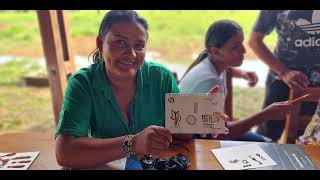
Bioregionalism
[edit | edit source]- Regenerative Colombia, "People, bioregions and organizations co-creating conditions to regenerate life"
Biodiversity
[edit | edit source]

Proyecto Titi is the name of an environmental program centered in Colombia with a special focus on the conservation of a critically endangered primate species endemic to the country, the Cotton-top Tamarin (Saguinus oedpipus). Due mainly to destruction of forest habitat and human colonization, the population of Cotton-top Tamarins has reached devastatingly low numbers in recent years. Proyecto Titi, which was founded in 1985, aims to bring awareness to the plight of the Cotton-top Tamarin through community education programs that focus on sustainability, as well as by encouraging field research studies that would hopefully allow us to better understand these secretive primates and protect the greater Colombian ecosystem as a whole.[1]
Biodiversity of Colombia

Colombia is one of the megadiverse countries in biodiversity, ranking first in bird species. Colombia is the country with the planet's highest biodiversity, having the highest rate of species by area as well as the largest number of endemisms (species that are not found naturally anywhere else) of any country. About 10% of the species of the Earth live in Colombia, including over 1,900 species of bird, more than in Europe and North America combined. Colombia has 10% of the world's mammals species, 14% of the amphibian species and 18% of the bird species of the world.
Open spaces
[edit | edit source]Protected areas and the "National Park System" cover an area of about 14,268,224 hectares (142,682.24 km2) and account for 12.77% of the Colombian territory. W
Trees, woodland and forest
[edit | edit source]The government of Colombia has launched the Amazon Vision Project. The Project, with the financial backing of Norway, Germany, and the United Kingdom, aims to completely eradicate deforestation of Colombia's Amazon by 2020. In the Climate Summit of 2015, Colombia, Germany, Norway, and the United Kingdom signed a Joint Declaration to strengthen collaboration on the climate and forests in Colombia. Norway has committed to a total of 1.8 billion Norwegian crones to Colombia within 2020. The project has been adopted as a national policy and priority in the new National Development Plan 2014-2018. The inclusion of the Program in this PND meant that for the first time in the country there is a framework for development policy that promotes green growth strategies with concrete goals of education of consequences of deforestation and goals of conservation and sustainable use for the Amazon region, offering the opportunity to influence national policies by inserting specificities of the Amazon region that help the region reduce deforestation. The project aims to improve forest governance, plan a sustainable sector development, begin environmental governance with indigenous people and enable conditions for the environment to thrive. W
Compared to neighboring countries, rates of deforestation in Colombia are still relatively low. Colombia had a 2018 Forest Landscape Integrity Index mean score of 8.26/10, ranking it 25th globally out of 172 countries. W
Cycling
[edit | edit source]Ciclovía
Ciclovía (, Spanish: [θikloˈβi.a]), also ciclovia or cyclovia, is a Spanish term that means "cycleway", either a permanent bike path or the temporary closing of certain streets to automobiles for cyclists and pedestrians, a practice sometimes called open streets.
The inspiration for Ciclovías is credited to Bogotá, Colombia. In 1970 the National Capital Commission in Canada's capital Ottawa organized open streets for active transportation. The events have taken place since December 1974 when they started through the efforts of organizer Jaime Ortiz Mariño and others cyclist aficionados. In 1976 Bogota's Mayor Luis Prieto Ocampo signed the 566 and 567 decrees and Ciclovía became an official program promoted by the City government and supported by the Transportation Department. In Bogotá, permanently designated bikeways are also known as ciclorrutas, while streets temporarily closed for that purpose are called ciclovías.
Each Sunday and public holiday from 7 am until 2 pm certain main streets of Bogotá, Cali, Medellín, and other cities are temporarily blocked off to cars allowing runners, skaters, and bicyclists to workout in a more comfortable environment. At the same time, stages are set up in city parks. Aerobics instructors, yoga teachers and musicians lead people through various performances. The great variety of traditional food and drinks offered in snack stalls motivates many locals and tourists to go around the Ciclovía. Bogotá's weekly ciclovías are used by approximately 2 million people (about 20% of the population) on over 120 km of car-free streets.
In 2007, a Colombian Congressman, José Fernando Castro Caycedo, proposed a law banning Ciclovia, charging that it caused traffic jams. Ciclovia users protested the change, and received support from ex-mayors Peñalosa and Samuel Moreno, as well as several members of the city council and other Members of Congress. The proposal was defeated.
The Bogota Ciclovía provides service from 7:00 am to 2:00 pm Sundays and holidays of the year by the main roads of the city, connected in a circuit of over 121 kilometers long and covers all sectors of the city.
This time space was born in 1974. Since 1995 its management was taken over by the IDRD. Since then and gradually, it has been constructed to reach its present appearance and acceptance among its thousands of users. Its infrastructure allows nearly one million (1,000,000) users leave their homes to safely practice different types of physical activities.
The Ciclovía was awarded under the II International Competition 2005 Active Cities Healthy Cities, through its contribution to the development of an alternative and efficient physical activity in the city. W
Sustainable transport
[edit | edit source]Urban transport
Urban transport systems have been developed in Barranquilla, Bogotá, Cali, and Medellín. Traffic congestion in Bogotá had been greatly exacerbated by a lack of rail transport; however, this problem was alleviated, to a degree, by the formation of one of the world's most expansive and highest-capacity bus rapid transit (BRT) systems—known as the TransMilenio (opened 2000)—and the restriction of vehicles through a daily, rotating ban on private cars (depending on plate numbers). Bogotá's BRT consists of bus and minibus services managed by both private- and public-sector enterprises.
Since 1995, Medellín has had a modern urban railway, the Metro de Medellín, utilizing two train lines with 27 stations. The Metro also connects with the cities of Itagüí, Envigado, and Bello. An elevated gondola-cablecar system, the Metrocable, opened in 2004 to improve Metro accessibility for some of the city's more isolated, dense barrios. The gondola design was specifically chosen due to the mountainous geography of the city, with most of the neighborhoods served being reasonably higher in elevation from the city center. A BRT line called Transmetro began operating in 2011, with a second line added in 2013.
Other Colombian cities have also installed BRT systems, such as Cali, with a six-line system (opened 2008), Barranquilla with two lines (opened 2010), Bucaramanga with one line (opened 2010), Cartagena with one line (opened 2015) and Pereira, with three lines (opened 2006). A future light rail line in Barranquilla is planned.
see also: Bogotá community action, Sustainable transport activism
Chiva bus
A chiva (Spanish for goat) or escalera (Spanish for ladder) is an artisan rustic bus used in rural Colombia and Ecuador. Chivas are adapted to rural public transport, especially considering the mountainous geography of the Andean region of these countries.
The buses are varied and characterized by being painted colorfully (usually with the yellow, blue, and red colors of the flags of Colombia, Venezuela and Ecuador) with local arabesques and figures. Most have a ladder to the rack on the roof which is also used for carrying people, livestock and merchandise.
They are built upon a bus chassis with a modified body made out either metal or wood. Seats are benchlike, made out of wood and with doors instead of windows. The owner or driver usually gives the vehicle a unique nickname.
Urban sustainability
[edit | edit source]News archive
[edit | edit source]- Governments of Colombia and The Netherlands Announce Co-hosting First International Conference on the Just Transition Away from Fossil Fuels, fossilfueltreaty.org (Nov 21, 2025)
- Science-backed conservation of Colombia’s wetlands led by Indigenous fishers, news.mongabay.com (Sep 24, 2025)
- From Kenya to Colombia, Field notes from Mnyumbuni exchange program, Grassroots Economics, Juan Lucio, and Aude Peronne, grassecon.substack.com (Aug 11, 2025)
- The Indigenous rangers protecting Katsa Su in Colombia, globalvoices.org (Jul 22, 2025)
- Medellín’s sublime return to nature – in pictures, theguardian.com (Jun 09, 2025)
- Why I’m training Colombian Amazonians to become archaeology tourist guides, theconversation.com (Mar 18, 2025)
- ‘I felt death in the flames’: how lighting a forest fire inspired one man to transform barren ranches into rainforest, theguardian.com (Jan 22, 2025)
- ‘The tranquility frees you’: Bogotá, the city that shuts out cars every week, theguardian.com (May 30, 2024)
- This is how Latin America tries to turn its youth into young homeowners, globalvoices.org (Mar 01, 2024)
- Hopes for end to land conflicts raised by new agrarian courts in Colombia, news.mongabay.com (Feb 07, 2024)
- Renewable energy drive for indigenous groups in Colombia, BBC News (Dec 27, 2023)
- Collaboration involving local fishing communities helps save manatees stranded in Colombia, news.mongabay.com (Dec 18, 2023)
- How Medellin is beating the heat with green corridors, BBC Future (Sep 23, 2023)
- More than 100 animals released back into Colombian wild, BBC News (Apr 07, 2022) — Environmental authority Corporinoquia, in charge of managing sustainable development, released more than 1,200 animals back into the wild last year alone.
- Colombia's Medellin plants 'green corridors' to beat rising heat, Jul 28, 2016...news.trust.org
- Ecovillages as Hubs for Social and Ecological Regeneration, Ecosystem Restoration Camps (Jul 29, 2020)
- 'The crisis is already here': young strikers facing climate apartheid, theguardian.com (Sep 19, 2019)
- Colombia bans coal mining in the páramos! February 12, 2016...Greenpeace International
- 2010 SEED Award Winners,unep.org, November 3, 2010.
- "BOSQUE HUMEDO BIODIVERSO" is a business initiative headed by a local NGO that uses fruit and pulp as ingredients for the local cosmetics and food industries. The use of non-timber products will reduce deforestation of tropical forests and local families will benefit from collecting value-added goods. This helps develop alternative income sources and promotes the sustainable management of local biodiversity.
- 2009 SEED Award Winners,United Nations Environment Programme, May 12, 2009
- A national NGO and local community associations are engaged in an initiative to reverse environmental degradation and social exclusion produced by illegal and uncontrolled mechanized mining. A mining certification process and capacity building program have been created created. More than 1000 artisan mines are now following social and environmental criteria.
- "Camarones Sostenibles del Golfo de Morrosquillo". The partners of this project are a community-based organization, a local NGO and a small business which are aiming to establish a cooperative enterprise that includes families of traditional fishermen in the Morrosquillo Gulf, farming shrimp in a way which produces zero emissions.
- New national park created in Colombia's Amazon, WebWire, August 31, 2007.
About Colombia
[edit | edit source]Environmental issues in Colombia
Decades of civil war and political unrest has impeded biological and environmental research in Colombia. The political unrest in Colombia catalyzes the alteration of land patterns through the cultivation of coca and opium crops, the redirection of extractive activities, and land abandonment in some areas.
There are many environmental issues in Colombia. Issues include deforestation, soil erosion, illicit drug crops grown in national natural reserves by mafias (not peasants), pollution on major bodies of water by corporations (backed up by unregulated / unsupervised policies and by the corruption of local and federal authorities) among others.
There is soil and water quality damage from contamination by the use of chemicals in the coca-refining process, spillage of crude oil into the local rivers as a result of guerrilla sabotage of pipelines, overuse of pesticides, and air pollution (especially in Bogotá) from vehicle emissions. Natural hazards include highlands subject to volcanic eruptions, occasional earthquakes, and periodic droughts. W
Colombia, officially the Republic of Colombia, is a constitutional republic in northwestern South America. Colombia is bordered to the east by Venezuela and Brazil; to the south by Ecuador and Peru;to the north by the Caribbean Sea; to the northwest by Panama; to the west by the Pacific Ocean; and to the east by Venezuela. Colombia also shares maritime borders with Venezuela, Jamaica, Haiti, the Dominican Republic, Honduras, Nicaragua and Costa Rica.With a population of over 45 million people, Colombia has the 29th largest population in the world and the second largest in South America, after Brazil.The territory of what is now Colombia was originally inhabited by indigenous nations including the Muisca, Quimbaya, and Tairona.
Near you
[edit | edit source]References
- ↑ Proyecto Titi: Conserving the Cotton-top Tamarin
| Authors | Phil Green |
|---|---|
| License | CC-BY-SA-3.0 |
| Cite as | Phil Green, Liz Kimbrough (2010–2026). "Community action/Colombia". Appropedia. Retrieved October 18, 2026. |