100 Visions of the Future

- Introduction
- Foreword
- Without Divine Justice, Human Rights
- Gods or Goats
- A 'Playbour' of Love for the Next Twenty Years
- Untitled, 2010
- We Deserve A Future Of Good Governance
- The World Needs Wives
- The Food We Deserve
- Rediscovering the Stuff We Forgot to Remember
- Reclaiming Awesome
- Panarchy
- On the Future We Deserve…
- There is No Future
- This is Mental
- Monastech
- The Futures We Deserve or, Even Bankers Might Have Uses
- Memes that Kill
- The Tiny Army
- A Four-Bladed Scissors
- One in Six, a Strategy for Reduction
- Of Arms and the Man
- A Knowing World
- A Picture, a Person, a Time and a Location
- Decline and Fall
- We Deserve to Evolve
- The Knowledge and Action Platform
- The Joy of Open
- 6 Ways to Live
- Solar Photovoltaic Energy Replication
- The Future We Desire
- Zombies and Vampires, Oh My!
- The Future of Information Freedom
- My Vision of the Future
- The Matter of Place
- The Locavores' War: A History of America's Future
- A World in Common
- The Story Our Children Will Tell
- The Abolition of Scarcity
- Cities of Freedom Chariots or Four-wheeled Demons?
- A Healthy and Smiling Planet
- The Earth Charter
- Sex and Singularity in the 21st Century
- The Feet We Deserve
- ...middle...
- If You Want to Go Fast, Go Alone. If You Want to Go Far, Go Together. And If You Want to Transform..?
- Just 4, A Macroscale Social Model
- Open Source Appropriate Technology
- Who Will Save Our Souls?
- Art Monasticism
- Personal Futures and Futures Therapy
- Deep Lessons
- Semantic Organization and Connectivity
- The Education We Deserve
- Moving Towards a Post Penal Society
- A Future Without Childhood
- Online Open Distance Learning
- The Future of Television
- Citizen Centred Participation
- The Future We Got–Earth Date Zero Plus Twenty
- The Onion and the Satellite
- Ode to the Tech Fix
- Deserving The Future We Want
- Re-envisioning Our Relationship With Micro-Organisms
- The Spaces We Deserve
- The Age of Warlords Cookbook
- Using Science Locally
- Seed Saving for Local Food Security
- Challenging Education and the "Harry Potter Letter"
- Credibility and Calories, A Perspective on Information
- The Future of Programming
- Higher Education for the Future We Deserve
- A Systemic Revolution, or, the Need for a Post-Scientific Approach
- An Ideal World
- My Ideal Panflu
- Report on the Planet Earth from the Intergalactic Study Group on Worlds in Transition
- A Hypothetical Vision of What the Property Sector in the Future Might Look Like
- The Future is Here
- Hacking Society and a Proposal for Beta Towns
- The Age of Phlight
- Designing the Future
- Collaboration for Introverts
- Hundreds of Sovereign Singapores
- Working Together: Unleashing Collective Intelligence
- Clash for Civilization
- Seawater into Food
- Collapsarithmetic
- Our Future and the Sun
- Bootleg Oil
- Time For Resilient Tribes to Step Up and Show the Way
- The Music We Deserve
- All the World's a Stage
- Success in the Twenty First Century
- On Lying to Children
- We Deserve the Time and Space to Be Human
- Opening the Floodgates
- The Future of Art
- The Human Rite of Living
- No Island is an Island
- Getting The Future We Deserve
- Berlin, Berlin
- We Deserve a Future
- Aftermath - Thinking the Unthinkable. Asking What is Not Asked
Download ▼
| PDF |
Download these pages as a PDF so you can print them or read them offline. |
| Booklet |
Download these pages as a PDF that you can print, fold and staple into a booklet. |
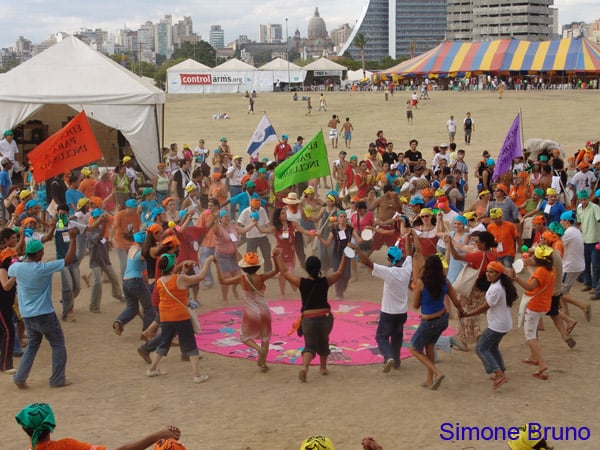
Citizens should be able to influence decisions affecting the localities and communities in which they live, work and visit.
This is not about tolerating what other agencies might cede to us, but about us (now)[1] taking responsibility (for our own futures). About us playing our part, according to our abilities, in co-designing and co-creating our own futures.
We share a planet with limited and sometimes scarce resources. In a more resource constrained future [2] it seems to make sense to make best use of our greatest resource - us, our ingenuity and creativity. For example it's arguable that we haven't got much hope of meeting, or better still even exceeding our carbon reduction targets unless we're all involved. So we accept some responsibility for all of the following:
- fair shares. We do not accept the inevitability of crude and harmful imbalances of access to resources or influence.
- fair shares between current and future generations
- a fair pattern of influence, for example between local and wider communities
- mediation between disparate interests
- envisioning and co-designing a better future [3], a wiser earth [4]
- planning what we need to do to get there
- co-creating whatever we need to help us get us there
- assessing our progress
We are responsible for the great transition, centred on our growing involvement and influence, our growing citizen and community self-actualization. [5] We are responsible for the great transition in both our local and wider communities. We all have a part to play. We do not accept any tendency to view any citizens or communities as disposable.
It's Ok to start with one's local community. We need to learn and develop confidence in our abilities to articulate the futures we choose, and to practice mediation between potentially conflicting choices. With modern technolgy we have the means to ensure proper and adequate recognition for this valuable work via transparency. Transparency via fully open and complete online record of involvement and influence, for purposes of recognition, reward, respect, trust, and, last but not least, learning and not having to keep reinventing the wheel. A quantum leap in creativity to meet contemporary challenges.
Participation with whom? - citizen to citizen as the norm, not a luxury handed down to us by benevolent yet archaic power structures. A role for experts or specialists, of course, via deliberative democracy, knowledge and evidence based decision making. But increasingly knowledge and expertise is not restricted to the few and we all have a role in ensuring knowledge is used wisely. Assessment of needs and aspirations must involve the communities affected. Local knowledge helps find solutions which work.
Civil society 2.0 - Open, wholly inclusive and totally transparent networks which enable the wellbeing of us all need to supercede the narrow interests of inflexible establishments and institutions. Gov 2.0 - Is there a role for government? yes, but also, increasingly it must be as the enabler of the wellbeing of us all.
A Wiser Rio 2012 [6], a Rio which made optimum use of, included, involved, nurtured and helped grow the creativity, ingenuity and innovation of mass participation would not be a bad thing in this context.
Template:TheFWD references



