


Community action/Peru

The aim of this page is to recognise, celebrate and encourage the self-empowerment of community agency networks (CANs) and community groups' activism for climate, environment and many other sustainability topics across Peru.
News
[edit | edit source] ‘The forest is life’: how Indigenous communities in Peru are preventing wildfires, positive.news (Sep 29, 2026)
 - Stingless bees from the Amazon granted legal rights in world first, theguardian.com (Dec 29, 2025)
- Community-led camera trapping boosts conservation and ecotourism in Peru, news.mongabay.com (Dec 16, 2025)
- Trash and dignity: The rise of inclusive recycling projects in Latin America, globalvoices.org (Jun 12, 2026)
- Argentina’s co-operativas escolares: A case study in co-op education, thenews.coop (May 12, 2026) — In 1946, national legislation formally established the teaching of co-operativism and the creation of school co-operatives
- Across South America, canopy bridges evolve as a lifeline for tree-dwelling wildlife, news.mongabay.com (Mar 04, 2026)
- Hunter Valley community group wins landmark high court climate change case over coalmine, theguardian.com (Oct 07, 2026) — Ruling on Mount Pleasant coalmine shows ‘we cannot continue to dig up coal … and pretend the consequences have nothing to do with us’, group says
- Citizens need to power Europe's future, demnext.substack.com (Oct 02, 2026) — The EU can enable new democratic institutions: in European countries; with a European Citizens’ Assembly as a 4th branch of government, and by legally enforcing the Global Citizens’ Assembly on AI, Claudia Chwalisz and Another Democratic Future
- Fifty Billion Seedlings: Can Ethiopia Replant Its Ravaged Forests?, e360.yale.edu (Oct 01, 2026)
International events
[edit | edit source]Global or International events
 Nov 05, 2026 (Thu) — Media Liberation Day, Change the Media, Change the Future, mediarevolution.org
- Nov 13, 2026 (Fri) — World Kindness Day, Nov 13, annually, highlighting good deeds in the community focusing on the positive power and the common thread of kindness for good which binds us, randomactsofkindness.org
- Nov 15, 2026 (Sun) — World Day of Remembrance for Road Traffic Victims, third Sunday in November each year, worlddayofremembrance.org
- Nov 16, 2026 (Mon) — International Day for Tolerance, Nov 16 each year, fostering respect, acceptance and appreciation of the rich diversity of our world's cultures, our forms of expression and ways of being human, unesco.org
- Nov 19, 2026 (Thu) — International Men's Day, Nov 19, annually
- Nov 27 & 28, 2026 — Buy Nothing Day, en.wikipedia.org
- Nov 27, 2026 (Fri) — Citizen Friday, actionism.space
2021-2030, UN Decade on Ecosystem Restoration, International community action events
CDC videos
[edit | edit source]Each week 3 different short videos from across the world.

Cycling activism, Food activism, Community climate action Scotland / ...This week's featured UK videos / ... read more about Cosmolocalism
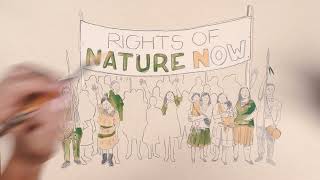
Peru video
[edit | edit source]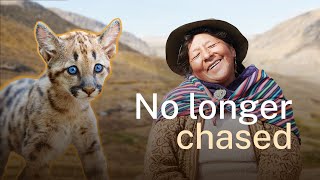
Networks and sustainability initiatives
[edit | edit source]- Neighbourhood initiatives across Lima
- Association for Nature and Sustainable Development (ANDES), non-profit Peruvian indigenous organisation that aims to improve the quality of life of Andean indigenous communities by promoting the conservation and sustainable use of their bio-cultural heritage through rights-based conservation-development approaches.
Community energy
[edit | edit source]
It has been estimated that Peru has favorable conditions for the development of solar energy projects. However, the country's solar potential has not been exploited yet. In the mountain ranges located in the South, solar energy reaches average levels above 6 kWh/m2/day, which are among the highest worldwide.
Visions
[edit | edit source]Amazon Sacred Headwaters Initiative, added 16:46, 22 March 2022 (UTC)
Climate action
[edit | edit source]Mitigation
The Economic Commission for Latin America and the Caribbean (ECLAC) estimates that the economic losses related to climate change could reach over 15% of national gross domestic product (GDP) by 2100. In 2010, Peruvian greenhouse gas emissions represented only 0.4% of global emissions. However, emissions are rising nationwide – particularly in the energy and transport sectors. In an effort to combat this, the Government of Peru approved a law to establish a national greenhouse gas inventory system called INFOCARBONO. INFOCARBONO will enable different ministries to include greenhouse gas management in their work.
Effects of climate change
Average annual temperatures rose by 1 °C (1.8 °F) from 1960 until 2016 and are predicted to increase by an additional 2 to 3 °C (3.6 to 5.4 °F) by 2065. Sea level is projected to rise by 50 cm (20 in) by 2100. Extreme weather events, including drought and flood, are anticipated to become more frequent.
The most immediately visible problem of climatic change in Peru is the melting of glaciers in the Andes. Peru is home to 71 percent of the world's tropical glaciers and since 1970 glacial volume has decreased by 40 percent. Many areas of Peru depend upon glacial melt for water for consumption, irrigation, and industry. In the Cordillera Blanca, for example, glacial melt provides 80 percent of water in the rivers during the dry season and 4-8 percent during the rainy season. The consequence of increased glacial melt is floods during the wet season and less water in rivers during the dry season. The desert coast of Peru has 52 percent of Peru's population on 12 percent of its land area and is especially vulnerable to fluctuations in its water supply, nearly all of which comes from rivers originating in the Andes. Accelerated glacial melt and the eventual disappearance of glaciers will severely impact the quantity of water available in the coastal and mountain regions. W
Public perceptions related to water and climate change
According to a 2008 survey of Radio RPP, only 37% of respondents think that water is scarce in Peru. Only 27% of respondents living in Lima—a city in the middle of a desert—believe water to be scarce in Lima. 72% of respondents throughout the country believe that Peru is affected by climate change. However, only 8% of respondents think that water scarcity is a consequence of Climate Change.
Sustainable transport
[edit | edit source]There are river boat service from Yurimaguas and Pucallpa to Iquitos, and from there to the Brazilian border in the Amazon river.W
Biodiversity
[edit | edit source]Environment quality
[edit | edit source]EcoSwell
Founded in 2013, the NGO EcoSwell works on water and sanitation projects across Peru (amongst other sectors of work); they are based in the northwestern Lobitos district of the Talara region, an arid coastal area that faces water stress. To combat the challenges of derelict infrastructure and environmental degradation, EcoSwell primarily constructs physical WASH projects with the help of local residents and interns, including bio-remediation for wastewater management, dry toilets, grey water reuse, desalination, and groundwater monitoring. Their bottom-up approach to community mobilization focuses on the long-term sustainability of Peru's ecology, with a commitment to a steady-state economy.
Trees, woodland and forest
[edit | edit source]Peru has the fourth-most tropical forests of any country and the ninth-most forest area. W
Wetlands
[edit | edit source]There are 12,201 lakes and lagoons in Peru, 3,896 of which are located in the Pacific basin; 7,441 in the Atlantic basin, 841 in the Titicaca basin, and 23 in the Huarmicocha system. Peru contains approximately 50,000 km2 of swamps and 45 km2 of mangroves.Peru's wetlands play an important role for rural communities. These wetlands are the source for animal protein and for totora, a plant used in the artisan production of boats and floating devices. Estuaries are also fundamental for the reproduction of several marine species that are basic for the fishing industry. Other uses such as industrial production of algae and bird-watching tourism are not yet fully discovered. In 1996 the Government adopted a National Wetlands Conservation Strategy aimed at increasing the area of mangroves, moors, estuaries, and lagoons considered to be protected areas. Uncertainties about land ownership, industrial pollution, urban sprawl, and deforestation continue to threaten wetland integrity in Peru. The complete Pucchun Lagoon in Arequipa, 50 km2, has been dried out for agricultural purposes. The Villa Swamp, located south of Lima, was reduced from its original 50 to 3 km2 in 1989 due to urban sprawl.
News archive
[edit | edit source]- Could a £2-a-day basic income be the key to protecting rainforests?, theguardian.com (Aug 22, 2024)
- Planting English trees to protect the Peruvian rainforest, positive.news (Aug 02, 2024)
- International Court Issues First-Ever Decision Enforcing the Right to a Healthy Environment, insideclimatenews.org (Mar 29, 2024)
- Indigenous communities get tech and training on vital early warning systems, positive.news (Mar 22, 2024)
- Lima’s neurodiverse picnic movement is liberating Peruvians from stigma and abuse, positive.news (Mar 13, 2024)
- Partnering with communities and llama herders in the Andes to improve soil quality and plant productivity as more ice retreats, news.mongabay.com (Nov 27, 2023)
- A Peruvian farmer is trying to hold energy giant RWE responsible for climate change – the inside story of his groundbreaking court case, theconversation.com (Nov 27, 2023)
- The seed guardians of Peru trying to save the potato, BBC Future (Oct 03, 2023)
- How a group of Peruvian coffee farmers are thriving despite the odds, positive.news (Jul 12, 2023)
- Indigenous Peoples defend a precious natural resource- empowering them protects us all, ashden.org (Feb 14, 2023)
- Nature surpassing nation: the Amazon Sacred Headwaters shows how a bioregion can transcend borders, The Daily Alternative (Mar 14, 2022)
- Gen Z on how to save the world: young climate activists speak out, The Guardian (Oct 17, 2021) — Features activists from Philippines, Australia, India, US, Uganda, Pakistan, Peru, Indonesia, United Kingdom, Ireland, France, Germany, Kenya and Canada
- Trees in Andes to counter Peru's climate and water crisis, says Swiss scientist, Feb 20, 2017...blog.worldagroforestry.org
- Peru protects vast 'Yellowstone of the Amazon', November 9, 2015...www.mnn.com
- In Peru, beach cleanup scheme helps disadvantaged people become entrepreneurs, February 12, 2014...Springwise
- Peru To Provide Free Solar Power To 2 Million Of Its Poorest Residents By 2016, huffingtonpost.com, July 23, 2013.
- Marcamasi [es] reports that in Peru more than 8,000 people managed to plant 27,166 trees in 5 minutes and 20 seconds, achieving a new Guinness record, 6 June 2010. This also marks the beginning of a national campaign called "Toward 180 million trees" ("Rumbo a los 180 millones de árboles") with the theme "Let's change our attitude, let's sow a plant" ("Cambiemos de actitud, sembremos una planta")...[http://web.archive.org/web/20120424223457/http://globalvoicesonline.org/2010/06/06/peru-world-record-for-planting-trees-in-five-minutes/ Global Voices Online. Written by Silvia Viñas, June 6, 2010.
- Projects from Peru and Lao PDR share UNEP Sasakawa prize 2008United Nations Environment Programme, June 4, 2018. Practical Action, founded in 1966, is working in Peru's eastern Andes where 68 per cent of the population - around 5 million people - do not have access to electricity. The project makes use of the region's vast potential for hydroelectricity: to date, 47 micro-hydro schemes have been installed in the area through Practical Action, bringing clean power to about 30,000 people.
- Through this project, Practical Action is also boosting local industry, as most of the turbines are manufactured by small companies in Peru to Practical Action designs - with each company making three or four turbines a year. Practical Action says it sees local manufacture as a key step towards widespread use of renewable energy.
- The electricity supply is boosting the development of the remote communities. Previously, people moved away to start businesses in places where the infrastructure was better, but the electricity from the micro-hydro schemes has brought them back. Some villages have doubled in size, with people returning and others starting or expanding businesses including restaurants, bakeries, furniture makers, welders and internet cafes.
About Peru
[edit | edit source]Environmental issues in Peru
The principal environmental issues in Peru are water pollution, soil erosion, pollution and deforestation. Although these issues are problematic and equally destructive, the Peruvian Environmental ministry has been developing regulation and laws to decrease the amount of pollution created in major cities and have been making policies in order to decrease the present deforestation rate in Peru.
Water access
Parts of Peru are located in vast deserts, limiting water accessibility. While there has been an emphasis within the country on improving infrastructure to increase water access and restore watersheds, much of Peru still remains under-served, with over 1.5 million people estimated to have no running water in their homes. A 2015 UN Water Global Analysis and Assessment of Sanitation and Drinking Water report stated that Peru has made significant improvements within the last fifteen years to promote sanitation and improve access to water. Water access, however, is still unequal; some Peruvians pay 1.3 sols (.40 USD) for one cubic meter of running water, while poorer citizens who rely on water delivery trucks to bring them their resources pay around 20 sols ($6 USD) for one cubic meter of running water, an over 1500% increase. Water delivered in Peru tends to be unsanitary and non-potable. However, wealthier citizens are more easily able to treat water in their homes, while poorer citizens often lack the resources to properly treat their water.
Peru, officially the Republic of Peru, is a country in western South America. It is bordered to the north by Ecuador and Colombia, to the east by Brazil, to the southeast by Bolivia, to the south by Chile, and to the south and west by the Pacific Ocean. Peru is a megadiverse country, with habitats ranging from the arid plains of the Pacific coastal region in the west, to the peaks of the Andes mountains extending from the north to the southeast of the country, to the tropical Amazon basin rainforest in the east with the Amazon River. Peru has a population of over 32 million, and its capital and largest city is Lima. At 1,285,216 km2 (496,225 sq mi), Peru is the 19th largest country in the world, and the third largest in South America.
Near you
[edit | edit source]| Authors | Phil Green |
|---|---|
| License | CC-BY-SA-3.0 |
| Cite as | Phil Green (2011–2026). "Community action/Peru". Appropedia. Retrieved October 21, 2026. |