Community action/Biodiversity

Biodiversity is the degree to which species vary throughout the environment. It is used as a measure of an ecosystem's health. Biologists and ecologists who study biodiversity typically look for the number of species and the way in which species differ. They also study the distribution of biodiversity across the globe and trends that may be contributing to decreased biodiversity.
The period since the emergence of humans has displayed an ongoing biodiversity reduction and an accompanying loss of genetic diversity. Named the Holocene extinction, the reduction is caused primarily by human impacts, particularly habitat destruction. Conversely, biodiversity impacts human health in a number of ways, both positively and negatively. W
What communities can do
- Set up nature trails
- Advocate for and promote the idea of wildlife corridors
- Wildlife surveys
- promote and encourage wildlife gardens
- Ecosytem restoration camps, see Environment quality, Other resources
Cities and biodiversity

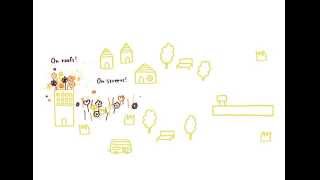
Cities and Biodiversity Outlook
Wildlife garden
A wildlife garden (or wild garden) is an environment that is attractive to various forms of wildlife such as birds, amphibians, reptiles, insects, mammals and so on. A wildlife garden will usually contain a variety of habitats that have either been deliberately created by the gardener, or allowed to self-establish by minimising maintenance and intervention.
Many organic gardeners are sympathetic to the philosophy of wildlife gardening, and will usually try to incorporate some aspects of the wild garden into their own plots in order to both act as a means of biological pest control, as well as for its value in promoting biodiversity and generally benefitting the wider environment. W
Resources
Citizens data initiative
- More than 1,200 species of bats comprise nearly a quarter of all mammals, and their ecological services are essential to human economies and the health of whole ecosystems worldwide. Source: unep.org, 21 January 2011
- In Asia, more than 70 percent of primates are classified on the IUCN Red List as Vulnerable, Endangered or Critically Endangered – meaning they could disappear forever in the near future. Source: IUCN, August 2008
- The great apes are the closest living relatives to man, bonobos sharing 98.4 per cent of our DNA, gorillas 97.7 per cent and orang-utans 96.4 per cent. Source: Defra
Inspiration
- Surf's up, dolphin dudes! guardian.co.uk
Maps
Quotes
"We are not defending nature, we are nature defending itself" Resistencia Indigena [1]
"I believe in God, only I spell it Nature." Frank Lloyd Wright
"If you hurt nature you are hurting yourself" ~ J Krishnamurti
Video

News and comment
See separate article: Biodiversity news
Events
-
 Feb 2 World Wetlands Day, 2020: Sun
 -
 Mar 3 World Wildlife Day, 2020: Tue
 -
 Mar 20 - 30 Pesticide Action Week 2020: Fri - Mon
 -
 May 22 International Day for Biological Diversity, 2019, Wed


2011-2020
United Nations Decade on Biodiversity
The goal of significantly reducing biodiversity loss includes special focus on supporting actions that address the underlying causes of biodiversity loss, including production and consumption patterns. W
Campaigns
No to Biodiversity Offsetting!
See also
- Biodiversity UK
- Biodiversity news
- Biological diversity
- Natural climate solutions
- Ethical consumerism
- Extinction Rebellion
- Food, sustainable community action
- Open spaces
- Trees, woodland and forest
- local information and news can be found, or shared, via our many location pages
External links
- Wikipedia: Biodiversity, Biocultural diversity, Biosphere reserve, Convention on Biological Diversity, Endangered species, Great Apes Survival Partnership, IUCN Red List, Orangutan, Tiger, World Land Trust
- Ape Alliance
- Biocultural Heritage, site dedicated to promoting the interlinked biological and cultural riches of indigenous peoples and local communities
- Biodiversity Media Alliance
- the Gorilla Organization
- Intergovernmental Platform on Biodiversity and Ecosystem Services
- International Animal Rescue, animal welfare non-profit organization based in the United Kingdom that comes to the aid of wild and domestic animals with hands-on rescue and rehabilitation. International Animal Rescue returns rehabilitated animals to the wild while also providing permanent sanctuary for those that cannot be released. International Animal Rescue specializes in comprehensive sterilization and vaccination programs for stray dogs and cats, particularly in developing countries. They also work to educate the public in the humane treatment of all animals. International Animal Rescue has offices in the United Kingdom, United States, India, Indonesia, Malta and the Netherlands. [2]
- International Fund for Animal Welfare
- IUCN Red List of threatened species
- Open Source Beehives, global network of citizen scientists aiming to discover the reason bee populations are declining throughout the world
- Orangutan Land Trust, UK charity with the objective of providing sustainable solutions for the long-term survival of the orangutan in the wild by ensuring safe areas of forest for their continued existence. The organizations President and co-founder, Lone Drøscher Nielsen is a prominent wildlife conservationist. W