


Community action/Ethiopia

The aim of this page is to recognise, celebrate and encourage the self-empowerment of community agency networks (CANs) and community groups' activism for climate, environment and many other sustainability topics across Ethiopia.
News
[edit | edit source] Fifty Billion Seedlings: Can Ethiopia Replant Its Ravaged Forests?, e360.yale.edu (Oct 01, 2026)
 - Fifty billion trees by 2030: how Ethiopia is recruiting citizens across the country to plant, plant, plant, theguardian.com (Sep 17, 2026) — After losing much of its forests in recent decades, the country’s people have led the way in planting saplings across the country as part of the government’s Green Legacy Initiative
- Powering up: how Ethiopia is becoming an unlikely leader in the electric vehicle revolution, theguardian.com (Sep 12, 2025)
- Young South Africans take up sustainable agriculture for food security, climatechangenews.com (Jun 02, 2026) — Aquaponics is seeing a revival in South Africa’s schools, boosted by government support and climate concerns
- Introducing Katcha: An African Democratic Innovation Network, demnext.substack.com (Feb 19, 2026)
- One of Africa’s Most Important Water Sources Just Got Some Very Good News, insideclimatenews.org (Feb 05, 2026) — Angola’s vast highland wetlands feed rivers that deliver freshwater to millions. They just gained global recognition that could help keep it that way.
- Hunter Valley community group wins landmark high court climate change case over coalmine, theguardian.com (Oct 07, 2026) — Ruling on Mount Pleasant coalmine shows ‘we cannot continue to dig up coal … and pretend the consequences have nothing to do with us’, group says
- Citizens need to power Europe's future, demnext.substack.com (Oct 02, 2026) — The EU can enable new democratic institutions: in European countries; with a European Citizens’ Assembly as a 4th branch of government, and by legally enforcing the Global Citizens’ Assembly on AI, Claudia Chwalisz and Another Democratic Future
- Fifty Billion Seedlings: Can Ethiopia Replant Its Ravaged Forests?, e360.yale.edu (Oct 01, 2026)
International events
[edit | edit source]Global or International events
 Nov 05, 2026 (Thu) — Media Liberation Day, Change the Media, Change the Future, mediarevolution.org
- Nov 13, 2026 (Fri) — World Kindness Day, Nov 13, annually, highlighting good deeds in the community focusing on the positive power and the common thread of kindness for good which binds us, randomactsofkindness.org
- Nov 15, 2026 (Sun) — World Day of Remembrance for Road Traffic Victims, third Sunday in November each year, worlddayofremembrance.org
- Nov 16, 2026 (Mon) — International Day for Tolerance, Nov 16 each year, fostering respect, acceptance and appreciation of the rich diversity of our world's cultures, our forms of expression and ways of being human, unesco.org
- Nov 19, 2026 (Thu) — International Men's Day, Nov 19, annually
- Nov 27 & 28, 2026 — Buy Nothing Day, en.wikipedia.org
- Nov 27, 2026 (Fri) — Citizen Friday, actionism.space
2021-2030, UN Decade on Ecosystem Restoration, International community action events
CDC video
[edit | edit source]Each week 3 different short videos from across the world.



Cycling activism, Food activism, Community climate action Scotland / ...This week's featured UK videos / ... read more about Cosmolocalism
Ethiopia video
[edit | edit source]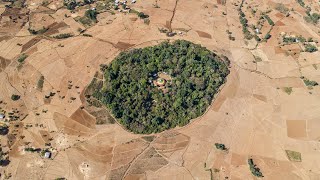
Biodiversity
[edit | edit source]- Ethiopian Wolf, conservation programme, added 14:49, 14 October 2022 (UTC)
Rural sustainability
[edit | edit source]News archive
[edit | edit source]- Forum Discusses Four Potential Scenarios for Ethiopia's Future, Dec 3, 2019...ezega.com
- Ethiopia 'breaks' tree-planting record to tackle climate change, Jul 29, 2019...BBC News
- Heating with coffee to prevent deforestation, Jan 5, 2017...dw.com
- With sub-Sahara Africa's largest wind farm, Ethiopia makes big push to be green super power, June 28, 2015...Mail & Guardian Africa
- Ethiopia to cut carbon emissions by two-thirds by 2030, June 11, June 28, 2015...Yahoo News
- Empowering Communities in Ethiopia, by Suzanne York, Apr 4, June 28, 2013...blog.wiser.org
- "Gibe III dam will be a disaster of cataclysmic proportions for the tribes of the Omo valley",Survival, March 23, June 28, 2010.
- Ethiopia was a particpant of the United Nations Environment Programme's Climate Neutral Network
- Ethiopia was the first African country to join the Climate Neutral Network. While the nation is not a net contributor to global greenhouse gas emissions, it has expressed its commitment to mitigating climate change.
- Ethiopia is an active supporter of UNEP's Billion Tree Campaign, contributing more trees than any other nation - over one billion - towards the global target of planting seven billion trees by the crucial UN climate change conference in December 2009. Furthermore, through Ethiopian Electric Power Corporation, the Government is distributing 5.4 million compact fluorescent lamps (CFLs) - commonly known as "energy savers" - country-wide to help consumers save money on electricity bills and reduce their carbon footprint.United Nations Environment Programme, June 5, 2009.
About Ethiopia
[edit | edit source]
Ethiopia, officially the Federal Democratic Republic of Ethiopia (FDRE), is a landlocked country located in the Horn of Africa region of East Africa. It shares borders with Eritrea to the north, Djibouti to the northeast, Somalia to the southeast, Kenya to the south, South Sudan to the west, and Sudan to the northwest. Ethiopia covers a land area of 1,104,300 km2 (426,400 sq mi). As of 2026, it has around 138 million inhabitants, making it the 10th-most populous country in the world and 2nd most populous country in Africa. The national capital and largest city, Addis Ababa, lies several kilometres west of the East African Rift that splits the country into the African and Somali tectonic plates.
Environmental issues
As in many neighboring countries, most environmental issues in Ethiopia relate to deforestation and endangered species.
Ethiopia had a 2018 Forest Landscape Integrity Index mean score of 7.16/10, ranking it 50th globally out of 172 countries.
According to the United Nations, Ethiopia loses 1.4 million hectares of forest annually, and has one of the highest deforestation rates in the world. The main causes of deforestation in Ethiopia are shifting agriculture, livestock production and fuel in drier areas.
Development challenges
In the 1970s and 1980s, Ethiopia experienced civil war and communist purges which hindered its economy but it has since recovered and, as of 2010, has the largest economy by GDP in East Africa. However, it remains one of the world's poorest countries, facing poverty, hunger, corruption, weak infrastructure, poor respect for human rights, and limited access to health and education, with a literacy rate of only 49%, ranking it in the worst quartile on the Human Development Index. W
Rural and urban life
Migration to urban areas is usually motivated by the hope of better lives. In peasant associations, daily life is a struggle to survive. About 16% of the population in Ethiopia lives on less than one dollar per day (2008). Only 65% of rural households in Ethiopia consume the World Health Organization's (WHO's) minimum standard of food per day (2,200 kcal), with 42% of children under five years old being underweight.
Most poor families (75%) share their sleeping quarters with livestock, and 40% of children sleep on the floor, where nighttime temperatures average 5 degrees Celsius in the cold season. The average family size is six or seven, living in a 30 square metre mud and thatch hut, with less than two hectares of land to cultivate.
The peasant associations face a cycle of poverty. Since the landholdings are so small, farmers cannot allow the land to lie fallow, which reduces soil fertility. This land degradation reduces the production of fodder for livestock, which causes low milk yields. Since the community burns livestock manure as fuel, rather than plowing the nutrients back into the land, the crop production is reduced. The low productivity of agriculture leads to inadequate incomes for farmers, hunger, malnutrition and disease. These unhealthy farmers have difficulty working the land and the productivity drops further.
Although conditions are drastically better in cities, all of Ethiopia suffers from poverty and poor sanitation. However, poverty in Ethiopia fell from 44% to 29.6% during 2000–2011, according to the World Bank. In the capital city of Addis Ababa, 55% of the population used to live in slums. However, a construction boom in both the private and the public sector has led to a dramatic improvement in living standards in major cities, particularly in Addis Ababa. Notably, government-built condominium housing complexes have sprung up throughout the city, benefiting close to 600,000 individuals. Sanitation is the most pressing need in the city, with most of the population lacking access to waste treatment facilities. This contributes to the spread of illness through unhealthy water.
Despite the urban living conditions, residents of Addis Ababa are more financially secure than those living in peasant associations, owing to their increased educational and economic opportunities. Unlike rural children, 69% of urban children are enrolled in primary school, and 35% are eligible to attend secondary school. Addis Ababa has its own university as well as its own secondary schools. The literacy rate in Addis Ababa is 82% as of 2008.
Many NGOs are working to solve this problem; however, most are far apart, uncoordinated, and working in isolation. The Sub-Saharan Africa NGO Consortium is attempting to coordinate efforts.
| Authors | Phil Green |
|---|---|
| License | CC-BY-SA-3.0 |
| Cite as | Phil Green (2014–2026). "Community action/Ethiopia". Appropedia. Retrieved October 21, 2026. |