


Community action/Bolivia

The aim of this page is to recognise, celebrate and encourage the self-empowerment of community agency networks (CANs) and community groups' activism for climate, environment and many other sustainability topics across Bolivia.
News
[edit | edit source] Bolivia Indigenous communities, local gov’ts help protect nearly 1 million hectares, news.mongabay.com (Feb 06, 2026)
 - Ranching to boost grasslands conservation in Bolivia’s flooded savannas, news.mongabay.com (Nov 29, 2024)
- This is how Latin America tries to turn its youth into young homeowners, globalvoices.org (Mar 01, 2024)
- Trash and dignity: The rise of inclusive recycling projects in Latin America, globalvoices.org (Jun 12, 2026)
- Argentina’s co-operativas escolares: A case study in co-op education, thenews.coop (May 12, 2026) — In 1946, national legislation formally established the teaching of co-operativism and the creation of school co-operatives
- Across South America, canopy bridges evolve as a lifeline for tree-dwelling wildlife, news.mongabay.com (Mar 04, 2026)
- Hunter Valley community group wins landmark high court climate change case over coalmine, theguardian.com (Oct 07, 2026) — Ruling on Mount Pleasant coalmine shows ‘we cannot continue to dig up coal … and pretend the consequences have nothing to do with us’, group says
- Citizens need to power Europe's future, demnext.substack.com (Oct 02, 2026) — The EU can enable new democratic institutions: in European countries; with a European Citizens’ Assembly as a 4th branch of government, and by legally enforcing the Global Citizens’ Assembly on AI, Claudia Chwalisz and Another Democratic Future
- Fifty Billion Seedlings: Can Ethiopia Replant Its Ravaged Forests?, e360.yale.edu (Oct 01, 2026)
International events
[edit | edit source]Global or International events
 Oct 01, 2026 (Thu) — World Vegetarian Day, Oct 1 each year, bringing awareness to the ethical, environmental, health, and humanitarian benefits of a vegetarian lifestyle, worldvegetarianday.navs-online.org
- Oct 02, 2026 (Fri) — International Day of Non-Violence, observed each year on 2 October, the birthday of Mahatma Gandhi, un.org
- Oct 07, 2026 (Wed) — World Day for Decent Work, October 7 is the World Day for Decent Work, ituc-csi.org
- Oct 10, 2026 (Sat) — World Mental Health Day, Oct 10, annually, wmhdofficial.com
- Oct 10, 2026 (Sat) — World Homeless Day, Oct 10 each year, drawing attention to homeless people’s needs locally and provide opportunities for the community to get involved in responding to homelessness, worldhomelessday.org
- Oct 10, 2026 (Sat) — World Migratory Bird Day, worldmigratorybirdday.org
- Oct 13, 2026 (Tue) — International Day for Disaster Risk Reduction, Oct 13, annually, promoting a global culture of natural disaster reduction, including prevention, mitigation, and preparedness, un.org
- Oct 16, 2026 (Fri) — World Food Day, celebrated every year around the world on 16 October, often with a focus on food security, fao.org
- Oct 17, 2026 (Sat) — International Day for the Eradication of Poverty, Oct 17 each year, honouring victims of poverty, hunger, violence and fear, with participation by the poorest of people an important aspect of the observance of the Day, un.org
- Oct 17, 2026 (Sat) — International Repair Day, annual celebration for everyone who makes repair happen in their communities around the world. "Repair for Everyone"., openrepair.org
2021-2030, UN Decade on Ecosystem Restoration, International community action events
Each week 3 different short videos from across the world.

Cycling activism, Food activism, Community climate action Scotland / ...This week's featured UK videos / ... read more about Cosmolocalism
Bolivia video
[edit | edit source]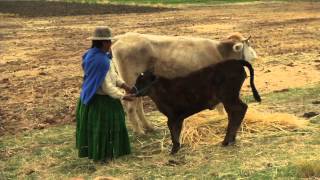
Networks, sustainability initiatives and community involvement
[edit | edit source]- Neighbourhood initiatives across La Paz
Water activism
[edit | edit source]Sustaining water supplies
Deforestation in upper river basins has caused environmental problems, including soil erosion and declining water quality. An innovative project to try and remedy this situation involves landholders in upstream areas being paid by downstream water users to conserve forests. The landholders receive $20 to conserve the trees, avoid polluting livestock practices, and enhance the biodiversity and forest carbon on their land. They receive $30, which purchases a beehive, to compensate for conservation for two hectares of water-sustaining forest for five years. Honey revenue per hectare of forest is $5 per year, so within five years, the landholder has sold $50 of honey. The project is being conducted by Fundación Natura Bolivia and Rare Conservation, with support from the Climate & Development Knowledge Network. W
How a water war in Bolivia led to the reversal of privatization
In Cochabamba, Bolivia, the lack of water has caused conflicts for decades. In 1999, Cochabamba's public water supplier, SEMAPA, was leased to the international consortium Aguas del Tunari. The major shareholder of the consortium was the multinational company Bechtel. In the course of the privatization procedures, independent water and irrigation systems and autonomous water services were threatened with expropriation. Water prices rose steeply as a result. In response, several civil society groups formed the "Coordinadora de Defensa del Agua y de la Vida" (Coalition for the Defense of Water and Life). Protests against these policies were fierce, lasted several months, and raised the issue to national and international levels.
Eventually, Aguas del Tunari was expelled. Control of SEMAPA was transferred to representatives from the municipality, the trade union, and the Coordinadora (though these arrangements have subsequently changed). The statutes of the hybrid company were rewritten in a challenging participatory process, but SEMAPA is still known for its lack of efficiency and transparency. Moverover, the state is currently trying to extend its sphere of control into the water sector. However, the so-called Cochabamba Water War contributed to major changes in Bolivia's water sector, the respective laws, the establishment of a national Ministry of the Environment and Water, and of the country as a whole.
Key points of Bolivian policy reforms sparked by the Cochabamba Water War:
- In 2000, the pro-privatization Law 2029 was canceled and rewritten as Drinking Water and Sanitation Services Law (2066). It was the result of negotiations between social movements and the state during the water wars. It recognized marginalized communities' rights to use water and differentiated them from capitalist activities, which had to be authorized and were subject to fees.
- In 2004, similar principles were applied to the irrigation sector (Law 2878), which recognized decentralized irrigation governance. Both laws support indigenous people and farm laborers from being dispossessed of water. At the same time, they contributed to the formalization of water management, which tends to favor commercial management over community management.
- The Bolivian constitution was changed in 2009. Prior to 2009, water supply concessions could be granted for up to 40 years. The new constitution considers water a basic right of life and bans the typical methods of privatization and leasing of water services to for-profit entities.
Sustainability and public participation are declared to be the responsibility of the state as well as universal access to water. To which extent these intentions will actually be reflected in reality remains to be seen, however. The responsibilities coming with this basic-rights approach demand action by the state and challenge community management at the same time...Shareable, Oct 17, 2018.
Biodiversity
[edit | edit source]Bolivia, with an enormous variety of organisms and ecosystems, is part of the "Like-Minded Megadiverse Countries".
Bolivia's variable altitudes, ranging from 90–6,542 metres (295–21,463 ft) above sea level, allow for a vast biologic diversity. The territory of Bolivia comprises four types of biomes, 32 ecological regions, and 199 ecosystems. Within this geographic area there are several natural parks and reserves such as the Noel Kempff Mercado National Park, the Madidi National Park, the Tunari National Park, the Eduardo Avaroa Andean Fauna National Reserve, and the Kaa-Iya del Gran Chaco National Park and Integrated Management Natural Area, among others.
Bolivia has gained global attention for its 'Law of the Rights of Mother Earth', which accords nature the same rights as humans. W
- Armonía (Harmony) Bolivia, "...implementing effective conservation strategies, coordinating with local communities to protect the country’s wildlife and habitats in programs throughout the country. As the name Armonía (Harmony) implies, we strive to create balance between nature and people." added 12:59, 5 December 2024 (UTC)
- Comunidad Inti Wara Yassi is a non-governmental organization dedicated to environmental education and the care of sick, mistreated and abandoned wildlife. Based and operated in Bolivia, it is the country's largest single destination for confiscated wildlife, though due to space limitations they are unable to accept all. The organization also carries out environmental activism and educational roles, focusing on animal rights and conservation. The name comprises words from three indigenous languages meaning sun, star and moon in the Quechua, Aymara and Chiriguano Guaraní languages.
- The organization is supported by international volunteers that stay for a minimum of two weeks. Volunteers care for animals, clean and build cages and prepare food. W
Environment quality
[edit | edit source]Water: Agua Sustentable, [es]
Towards sustainable economies
[edit | edit source]La Casa de Los Ningunos on facebook
Public interest law resources
[edit | edit source]Law of the Rights of Mother Earth (Spanish: Ley de Derechos de la Madre Tierra) is a Bolivian law (Law 071 of the Plurinational State), that was passed by Bolivia's Plurinational Legislative Assembly in December 2010. This 10 article law is derived from the first part of a longer draft bill, drafted and released by the Pact of Unity by November 2010. The full bill remains on the country's legislative agenda.
The law defines Mother Earth as "a collective subject of public interest," and declares both Mother Earth and life-systems (which combine human communities and ecosytems) as titleholders of inherent rights specified in the law. The short law proclaims the creation of the Defensoría de la Madre Tierra a counterpart to the human rights ombudsman office known as the Defensoría del Pueblo, but leaves its structuring and creation to future legislation. W
News archive
[edit | edit source]Pollution levels in Bolivia plummet on nationwide car-free day, Sep 3, 2017...The Guardian
- Bolivia To Be Completely Food Independent In 2020 By Investing In Small Farmers, 2017...ecosnippets.com (date not found)
- How One Urban Activist Community in Bolivia Thrives on 'Abundance For Everybody', Jul 5, 2016...resilience.org
- Bolivia Gives Legal Rights To The Earth, Ocotber 10, 2014...earthweareone.com
Bolivia Celebrates First Annual "Day of the Pedestrian",treehugger.com, September 5, 2011.
- Bolivia's Law for Mother Earth could spark a new world of ecological justice, Polly Higgins, positivenews.org.uk, June 12, 2011.
- Bolivia submits Cochabamba Conference outcome to UNFCCC, pwccc.wordpress.com, April 30, 2010. The Bolivian submission incorporates the main content of a "Peoples Agreement" and a draft proposal for a "Universal Declaration of Mother Earth's Rights" that were adopted at the Cochabamba Conference.
- The concept of "Living Well" - a Bolivian viewpoint, Bolivia delegation at the UN, Energy Bulletin, April 20, 2010.
- Bolivia: deforestation rate is 20 times the global average. Global Voices Online, December 19, 2009.
- Bolivia: water shortages due to melting glaciers. The disappearance of glaciers in the Bolivian Andes Mountains is causing a concern because the future water shortages will affect the availability of suitable drinking water for a vulnerable migrant population. globalvoicesonline.org, November 2, 2009.
About Bolivia
[edit | edit source]Environmental issues
A land-use survey conducted in 2001 found a 6 percent loss of primary forest over the previous two decades. Even with this encroaching desertification, however, forests still cover more than 50 percent of Bolivian territory. Bolivia's history of slash-and-burn agriculture, overgrazing, and industrial pollution has caused significant concern among environmentalists. Soil erosion, made worse by seasonal flooding, and contaminated water supplies are Bolivia's most pressing environmental problems. The National Service for Protected Areas, established in 1998, currently manages 21 protected areas. W

Bolivia, officially the Plurinational State of Bolivia, is a landlocked country located in central South America. Its geography primarily consists of an Andean region to the west and tropical lowlands to the east and north. The country has a diverse environment, including the vast Amazonian plain, the Gran Chaco, temperate valleys, the high-altitude Altiplano plateau, snow-capped peaks, and mountains, encompassing a wide range of climates and biomes across its regions and cities. It includes part of the Pantanal, the largest tropical wetland in the world, along its eastern border. Bolivia is bordered by Brazil to the north and east, Paraguay to the southeast, Argentina to the south, Chile to the southwest, and Peru to the west. The seat of government is La Paz, which contains the executive, legislative, and electoral branches of government, while the constitutional capital is Sucre, the seat of the judiciary. While most population and urban centers lie in the Andean region, the largest city and principal industrial center is Santa Cruz de la Sierra, located in the eastern tropical lowlands.
Bolivia is a constitutionally unitary state divided into nine departments. Its geographic Andean-lowland divide is matched by economic and cultural differences such as those associated with the camba and colla demonyms. One-third of the country is within the Andean mountain range. With an area of 1,098,581 square kilometers (424,164 sq mi), Bolivia is the fifth-largest country in South America and, alongside Paraguay, is one of two landlocked countries in the Americas. It is the largest landlocked country in the Southern Hemisphere; it has inland ports accessing the Atlantic Ocean through two river systems: Acre-Purus-Amazon and Paraguay-Paraná. Bolivia had a population of 11.4 million as of the latest census in 2024. It is multiethnic, including Amerindians, Mestizos, and the descendants of Europeans and Africans. Spanish is the official and predominant language, although 36 indigenous languages also have official status, of which the most commonly spoken are Guaraní, Aymara, and Quechua.
Centuries prior to Spanish colonization, the region formed part of the Tiwanaku polity, which collapsed around 1000 AD. The Colla–Inca War of the 1440s marked the beginning of Inca rule in western Bolivia. The eastern and northern lowlands were inhabited by independent non-Andean Amazonian and Guaraní tribes. Spanish conquistadores arriving from Cusco, Peru and Asunción, Paraguay, forcibly took control of the region in the 16th century.
| Authors | Phil Green |
|---|---|
| License | CC-BY-SA-3.0 |
| Cite as | Phil Green (2007–2026). "Community action/Bolivia". Appropedia. Retrieved October 19, 2026. |