


Community action/Norway

The aim of this page is to recognise, celebrate and encourage the self-empowerment of community agency networks (CANs) and community groups' activism for climate, environment and many other sustainability topics across Norway.
News
[edit | edit source] Nordic countries hit by ‘truly unprecedented’ heatwave, theguardian.com (Aug 02, 2025) — weather station in the Norwegian part of the Arctic Circle records temperatures above 30C (86F) on 13 days in July
- Urban swimming: six European cities that revived river bathing, positive.news (Jul 17, 2025)
- Citizens' ideas on sustainable consumption, buergerrat.de/en (Feb 16, 2025)
- Citizens need to power Europe's future, demnext.substack.com (Oct 02, 2026) — The EU can enable new democratic institutions: in European countries; with a European Citizens’ Assembly as a 4th branch of government, and by legally enforcing the Global Citizens’ Assembly on AI, Claudia Chwalisz and Another Democratic Future
- Reclaiming the streets: the architects clawing back Europe’s car-centric spaces, theguardian.com (Sep 09, 2026) — The European Prize for Urban Public Space’s shortlist highlights projects helping people cope with climate crisis
- We’re the mayors of Paris, Milan and Phoenix. The heat crisis has us all facing the same question, Emmanuel Grégoire, Giuseppe Sala and Kate Gallego, theguardian.com (Sep 07, 2026) — Our three cities are learning from each other about how to protect residents. These climate policies are also public health measures
- Throw the best party!, demnext.substack.com (Oct 22, 2026) — Programme Coordinator Hannah Terry on finding hope with 30 young democracy builders in Croatia
- How a civic tech platform is helping women in Serbia get home safely, globalvoices.org (Oct 20, 2026) — ‘What can we change in the spaces where people live, work, study and spend their free time?’, Daria Dergacheva
- Giving £2 a day to people in the Amazon helps protect rainforest, pilot project finds, theguardian.com (Oct 20, 2026)
Video
[edit | edit source]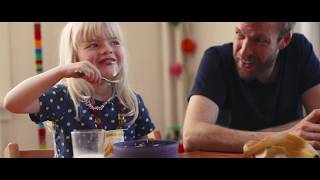

Food activism
[edit | edit source]Fairtrade settlements in Norway - Farmers Market Norway
Sharing
[edit | edit source]
Dugnad (IPA: [ˈdʉːgnɑd]) is a Norwegian term for voluntary work done together with other people. It is a core phenomenon for Norwegians, and the word was voted as the Norwegian word of the year 2004 in the TV programme Typisk norsk ('Typically Norwegian'). Participation in a dugnad is often followed by a common meal, served by the host, or consisting of various dishes brought by the participants, thus the meal is also a dugnad.
In urban areas, a dugnad often consists of outdoor spring cleaning and gardening in housing co-operatives. Dugnader (plural) are also a phenomenon in kindergartens and elementary schools to make the grounds nice, clean and safe and to do paintwork or other types of maintenance. Dugnader occur more widely in remote and rural areas. Neighbours sometimes participate during house or garage building, and organizations (such as kindergartens or non-profit organizations) may arrange annual dugnader.
The Norwegian word dugnadsånd means the spirit of being willing to work together for a better community. Many Norwegians will describe this as typical of Norway.
The word dugnad was used to unite the people of Norway to cooperate and shut down public activities to fight the pandemic of 2020.
In 2024, 61 % of the Norwegian population took part in some form of organized voluntary work, which is slightly lower than before the Covid pandemic.
Climate action
[edit | edit source]Public perception and activism
There seems to be two stories, one about Norway wanting to be a world leader in global climate change and environmental issues whilst the other tends to favour Norway's oil and gas reserves, claiming that its necessary to extract more oil and gas because of high demand and in order to help the poor who in some parts of the world have no access to energy. This duality therefore sends a very polarised message to the Norwegian public and may be part of the reason why there is a lack of engagement or enthusiasm currently observed around the issue of climate change.
In August 2025, about 200 activists, including Sweden's Greta Thunberg, organized a blockade of the biggest oil refinery in Norway, in Bergen. According to Extinction Rebellion the climate protest is “the largest action in Norwegian history.” Greta Thunberg described the reasons for the non-violent protest as follows: “We are here because there is no future in oil. Fossil fuels lead to death and destruction.” As she added, with so many ongoing crises, it is crucial to ensure "the climate crisis does not disappear into the crowd.” Extinction Rebellion Norway sponsored additional protests later in the week. A representative of Norway's Conservative Party objected to the blockade, arguing it thwarts military efforts against Russian President Vladimir Putin's regime.
Climate change in Norway
All regions and seasons of Norway are expected to become warmer and wetter due to climate change.
On a per-capita basis, Norway is the world's largest producer, and exporter, of oil and natural gas outside the Middle East. In 2016, 56 new licenses for oil exploration near the Lofoten Islands were issued. However, 98% of Norway's electricity demand is supplied by renewable sources, mostly from hydroelectric power, generated using Norway's extensive freshwater reserves. Emissions are also generated through transportation, although Norway is a world leader in electric vehicles.
Warmer temperatures in Norway are causing permafrost and glaciers to retreat, and leading to shifts in precipitation patterns. Climate change is particularly impacting Norway's Arctic region. Biodiversity and forested areas are experiencing shifts due to the phenomenon, with significant implications for the agriculture and economy of the country. Indigenous Sámi people's practices are being impacted by climate change.
Norway's government have introduced several social and economic policies towards climate change mitigation, including through carbon capture and storage. Norway wants to achieve carbon neutrality by 2030, partly by investing in projects with emissions reduction abroad. It wants to achieve zero emission in the country by 2050. In 2020, Norway pledged to achieve a 50% - 55% reduction in domestic emissions from the level of 1990 by 2030.
About Norway
[edit | edit source]Norway, officially the Kingdom of Norway, is a Nordic country comprising the western and northernmost parts of the Scandinavian Peninsula in Northern Europe, the remote Arctic island Jan Mayen and the archipelago Svalbard. Bouvet Island, located in the Subantarctic, is a dependency, and not a part of the Kingdom; Norway also claims the Antarctic territories of Peter I Island and Queen Maud Land. Norway has a population of approximately 5.6 million, and a total area of 385,207 square kilometres (148,729 sq mi). Its capital and largest city is Oslo. The country shares a long eastern border with Sweden, and is bordered by Finland and Russia to the northeast. Norway has an extensive coastline facing the Skagerrak strait, the North Sea, the Norwegian Sea, and the Barents Sea.
The unified kingdom of Norway was established in 872 as a merger of petty kingdoms and has existed continuously for over a millennium. From 1537 to 1814, Norway was part of Denmark–Norway, and from 1814 to 1905, it was in a personal union with Sweden. Norway was neutral during the First World War, and in the Second World War until April 1940 when it was invaded and occupied by Nazi Germany until the end of the war.
Haakon VIII of the House of Glücksburg is the king of Norway. Jonas Gahr Støre has been prime minister of Norway since 2021. As a unitary state with a constitutional monarchy, Norway divides state power between the parliament, the cabinet, and the judiciary, as determined by the 1814 constitution. Norway has both administrative and political subdivisions on two levels: counties and municipalities. The Sámi people have a certain amount of self-determination and influence over traditional territories through the Sámi Parliament and the Finnmark Act. Norway maintains close ties with the European Union and with the United States. Norway is a founding member of the United Nations, NATO, the European Free Trade Association, the Council of Europe, the Antarctic Treaty, and the Nordic Council; a member of the European Economic Area, the WTO, and the OECD; and a part of the Schengen Area. The Norwegian dialects form a continuum of mutual intelligibility with Danish and Swedish dialects.
External links
- Norwegian environmentalists (category)
- Cittaslow Norway
| Authors | Phil Green |
|---|---|
| License | CC-BY-SA-3.0 |
| Cite as | Phil Green (2014–2026). "Community action/Norway". Appropedia. Retrieved October 24, 2026. |