


Community action/Chile

The aim of this page is to recognise, celebrate and encourage the self-empowerment of community agency networks (CANs) and community groups' activism for climate, environment and many other sustainability topics across Chile.
News
[edit | edit source] Climate finance and care services: why public investment is necessary, theconversation.com (Jan 29, 2025) — Quezon City in Manila, the Philippines, Renca in Santiago, Chile and Barcelona are cities that are beginning to consider how care systems can be incorporated in their climate adaptation response.
- ‘We are in an era of megafires’: new tactics demanded as wildfires intensify across South America, theguardian.com (Feb 13, 2024)
- In Chile, huge wildfires have killed at least 131 people – but one village was almost untouched, theconversation.com (Feb 08, 2024)
- Trash and dignity: The rise of inclusive recycling projects in Latin America, globalvoices.org (Jun 12, 2026)
- Argentina’s co-operativas escolares: A case study in co-op education, thenews.coop (May 12, 2026) — In 1946, national legislation formally established the teaching of co-operativism and the creation of school co-operatives
- Across South America, canopy bridges evolve as a lifeline for tree-dwelling wildlife, news.mongabay.com (Mar 04, 2026)
- Hunter Valley community group wins landmark high court climate change case over coalmine, theguardian.com (Oct 07, 2026) — Ruling on Mount Pleasant coalmine shows ‘we cannot continue to dig up coal … and pretend the consequences have nothing to do with us’, group says
- Citizens need to power Europe's future, demnext.substack.com (Oct 02, 2026) — The EU can enable new democratic institutions: in European countries; with a European Citizens’ Assembly as a 4th branch of government, and by legally enforcing the Global Citizens’ Assembly on AI, Claudia Chwalisz and Another Democratic Future
- Fifty Billion Seedlings: Can Ethiopia Replant Its Ravaged Forests?, e360.yale.edu (Oct 01, 2026)
International events
[edit | edit source]Global or International events
 Oct 01, 2026 (Thu) — World Vegetarian Day, Oct 1 each year, bringing awareness to the ethical, environmental, health, and humanitarian benefits of a vegetarian lifestyle, worldvegetarianday.navs-online.org
- Oct 02, 2026 (Fri) — International Day of Non-Violence, observed each year on 2 October, the birthday of Mahatma Gandhi, un.org
- Oct 07, 2026 (Wed) — World Day for Decent Work, October 7 is the World Day for Decent Work, ituc-csi.org
- Oct 10, 2026 (Sat) — World Mental Health Day, Oct 10, annually, wmhdofficial.com
- Oct 10, 2026 (Sat) — World Homeless Day, Oct 10 each year, drawing attention to homeless people’s needs locally and provide opportunities for the community to get involved in responding to homelessness, worldhomelessday.org
- Oct 10, 2026 (Sat) — World Migratory Bird Day, worldmigratorybirdday.org
- Oct 13, 2026 (Tue) — International Day for Disaster Risk Reduction, Oct 13, annually, promoting a global culture of natural disaster reduction, including prevention, mitigation, and preparedness, un.org
- Oct 16, 2026 (Fri) — World Food Day, celebrated every year around the world on 16 October, often with a focus on food security, fao.org
- Oct 17, 2026 (Sat) — International Day for the Eradication of Poverty, Oct 17 each year, honouring victims of poverty, hunger, violence and fear, with participation by the poorest of people an important aspect of the observance of the Day, un.org
- Oct 17, 2026 (Sat) — International Repair Day, annual celebration for everyone who makes repair happen in their communities around the world. "Repair for Everyone"., openrepair.org
2021-2030, UN Decade on Ecosystem Restoration, International community action events
Each week 3 different short videos from across the world.

Cycling activism, Food activism, Community climate action Scotland / ...This week's featured UK videos / ... read more about Cosmolocalism
Chile video
[edit | edit source]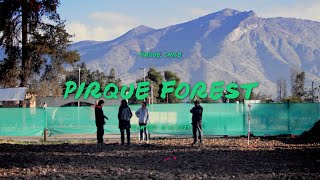

Networks and sustainability initiatives
[edit | edit source]- Neighbourhood initiatives across Santiago
Indigenous peoples
[edit | edit source]
Indigenous peoples in Chile (Spanish: Chilenos indígenas) or Native Chileans (Spanish: Chilenos nativos), are Chileans who have predominant or total Amerindian or Rapa Nui ancestry. According to the 2024 census, 2,105,863 people declare having Indigenous origins, representing 11.5% of the total population. Most Chileans are of partially Indigenous descent; however, Indigenous identification and its legal ramifications are typically reserved to those who self-identify with and are accepted within one or more Indigenous groups.
Human presence in Chilean territory can be documented from at least 14,500 BCE, based on archaeological remains found at Monte Verde in the southern part of the country. From that time onward, diverse societies inhabited the territory during the pre-Columbian period, and it is estimated that more than one million people lived in the area prior to the Spanish conquest of Chile.
European colonization had a devastating impact on the Indigenous population, which experienced a drastic decline due to introduced diseases, wars, forced labor, and harsh living conditions. In addition, many survivors were compelled to abandon their cultures and assimilate into the dominant society. Some peoples disappeared entirely.
From the 19th century onward, the Chilean state implemented policies that deepened Indigenous dispossession, such as the Occupation of Araucanía and the creation of Indigenous reservations (reducciones), which severely restricted access to ancestral lands. The Informe de Verdad Histórica y Nuevo Trato (2003) acknowledged this historical debt and recommended reparative measures, including the recognition of collective rights over land and natural resources, as well as Indigenous political participation.
Despite this historical background, Indigenous peoples maintain a significant presence in Chile. Since 1993, the state has officially recognized 11 Indigenous peoples. The Mapuche, with their traditional lands in south-central Chile, account for approximately 80% of the total Indigenous population. There are also small populations of Aymara, Quechua, Atacameño, Qulla (Kolla), Diaguita, Yahgan (Yámana), Rapa Nui and Kawésqar (Alacalufe) people in other parts of the country, as well as many other groups such as Caucahue, Chango, Picunche, Chono, Tehuelche, Cunco and Selkʼnam.
Indigenous peoples in Chile face various forms of racial and social discrimination, as well as higher rates of poverty, unemployment, and illiteracy compared with the rest of the population. Their demands include constitutional recognition, respect for territorial rights, and progress toward forms of autonomy and self-determination.
Urban sustainability
[edit | edit source]Biodiversity
[edit | edit source]
The wildlife of Chile is very diverse because of the country's slender and elongated shape, which spans a wide range of latitude, and altitude, ranging from the windswept coastline of the Pacific coast on the west to northern Andes to the sub-Antarctic, high Andes mountains in the east. There are many distinct ecosystems.
Chile, often called "the spine of South America", has 100 protected areas covering a total area of 14.5 million hectares (20% of the country) in 36 national parks, 49 national reserves, and 15 national monuments. In the southern part of Chile, 50% of the flora (part of temperate rain forest called the Valdivian forests) is endemic, which is a unique feature in the world. Lapageria rosea (Chilean bellflower) is the national flower, the Andean condor, (Vultur gryphus) (NT) is the national bird, and the South Andean huemul (Hippocamelus bisulcus), is the national animal of Chile. Legally, wildlife in Chile is res nullius (ownerless property).
News archive
[edit | edit source]- The Beyond Oil and Gas Alliance now has 10 core members (Costa Rica, Denmark, France, Greenland, Ireland, Portugal, Quebec, Sweden, Wales, and Washington State), two associate members (California and New Zealand), and five "friends of BOGA" (Chile, Fiji, Finland, Italy, and Luxembourg)., beyondoilandgasalliance.org (Nov 16, 2022) — BOGA is an international alliance of governments and stakeholders working together to facilitate the managed phase-out of oil and gas production, led by the governments of Denmark and Costa Rica
- ‘One of the most progressive and environmentally conscious legal texts on the planet’: Chile’s proposed constitution and its lessons for Australia, The Conversation (Aug 30, 2022)
- How Eco Fibra is tackling the fashion dumpster in the Chilean Desert, Shareable (May 11, 2022)
Chile creates five national parks over 10m acres in historic act of conservation, Jan 29, 2018...The Guardian
- Chile's Energy Transformation Is Powered by Wind, Sun and Volcanoes, Aug 12, 2017...nytimes.com
- Wind power plant in Atacama Desert fills Chile's clean-energy sails, Jul 5, 2016...reuters.com
- Chile Rejects Patagonian Dam Project, Environmentalists Hail Victory, June 16, 2014...upsidedownworld.org
- Okuplaza – Pavement to Plaza in Santiago, October 30, 2013...opencityprojects.com
- Campaigns: Isla Riesco Chile (es), save Riesco Island from destruction,globalvoicesonline.org, Written by Paulina Aguilera Muñoz, Translated by Negarra Akili Kudumu, February 21, 2011.
Desertification
In Chile, where 62% of the national territory is already affected by desertification, blogger Alfredo Erlwein expressed concern on the blog El Ciudadano (The Citizen) on how little knowledge citizens have about desertification.
Efectivamente la desertificación es el problema ambiental más grave de Chile y muy poco conocido. Existen grandes zonas, como en la costa de la octava región, donde la erosión severa supera el 50% de la superficie: esto es que literalmente más de la mitad de los suelos se ha perdido por completo. En esas zonas se encuentran cárcavas de más de 50 metros de profundidad. Una tasa normal de formación de suelo puede ser de 0.2 cm por año, lo que evidencia la gravedad del asunto.
Desertification is indeed the biggest but least known environmental problem in Chile. There are vast areas, such as the Eight Region's coast, where the severe erosion exceeds 50 percent of the surface: this means that more than half of the land has been lost, literally. In those areas there are grooves of over 50 meters of depth. A normal range of land formation is of about 0.2. centimetres per year, which proves the severity of the matter, Global Voices Online November 4
About Chile
[edit | edit source]Chile, officially the Republic of Chile, is a country in the Southern Cone of southwestern South America. It is the southernmost country in the world and the closest to Antarctica, extending along a narrow strip of land between the Andes Mountains and the Pacific Ocean. According to the 2024 census, Chile had an enumerated population of 18.5 million. The country covers a territorial area of 756,102 square kilometers (291,933 sq mi), sharing borders with Peru to the north, Bolivia to the northeast, Argentina to the east, and the Drake Passage to the south. It also administers several Pacific islands, including Juan Fernández, Isla Salas y Gómez, Desventuradas, and Easter Island, and claims about 1,250,000 square kilometers (480,000 sq mi) of Antarctica as the Chilean Antarctic Territory. The capital and largest city is Santiago, and the official and national language is Spanish.
Spain conquered and colonized the region in the mid-16th century, replacing Inca rule; however, they failed to conquer the autonomous tribal Mapuche people who inhabited what is now south-central Chile. Chile emerged as a relatively stable authoritarian republic in the 1830s after its 1818 declaration of independence from Spain. During the 19th century, Chile experienced significant economic and territorial growth, putting an end to Mapuche resistance in the 1880s and gaining its current northern territory in the War of the Pacific (1879–83) by defeating Peru and Bolivia.
| Authors | Phil Green |
|---|---|
| License | CC-BY-SA-3.0 |
| Cite as | Phil Green (2014–2026). "Community action/Chile". Appropedia. Retrieved October 20, 2026. |