


Swetman Makerspace fiberworks station

| Authors | Anthony Joaquin Lachman Itzel Ramirez Amelia Reeves Rafaella Sucre |
|---|---|
| Location | Arcata, United States |
| Status | Deployed |
| Made | Yes |
| Replicated | No |
| Uses | education, science, fabrication, design |

The Fiberworks Station is meant to create a functional sewing workstation for The Engineering Department's Swetman Makerspace at Cal Poly Humboldt. It was designed and built in Spring 2025 by engineering students enrolled in Intro to Design (Engr 205). The main motivation of this project is to solve the lack of surface area and organized storage for students or staff who use the sewing machines and materials. Our goal is to motivate Intro to Fabrication and Intro to Design students to use the sewing machines for their future projects as engineers.
Background
[edit | edit source]The client overseeing and guiding the Fiberworks Station build out is Matt Kerwin on behalf of the Swetman Makerspace at Cal Poly Humboldt. The goal of this project was to create an organized station for students to use the Singer sewing machine and embroidery machine. Before this project, the only work area for sewing projects consisted of a small industrial sewing machine table, as well as the makerspace's only table designated for eating, homework, and miscellaneous tasks. The aim of the project is to create a better designated space for sewing projects that has storage and surface area required for. Although the makerspace is currently available only to Intro to Fabrication students, Intro to Design students, and Engineering staff, the Engineering Department at CPH hopes that the space will be open to any and all students or staff with the help of funding and the engineering students that contribute to the ongoing development.
Problem statement
[edit | edit source]The objective of this project is to design, build, and test a functional sewing workstation that has ample surface area for working on sewing projects, sufficient and organized storage, all while having the ability to be stowed away or compacted.
Criteria
[edit | edit source]The criteria of the Fiber Works Station Build Out outlines the overall goals and standards of the station, carefully thought through and prioritized (descending from top to bottom) with the guidance of the client's input. The constraints are non-negotiable, quantifiable variables that will ensure the criteria is met. The table below contains the weighted criteria for the project and the constraints that go along with them.
Table 1: Fiberworks Station criteria, criteria description, prioritized (A.A.I.R. Tech 2025)
| Criteria | Description | Weight (1-10) |
|---|---|---|
| Safety | The station will be safe for all users. No potential to fall over and hurt others in case of earthquakes or other incidents. | 10 |
| Surface Area | Surface area is proficient enough for large sewing projects. | 8 |
| Ease of Use | Station is accessible for all users and can be easily navigated. | 7 |
| Cost | Cost must be under the $200 budget. | 5 |
Prototyping
[edit | edit source]We created two different prototypes of our design: a 3D model of the station in Fusion, and a cardboard model of the design to scale. Since we created the 3D model first, we were able to get an idea of the dimensions we would be working with. We were also able to use creativity to see what we could create or adapt. With the cardboard model, we got to see the design to scale and see how it would fit in the makerspace. We could see how many components, or individual pieces of material the station would be made with.
-
 Figure 1: Cardboard Prototype of Fiberworks Station (A.A.I.R. Tech 2025) This is the physical prototype that we created of the Fiberworks Station. It allowed us to see how the station would fit into the makerspace and gave us a visual representation of how much space the station would take up.
 -
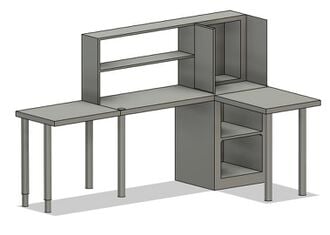 Figure 2: 3D Fusion 360 Prototype of Fiberworks Station (A.A.I.R. Tech 2025) This is a CAD prototype of the station made in Fusion 360. It depicts how the table will look with the table flaps extended.


Final product
[edit | edit source]The final product provides ample storage space for the sewing machines and surface area for projects. The design is built off of an already existing table and consists of two fold up table flaps and two cabinets. On the right side of the table there is a bottom cabinet that will house the sewing machine and embroidery machine. The door to this cabinet will be one of the fold up table flaps that folds up perpendicular to the table. Above this cabinet, there will be a smaller cabinet on top of the table that will house sewing supplies. The top of this cabinet will extend to be a shelf that runs along the length of the table for more storage. On the left side of the table another fold up table flap will fold parallel to the table for more surface area to work.
Construction
[edit | edit source]To construct the station we first figured out the dimensions everything we were building so that we knew exactly how much wood and other materials we needed. Since we were building off of an already existing table we then dismantled the already existing table and cut two of the legs to the height that we wanted (Image 1). Then, we used a table saw and a miter saw to cut all of our wooden pieces that are used for the cabinets, table flaps, shelf, and support beams to the correct sizes (Image 2 and 3). Then we worked on sanding down the wood that is used for the table flaps (Image 4) to provide a clean and smooth surface that doesn't risk snagging or ripping fabric. After that, we assembled all of the pieces, starting with the bottom cabinet.
- Construction Images
-
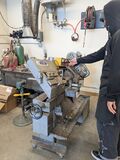 Figure 3: Metal table legs being cut. (A.A.I.R. Tech 2025)
 -
 Figure 4: Cutting a plywood board that will be used for one of the cabinets using a table saw. (A.A.I.R. Tech 2025)
 -
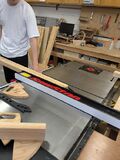 Figure 5: Cutting a piece of wood that will be used as a support beam in one of the cabinets using a table saw. (A.A.I.R. Tech 2025)
 -
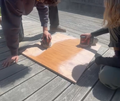 Figure 6: Sanding down a board that will be used as one of the table flaps. (A.A.I.R. Tech 2025)


Video instructions
[edit | edit source]This video showcases the process AAIR Tech used to build the Fiberworks build-out station. The end shows final results.
Bill of materials
[edit | edit source]Here is a list of items we bought to complete our project, including the itemized price of each and the total cost. We were able to obtain and repurpose recycled materials from Colin Wingfield, the Lab Manager for the Engineering Department, the Campus Center for Appropriate Technology, and the Swetman Makerspace.
Colin Wingfield
- Screws
- Hinges
- Strut Brackets
- Wood
CCAT
- Wood
Swetman Makerspace
- Plywood
Table 2: Cost analysis of hardware and materials bought to build Fiberworks Station (A.A.I.R. Tech 2025)
| Item | Amount | Cost per unit | Total |
|---|---|---|---|
| Pine wood — 2' x 4' x 10', untreated | 4 | USD 9.43 | USD 37.72 |
| Screws — Exterior wood screws, Get at Ace Hardware | 2 | USD 9.92 | USD 19.84 |
| Better Angle Flat Brush Set — 4 count brush set | 1 | USD 17.47 | USD 17.47 |
| Paint — Interior Matte Finish - 1 gal - Color: Pewter | 1 | USD 54.61 | USD 54.61 |
| Adjustable Lamp — 10x magnifying glass; Hands-free | 1 | USD 33.06 | USD 33.06 |
| Surge Protector Power Strip — 6 ft - 8 widely outlet ports - 4 usb ports - 3 side outlet extenders | 1 | USD 15.92 | USD 15.92 |
| Medium Storage Trays — 3-pack - white | 3 | USD 2.19 | USD 6.57 |
| Grand total | USD 185.19EUR 159.26 <br />GBP 135.19 <br />CAD 229.64 <br />MXN 3,861.21 <br />INR 13,861.47 <br /> | ||
Operation
[edit | edit source]
To access Singer sewing machine, embroidery machine, and embroidery loops, lift the right lower cabinet flap. Refer to the following instructions to secure the table top.

After lifting tabletop, insert leg into leg holder underneath at an angle before straightening out and locking in place, as seen in the following step.

To secure the leg in its position, straighten out the leg after inserting the leg into holder at angle, then lower the table top and leg towards the floor.

To deploy table tops, follow the previous steps in reverse.

Find top right cabinet where sewing supplies such as pins, scissors, thread, bobbins, and more are stored.
Maintenance
[edit | edit source]As long as the station is kept clean and is not intentionally broken, it is not anticipated that there will need to be much maintenance. The metal hardware such as hinges and screws will need to be checked regularly for damage and rust and will need to be replaced when necessary but this would most likely not be a common occurrence. The table below shows the estimated yearly hours that will need to be dedicated to maintenance and upkeep.
Note: This is not including the maintenance of any of the sewing machines, it is just for the table itself.
Table 3: Maintenance in hours, yearly. (A.A.I.R. Tech 2025)
| Maintenance | Time Annually (hours) |
|---|---|
| Cleaning | 7 |
| Minor Repairs | 3 |
| Total: 10 hrs |
Conclusion
[edit | edit source]Testing results
[edit | edit source]To test the effectiveness in regard to safety, ease of use, surface area and storage of the completed Fiberworks Station, we conducted multiple tests and gathered the opinions of peers and faculty. We had multiple people within the makerspace remove the sewing machines, flip up the table tops and employ the legs, and find the sewing supplies all while rating the level of ease to complete these tasks. To test the safety and integrity, participants put significant weight on the foldable tables by leaning on multiple spots. To test the accessibility, they folded up the table tops and inserted the table legs to access the sewing machines in the lower cabinet. For accessibility of the supplies, they judged it based on the organization and ability to find any given sewing supply. The results of these tests were successful, not only did everyone find it functional, but they also enjoyed its presentation.
Discussion
[edit | edit source]The testing results for the Fiberworks Station indicate a strong overall performance in key areas: safety, ease of use, surface area, and storage. Participants from the Makerspace, including both peers and faculty, were involved in hands-on evaluations, providing a range of perspectives on functionality. Ease of Use was thoroughly assessed by having users interact with the station’s modular features removing sewing machines, deploying table tops and legs, and locating supplies. Participants consistently reported that these tasks were manageable and intuitive, suggesting the design is user-friendly and supportive of a smooth workflow.
Safety and Structural Integrity were also effectively evaluated. Users applied significant weight to various parts of the foldable tables, with no reported failures or instability. This demonstrates that the station can withstand typical and even excessive use, which is critical in a collaborative or educational environment. Accessibility was tested both in terms of physical access to equipment and the organizational layout. The ability to retrieve sewing machines from lower cabinets and locate supplies quickly was a major focus. Testers found the layout logical and well structured, indicating that the design supports efficient access and minimizes user frustration.
Finally, aesthetic appeal and overall satisfaction were noted as strengths. Beyond meeting functional criteria, users also appreciated the station’s appearance and reported positive impressions, which can enhance engagement and willingness to use the space. In conclusion, the Fiberworks Station passed all major testing benchmarks, proving to be a safe, accessible, and user-friendly solution for sewing workspaces..
Lessons learned
[edit | edit source]Throughout the development and testing of the Fiberworks Station, we learned several valuable lessons. Involving users early on was incredibly helpful, their feedback gave me practical insights that we hadn’t considered during the design phase. We realized that simplicity is key, the features that worked best were the ones that were easy and intuitive to use, like folding the tabletops or accessing storage. We also learned how important durability is, especially in a shared Makerspace where furniture needs to withstand heavy, repeated use. Accessibility made a big difference too, when tools and supplies were easy to find and reach, users were more comfortable and efficient. We were also surprised by how much people appreciated the look of the station, which taught me that aesthetics play a bigger role in functionality than we initially thought. Overall, this experience showed me that real world testing and feedback are essential to creating designs that are both practical and enjoyable to use.
Next steps
[edit | edit source]Moving forward, the next steps for the Fiberworks Station include gathering long-term user feedback to identify any needed improvements in durability, accessibility, or storage. Based on that input, we hope future ENGR 205 students plan to refine the design and explore building additional stations or adapting the concept for other creative uses. WE also hope to document the process to help others recreate it and consider using more sustainable materials in future versions.
Troubleshooting
[edit | edit source]| Problem | Suggestion |
|---|---|
| Broken or damaged hardware | Contact Matt Kerwin to find replacement hardware. |
| Paint chipping | Make sure to use cutting mats; contact Matt Kerwin to access paint for touch-ups. |
| Unstable or unleveled surfaces | Check metal legs; the plastic feet can be twisted up or down to adjust height. If this doesn't resolve the problem, contact Matt Kerwin. |
Team
[edit | edit source]A.A.I.R Tech Members:
- Anthony Joaquin Lachman
- Itzel Ramirez
- Amelia Reeves
- Rafaella Sucre-Bremner
References
[edit | edit source]
| License | CC-BY-SA-4.0 |
|---|---|
| Organizations | Cal Poly Humboldt |
| Cite as | Lonny Grafman, Dubie01, Amelia Reeves, Rafaella Sucre (2025–2026). "Swetman Makerspace fiberworks station". Appropedia. Retrieved October 19, 2026. |