


Rainwater Innovation Project/Rainwater Innovation Project


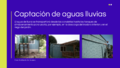
Rainwater harvesting system, originally developed in California, USA, by Kyle Basnett and Colin Bourgeois . Rainwater will be transported from gutters to storage tanks for use in flushing indoor toilets and irrigating gardens.
Contents
Description
This project consists of a rainwater harvesting system, originally built on a house in Blue Lake, Humboldt Country in California. Rainwater will be transported from gutters to storage tanks for use, for example, in flushing the indoor toilet and watering the garden.
The objectives of the project are:
- Install a safe, easy-to-use and easy-to-maintain rainwater harvesting system.
- Connect the rainwater harvesting system to the toilet tank and other areas of the home.
- Provide access to water for domestic use in low-income communities and generate a positive environmental impact.
Problem
In El Salvador, both in rural and urban areas, the use of rainwater as a source of supply is still quite limited, especially when it comes to domestic use. The most common method (if not the only one) for capturing rainwater is to collect the water that falls on roofs, storing it in metal containers (barrels) to be used for domestic purposes and eventually for human consumption.
In rural areas, most people draw water from rivers, wells, streams or other sources that are far from their homes, which means a loss of time that could be used for income-generating activities, and that is why the family assigns women and children to this task. Another problem arises when assigning children to this activity, as carrying water from far away can mean that they often miss school and waste their energy.
Why this project?
The main reasons for choosing this project can be summarized in three properties, these being due to its functionality, its low cost and, especially, its practicality. This, due to the need that the lack of access to water for some people in different parts of the world can cause, either due to the inefficiency of the institutions in charge of distribution or residence far from a water source. Developing a system that takes advantage of rainwater, a natural phenomenon, allows anyone to store water for free, either to water plants or use it for the toilet tank.
Regarding its functionality, it is presented in a simple way to understand, since it consists of two tanks that store rainwater by means of the construction of gutters, so that the water finally reaches the toilet tank. In addition, the design of the equipment allows its maintenance and cleaning not to become complicated.
On the other hand, the cost of installation could be around $400, but considering all the benefits and savings that this project represents, it becomes a low figure, since it would be a one-time payment and there would no longer necessarily be a dependence on an institution to provide water to the toilet. In addition, each individual can adapt their own equipment with less expensive materials or recycle others.
Finally, its practicality involves the ways in which functionality simplifies daily life, as water from a natural event such as rain is used for basic tasks such as watering plants or flushing the toilet. Likewise, its storage can benefit crops for farmers in the case of droughts.
Innovation proposal
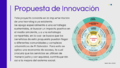
This project involves the application of an existing technology. At first glance, it may seem that the solution proposed by this project is focused on solving individual problems and would only contribute to a few households, however, multiple benefits can be obtained from it (Visser, 2020), since there is the opportunity to develop an integrated innovation, along with the possibility of the project scaling up and supporting entire communities, and even urbanizations.
.png)
This rainwater harvesting project adheres particularly to a sustainable strategy, seeking a positive impact on the environment, and to a shared strategy, in which it is sought that the benefits of this proposal can reach different communities and urban complexes in El Salvador. To this end, an access economy is applied, which seeks to ensure that services are used in a fair and equitable manner, using available resources in the most efficient way possible, thus contributing to the improvement of the social system.
Water scarcity is a global problem. Population growth and the effects of climate change are accelerating conflicts over the use and management of water. Therefore, we are looking for ways to have this vital liquid in our homes, and one of them is the use of rainwater through technologies that are easy to implement and at a cost that is quickly recovered in savings on the water bill.
The invention of collecting rainwater, as in the example of the project, is an alternative that has not been properly exploited, since it should exist in all homes that use drinking water for toilets and watering gardens, as well as for other uses in which it is not necessary for the water to be drinkable. Therefore, this project helps save money, and above all, in saving or not wasting this non-renewable natural resource that is becoming increasingly scarce.
In El Salvador, it is common to see in rural areas and in homes where the inhabitants are of scarce resources, the placement of barrels in the downpipes of the rainwater channels, which are collected directly from the roof, and from there, by means of "guacales", it is used in toilets and other domestic uses. Therefore, it is evident that the project would be a very good alternative to store water more hygienically and avoid the proliferation of vectors such as mosquitoes and the transmission of dengue. In addition, it would alleviate the great shortage of water in the popular neighborhoods, in which, despite having the installation of the domestic drinking water service, it does not arrive or arrives very sporadically.
For this basic unmet need, such a proposal would benefit businesses that provide these construction materials and the employment of skilled labor for their installation. Likewise, it could benefit initiatives by organizations that work to help poor sectors of the population that could not acquire the materials or pay for the installation.
The project has good prospects for development, because it seeks to satisfy a vital need for those who do not have the service, and for those who do, a saving on their monthly bill, in addition to the great positive environmental impact that it would generate. It is considered that, for its implementation, the idea can be sold to the institution that manages this water resource, and on the other hand, in the case of people who can pay for it, only good publicity would be needed.

Literature review
On the following page you can find the different sources of information consulted for this project:
Rainwater Innovation Project/Literature Review .
Value proposition
The use of rainwater for different purposes benefits both environmental and economic aspects. Specifically, it ensures the protection of one of the most important resources for our development as human beings.
This project is one of the best options to achieve a reduction in drinking water consumption and to reuse this resource in other activities, such as watering plants, toilets, etc. This business model also brings with it a reduction in costs for its use. At a national level, it will help the population that does not have regular access to this service and companies that want to transform their traditional structure into an eco-friendly one.
Benefits (gains)
On the people's side, they will be able to access an extra source of this resource that can be used for key activities such as crop irrigation and use in sanitary services. Furthermore, on the part of companies, in addition to the aforementioned activities, this will represent a reduction in their costs and opens the possibility of transforming their traditional structure into one that favors the improvement of the environment.
Discomfort (pains)
Although the country is considered part of the tropical region, a pattern for rainfall levels cannot yet be adequately established, so this extra water intake cannot be considered stable.
Services and activities
This innovative project is aimed at people who do not have regular access to water, most of whom live in rural areas and are engaged in agriculture, providing them with a new source of water input so they can carry out different activities.
On the other hand, it is focused on companies that want to reduce their costs by reusing rainwater and that want to present themselves as a business that cares about and takes action in favor of the environment.
Business Model Canvas
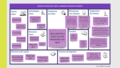
Within the CANVA business model, there are several essential elements that should be taken into account when generating strategies. We can see that, for this project, the key partners are mainly: the Government (Ministry of the Environment), StartUps incubators , hardware stores and of course the investors. Likewise, we note that the construction of the rainwater harvesting system and a climate study are the key activities to be carried out in order to have a better understanding of how to proceed with the implementation of the project. These, together with the key resources to physically create the main product, which would be the construction materials (barrels, PVC pipes, among others) and the qualified labor, make up an important weight for the creation of the idea, since they represent the first steps of this. Its main value proposition consists of the positive use of rainwater (free) and the reduction of its waste. The above is the starting point for creating a relationship with clients in which we want to show them that rain can provide benefits by reducing their basic costs. On the other hand, we also aspire for the client to feel understood and to recognize that there are many people who care about nature. The main distribution and promotion channels would be: classic media such as TV and social networks, since it is a service that would be distributed in the location of each client. Due to the primary concept of the project, CANVA makes it known that the client segments that are expected to be served are earth-friendly people and users affected by rain. Regarding the structure of its costs, these would be approximately: construction materials, labor, cost of installation and assembly. Finally, income would be mainly received from the sale of the service.

Budget
| Item | Amount | Cost per unit | Total |
|---|---|---|---|
| Exploratory study (potential customers, market segment, suppliers, partners, etc.). | 1 | USD 2,000.00 | USD 2,000.00 |
| Prototype manufacturing (materials and labor). | 2 | USD 750.00 | USD 1,500.00 |
| Logistics (mobilization of prototypes and search for spaces for testing). | 1 | USD 200.00 | USD 200.00 |
| Technical testing (testing prototypes to validate that they work). | 2 | USD 250.00 | USD 500.00 |
| Focus testing with potential end users to determine desirability (working hours, spaces, incentives, stationery). | 3 | USD 125.00 | USD 375.00 |
| Preparation of final report. | 1 | USD 400.00 | USD 400.00 |
| Grand total | USD 4975EUR 4,278.50 <br />GBP 3,631.75 <br />CAD 6,169.00 <br />MXN 103,728.75 <br />INR 372,378.75 <br /> | ||

Conclusions
- Reusing rainwater is an innovative idea in El Salvador, as it is only known that the Sherwin Williams company, a paint producer, uses this mechanism to meet needs within the plant, which in addition to producing a reduction in their administrative costs allows them to generate a positive footprint in favor of caring for the environment.
- This project, in addition to being a way for companies, benefits residents who do not have regular access to drinking water, creating a new opportunity for them to acquire this resource.
- This alternative has a great positive impact, because in addition to helping communities, it also becomes a way to promote sustainable development since its main source is the reuse of rainwater.
Recommendations
- It has been made clear that there is no pattern that allows us to identify when it will or will not rain, so it is recommended that when this happens, this resource should be used to its full potential and that the greatest amount of water should be stored so that it ends up having a function similar to that of a cistern.
- It is recommended to clearly establish the distinction that these rainwaters are not drinkable, so making a list of the activities in which this input can be used will be the best option.
Final presentation

Presentation - Rainwater Innovation Project
Presentation - Rainwater Innovation Project
Presentation - Rainwater Innovation Project
Presentation - Rainwater Innovation Project
Presentation - Rainwater Innovation Project

Presentation - Rainwater Innovation Project

Presentation - Rainwater Innovation Project
Presentation - Rainwater Innovation Project
Presentation - Rainwater Innovation Project


References
- ^ Visser, W. (2020). Integrated Innovation: Applying Systems Thinking to Sustainable Innovation and Transformation. Sustainability, 12(13), 5247.