


NOAA pinniped tags accelerated aging system

| Authors | Sean Orion Shermer Deeksha Nathan Gerardo Vasquez |
|---|---|
| Location | Arcata, United States |
| Status | Deployed |
| Made | Yes |
| Replicated | No |
| Uses | education, science |
This project presents an accelerated aging system designed and built in 2025 to evaluate the durability of pinniped identification tags used by NOAA researchers. The system simulates environmental stressors such as UV sunlight, mechanical abrasion, biofouling, and extreme temperature cycles to predict prolonged performance before deployment. Our motivation is to help wildlife scientists reduce tag failure, improve material selection, and increase reliability in harsh field conditions. The intended users are marine biologists, conservation researchers, tagging teams, and engineering students developing future iterations of durable tag materials.
Background
[edit | edit source]Pinniped tags are used to document and keep track of marine mammals internationally, and they are critical tools in marine mammal research. Currently, researchers often rely on livestock style identification tags, which have proven increasingly inadequate for pinnipeds over time. These tags fail due to harsh environmental factors encountered during deployment, including abrasion, sunlight, biofouling, and extreme temperature swings.
Before a suitable next generation tag can be developed, there must first be a reliable method for testing tag performance. This requires a system of accelerated aging tests that accurately simulate the environmental stresses pinniped tags face in real deployment conditions. Since pinniped tags are expected to remain functional for approximately 25 years, it is essential to confirm in advance that they can withstand all relevant factors for this duration.
The Testing and Development Team (TDT) from Cal Poly Humboldt’s Fall 2025 Introduction to Design class (ENGR 205) worked on behalf of the National Oceanic and Atmospheric Administration (NOAA) and with the Cal Poly Humboldt Marine Laboratory to develop this testing method and construct a functioning accelerated aging system for pinniped tags.
Problem statement
[edit | edit source]The objective of this project is to design, build, and validate a toolchain that can reliably accelerate and monitor the aging of pinniped identification tags. This toolchain simulates environmental stressors, including UV exposure, mechanical wear, biofouling, and thermal cycling to reproduce prolonged deterioration in a controlled laboratory environment.
By creating this accelerated aging testing system, TDT aims to provide marine researchers with a consistent and repeatable method to evaluate long term tag durability. This approach reduces the need for prolonged multi-year field trials and establishes clear performance standards for future tag production.
Criteria
[edit | edit source]The criteria listed below were used to guide the team in designing, developing, and deciding on a solution to our project that would satisfy our client's needs. They were weighted in terms of importance to the project with 1 being least important and 5 being most important.
| Criterion | Description | Weight (1-5) |
|---|---|---|
| Functionality | The system must effectively reproduce multiple environmental stressors to simulate wear. | 5 |
| Accuracy | The processes must generate controlled, measurable, and repeatable conditions for reliable data collection. | 3.5 |
| Feasibility | The design must be achievable within current time, material, and resource limits. | 4.6 |
| Safety | Makes documentation informative (e.g. images, video) | 1.5 |
| Cost Efficiency | The design should use existing facilities and affordable materials whenever possible. | 5 |
| Time Efficiency | The tests should not require a lot of time. | 5 |
| Ease of use | The setup must be straightforward for students and researchers to operate and maintain. | 2 |
Prototyping
[edit | edit source]Our prototyping process evolved from early hand drawn sketches and brainstorming exercises to testing with real materials and equipment. Initial sketches explored exaggerated and impractical ideas, which helped identify the key environmental stressors affecting pinniped tags and narrow the design to feasible solutions.
Several early concepts were abandoned due to safety, cost, or feasibility limitations. These failed attempts were valuable, as they clarified design constraints and guided improvements. Physical prototyping included assembling test setups and running short trial tests to verify equipment performance.
Through prototyping, we learned that simple and controlled systems produced the most reliable and repeatable results. Iteration, testing, and documentation were essential in refining the final accelerated aging system.
Final product
[edit | edit source]Our multi-stage accelerated aging testing system is used to evaluate the durability of pinniped identification tags under simulated environmental stressors. The system is composed of five main components, UV exposure chamber, rock tumbler abrasion unit, biofouling environment, hot and cold cycling setup, and SEM analysis workflow. Together, these components enable rapid assessment of how tag surfaces degrade over time, allowing for informed improvements in material selection, design geometry, and printing durability.
A: UV Exposure Chamber
B: Rock Tumbler Abrasion System
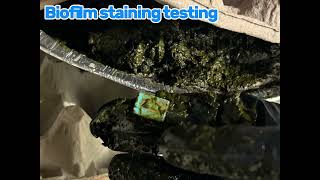
C: Biofouling Manure Incubation Bin
D: Hot and Cold Thermal Cycling Station
E: SEM Imaging Station
Construction
[edit | edit source]



Bill of materials
[edit | edit source]The table below displays the cost of consumables used for every cycle of testing conducted throughout the course of the project. The amount of material is included along with its total cost and location of purchase. Some materials were repurposed from residual backyard stock and had no additional costs.
| Item | Amount | Cost per unit | Total |
|---|---|---|---|
| 2'x2' Plywood Planks — Millyard | 4 | USD 9.56 | USD 38.24 |
| 0.67 lb Gravel/Sand Mixture — Backyard | 1 | USD 0.00 | USD 0.00 |
| 2 lbs Coarse 60/90 Silicon Carbine grit | 1 | USD 21.55 | USD 21.55 |
| 3 lbs Cow Manure | 1 | USD 0.00 | USD 0.00 |
| Grand total | USD 59.79EUR 51.42 <br />GBP 43.65 <br />CAD 74.14 <br />MXN 1,246.62 <br />INR 4,475.28 <br /> | ||
The table below displays the cost analysis for equipment used for each testing process. It includes the model used, its amount, and cost.
| Item | Amount | Cost per unit | Total |
|---|---|---|---|
| SUNSPOT 2 UVITRON | 1 | USD 4,250.00 | USD 4,250.00 |
| LORTINE ROTARY TUMBLER MODEL 33B | 1 | USD 185.00 | USD 185.00 |
| QUANTA FEI 250 SCANNING ELECTRON MICROSCOPE | 1 | USD 100,000.00 | USD 100,000.00 |
| Grand total | USD 104435EUR 89,814.10 <br />GBP 76,237.55 <br />CAD 129,499.40 <br />MXN 2,177,469.75 <br />INR 7,816,959.75 <br /> | ||
Operation
[edit | edit source]Materials Preparation
1) Gather all prototype tags and label them clearly with test type and exposure intervals.
2) Prepare plywood boards, abrasive media, manure for biofouling tests, and water baths for thermal cycling.
3) Ensure all personal protective equipment (PPE) is available: gloves, masks, and safety glasses.
UV Exposure Testing
1) Place labeled tags into the UV chamber.
2) Set the exposure time according to the protocol (e.g., 5 min, 10 min, 30 min, 2 hours).
3) Start the UV chamber and monitor for correct operation.
4) After exposure, carefully remove tags and document visual changes with photos.
Mechanical Abrasion - Rock Tumbler
1) Add gravel/sand mixture and abrasive grit to the rock tumbler drum.
2) Place the labeled tags inside and securely close the tumbler.
3) Set the rotation time (e.g., 5 days continuous).
4) Periodically check for proper rotation and record observations.
5) At the end of the cycle, remove tags carefully and document wear.
Biofouling Testing
1) Evenly coat tags with cow manure to simulate microbial and organic buildup.
2) Allow the tags to sit for the designated period.
3) Document staining and residue formation.
4) Clean tags if necessary before further testing.
Hot & Cold Thermal Cycling
1) Submerge labeled tags in boiling water (212°F) for 30 minutes.
2) Immediately transfer tags to ice water (32°F) for 30 minutes.
3) Repeat cycles as specified by the protocol.
4) Document any visible surface changes.
SEM Analysis
1) Mount baseline and test-exposed tags on SEM sample holders.
2) Insert into SEM chamber and follow calibration procedures.
3) Capture images at required magnifications (e.g., 105×, 113×, 399×, 408×).
4) Compare images to document microstructural changes.
Safety Notes
1) Always wear PPE when handling tags, abrasive materials, or hot/cold baths.
2) Never look directly into the UV chamber when it is operating.
3) Handle SEM samples carefully to avoid contamination or damage.
Maintenance
[edit | edit source]- Consumables utilized for each testing process need to be replaced either every cycle or periodically based on the amount used.
- There is no maintenance needed for the UV testing process.
- The gravel/sand mixture and grit used within the rock tumbler for the abrasion testing do need to be replaced every cycle (2 weeks).
- Cow manure utilized within the biofilm staining testing also needs to be replaced every cycle (2 weeks).
- Water consumed during the hot & cold temperature testing is to be replaced every cycle.
The machinery utilized within each testing process follows its own maintenance schedule. These are not included as they vary depending on the specific equipment used.
Conclusion
[edit | edit source]UV Exposure Testing
Tags were placed in a controlled UV chamber for exposure intervals ranging from 5 minutes to 2 hours.
Results:
- Visible color fading and surface discoloration were observed after prolonged exposure.
- The 2-hour UV-exposed tag showed the most noticeable cosmetic change compared to the baseline.
- SEM comparison (105× baseline vs. 113× 2-hour UV sample) revealed no significant microscopic degradation, confirming that UV light at this duration affects appearance but not structural integrity.
Mechanical Abrasion (Rock Tumbler)
Tags were placed in a rock tumbler for five days with a mixture of sand, gravel, and abrasive grit to simulate long term rolling abrasion.
Results:
- Significant surface wear, including scratches and edge rounding.
- Printed identifying numbers became less sharp and increasingly worn.
- SEM images (399× baseline vs. 408× 5-day tumbled sample) showed clear evidence of pitting, surface roughening, and micro-fracturing, indicating meaningful material degradation.
Hot & Cold Thermal Cycling
Tags were alternately submerged in boiling water (212°F) and ice water (32°F), each for 30 minutes, to simulate rapid marine temperature swings.
Results:
- Mild surface staining, likely due to heat exposure and water impurities.
- Slight discoloration compared to the baseline.
- No visible cracking, warping, or loss of mechanical integrity.
- The test suggests that the tag material tolerates short-term extreme temperature cycling without structural failure.
Biofouling Exposure
Tags were coated in cow manure to simulate microbial and organic buildup similar to what occurs in real marine or agricultural environments.
Results:
- Noticeable organic staining and buildup on the tag surface.
- No measurable deterioration of the material structure.
- Surface changes were cosmetic and likely removable through cleaning.
Scanning Electron Microscope (SEM) Analysis
SEM imaging was used to compare baseline samples with UV-exposed and mechanically abraded samples.
UV-exposed samples:
- No detectable micro-cracking or pitting. Surface remained smooth, confirming UV exposure (at test durations) primarily affects color rather than structure.
Rock tumbler samples:
- Clear micro-scale abrasion including pitting, smoothing, and early-stage cracking, consistent with physical wear.
Discussion
UV Exposure
UV testing showed that the tags experienced visible color fading and surface discoloration with prolonged exposure, but SEM imaging indicated no microscopic structural damage. This suggests that the tag material is resistant to UV-induced structural degradation over short to moderate exposure periods, though cosmetic changes may occur. Therefore, tags should remain mechanically reliable in sunlight, but aesthetic fading may affect future readability or visual inspection.
Mechanical Abrasion
The rock tumbler abrasion test caused the most significant structural wear. Visible edge rounding, surface scratching, and partial degradation of printed markings were observed. SEM images confirmed microscopic pitting and surface roughening. These results indicate that repetitive physical contact or movement over rough surfaces will gradually compromise the tag’s surface integrity and readability. This emphasizes the importance of selecting materials with higher abrasion resistance for longer term deployments in high friction environments, such as rocky shorelines or areas with heavy animal activity.
Thermal Cycling (Hot & Cold Exposure)
Alternating immersion in boiling and ice water caused only minor surface staining and slight discoloration, with no visible cracking or warping. This demonstrates that the tag material tolerates rapid temperature fluctuations typical of marine or terrestrial environments without structural failure, suggesting reliable mechanical performance across a wide temperature range.
Biofouling Exposure
Tags exposed to cow manure developed surface staining and organic buildup, but no measurable structural degradation occurred. This implies that while biofouling can affect surface appearance and possibly readability, it is unlikely to compromise the mechanical integrity of the tags under similar field conditions. Regular cleaning or anti-fouling coatings could further mitigate cosmetic effects.
Overall Interpretation
Primary Structural Risk: Mechanical abrasion poses the greatest threat to tag longevity, causing both visible and microscopic wear.
Secondary Effects: UV exposure, thermal cycling, and biofouling primarily affect cosmetic appearance rather than structure.
Field Implications: Tags are suitable for short to medium term deployment in marine environments, with careful consideration of abrasion prone areas. Material selection and protective coatings may improve durability and maintain readability over extended periods.
In summary, the accelerated aging tests suggest that the tag design is mechanically robust against UV, temperature extremes, and biological exposure, but mechanical wear is the main factor limiting long term performance testing results.
Next Steps and Future Work
Material Optimization
- Abrasion-Resistant Materials: Since mechanical wear is the primary mode of degradation, explore alternative plastics, composites, or surface coatings that improve resistance to edge rounding, pitting, and scratching.
- UV-Stable Pigments: To reduce cosmetic fading from sunlight exposure, incorporate UV-resistant inks or pigments for printed identifiers.
Design Refinements
- Edge Geometry: Modify tag edges or corners to reduce stress concentrations and wear in high-friction environments.
- Surface Texture: Investigate surface treatments or micro-patterning that minimize abrasion and biofouling accumulation.
Protective Coatings
- Apply anti-fouling or scratch-resistant coatings to enhance longevity against biofilm formation and mechanical wear.
- Evaluate transparent UV-blocking coatings to preserve tag readability and appearance.
Extended Environmental Testing
- Conduct long-term field trials in marine and coastal environments to validate accelerated aging predictions.
- Introduce additional stressors such as saltwater corrosion, wave impact, or interactions with animals to refine durability assessments.
Monitoring and Data Collection
- Develop a protocol for periodic inspection of deployed tags to track real-world wear patterns and degradation rates.
- Record and analyze environmental variables (e.g., temperature, salinity, UV intensity, biofouling levels) to correlate with observed tag performance.
Integration with Tagging Programs
- Work with NOAA and other research organizations to implement optimized tags in live pinniped studies.
- Collect feedback on visibility, durability, and field usability to guide further improvements.
Documentation and Open Sharing
- Update Appropedia pages with ongoing results, design iterations, and best practices for tag durability testing.
- Support open-source adoption by other researchers and conservation projects.
Lessons learned
[edit | edit source]Consistent sample preparation and accurate control of exposure time were critical to obtaining reliable results. We also learned that combining multiple aging methods (UV exposure, mechanical wear, and SEM analysis) provides a more complete understanding of material degradation than using a single technique.
Team
[edit | edit source]TDT - Fall 2025
- Deeksha Garige
- Sean Shermer
- Nathan Vasquez
| Authors | Sean Orion Shermer, Nathan Gerardo Vasquez, Deeksha |
|---|---|
| License | CC-BY-SA-4.0 |
| Organizations | Cal Poly Humboldt |
| Cite as | Sean Orion Shermer, Nathan Gerardo Vasquez, Deeksha (2025–2026). "NOAA pinniped tags accelerated aging system". Appropedia. Retrieved October 18, 2026. |