


CSU Research Competition 2025 Behavioral, Social Sciences & Public Administration trophy

| Authors | Stephanie Barajas Aubrey Cooper Kaden Smith Chanelle Vaillancourt |
|---|---|
| Location | Arcata, California, United States |
| Environment | University |
| Status | Deployed |
| Made | Yes |
| Replicated | No |
| Uses | education, science |
The Team Hupods' BSSPA Trophy Design Project was created in Fall 2024 by a team of engineering students at Cal Poly Humboldt for the 39th Annual California State University Student Research Competition (CSU SRC). Motivated by the need to replace uninspiring trophies with designs that embody the winners' achievements, the team aimed to highlight the Behavioral, Social Sciences, and Public Administration (BSSPA) category through innovative and symbolic elements. Intended for graduate and undergraduate award recipients, the project reflects Cal Poly Humboldt's commitment to sustainability, creativity, and excellence in design.
Background
[edit | edit source]The Hupods BSSPA Trophy Design Project was developed by a team of aspiring Environmental Resources and Mechanical Engineers from Cal Poly Humboldt's ENGR 205 Introduction to Design class during the Fall 2024 semester. The project was undertaken in collaboration with the Cal Poly Humboldt Office of Research and Sponsored Programs (ORSP) to create two symbolic and innovative trophies for the Behavioral, Social Sciences, and Public Administration (BSSPA) category of the 39th Annual California State University Student Research Competition (CSU SRC).
This prestigious competition, hosted for the first time by Cal Poly Humboldt, showcases research and creative achievements from students across 23 CSU campuses. The goal was to elevate the existing trophy designs to better represent the winners' hard work, innovation, and societal contributions.
The trophies were conceptualized, designed, and prototyped in the newly renovated Makerspace at Cal Poly Humboldt, with a focus on sustainability, creativity, and durability. This project highlights the university's hands-on learning approach and commitment to innovation while ensuring the designs align with Cal Poly Humboldt's values of equity, diversity, and environmental stewardship.
Problem statement
[edit | edit source]The objective of this project is to design and construct two innovative and symbolic trophies for the Behavioral, Social Sciences, and Public Administration (BSSPA) category of the 39th Annual California State University Student Research Competition (CSU SRC). These trophies aim to replace the current uninspiring designs with creations that visually and interactively represent the winners’ achievements, emphasizing innovation, societal contributions, and the core values of the BSSPA field. Once implemented, the solution will provide meaningful recognition for the recipients and elevate the event's prestige, while showcasing Cal Poly Humboldt's dedication to sustainability, creativity, and excellence in engineering design.
Criteria
[edit | edit source]The design of the Hupods BSSPA Trophies was guided by a set of criteria and constraints that ensured the final product met both functional and symbolic goals. These criteria prioritized aspects such as aesthetic appeal, durability, and interactivity while adhering to practical limitations like budget, size, and transportability. Each criterion was assigned a weight (on a scale from 0 to 10) based on its importance, as determined by client input, to ensure the design addressed key project objectives effectively.
| Criteria | Description | Weight (1-10) |
|---|---|---|
| Cost | The total allowable budget for both trophies is capped at $500. This budget includes $200 provided by the client and a combined $300 contributed by the members of the Hupods team. | 10 |
| Aesthetic | The design must visually resonate with the target audience, reflecting prestige, innovation, and significance of the BSSPA category. The trophies should incorporate symbols or design elements that represent BSSPA themes, making the design meaningful to the award recipients and their contributions in these fields. | 9 |
| Transportability | The trophies must be durable and compact enough to withstand various modes of travel, including by car or airplane, and comply with TSA guidelines to ensure smooth transportation by the client or award recipients. | 9 |
| Durability | The trophies must be designed to endure long-term display and potential handling over several decades. They should maintain their structural integrity and visual appeal despite regular use or exposure. | 5 |
| Complexity | The trophy should reflect the technical abilities of engineering students, showcasing advanced craftsmanship, thoughtful design, and creative problem-solving. The final product should highlight the skills gained from using resources at the MakerSpace and other relevant tools. | 5 |
| Intuitive User Interface | The functionality and handling of the trophies must be straightforward and self-explanatory. Recipients should intuitively understand how to interact with any dynamic or interactive elements without the need for detailed instructions or specifications. | 8 |
Prototyping
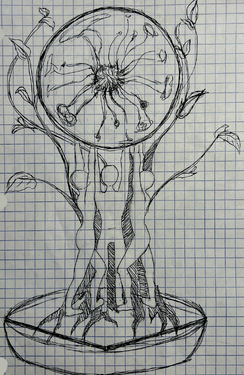
[edit | edit source]The creation of the Hupods' BSSPA Trophies was a journey of exploration, teamwork, and iterative refinement. It began with individual sketches—rough ideas etched on binder paper and whiteboards during brainstorming sessions. Each team member brought unique perspectives, resulting in diverse concepts that emphasized interactive features and meaningful symbolism.
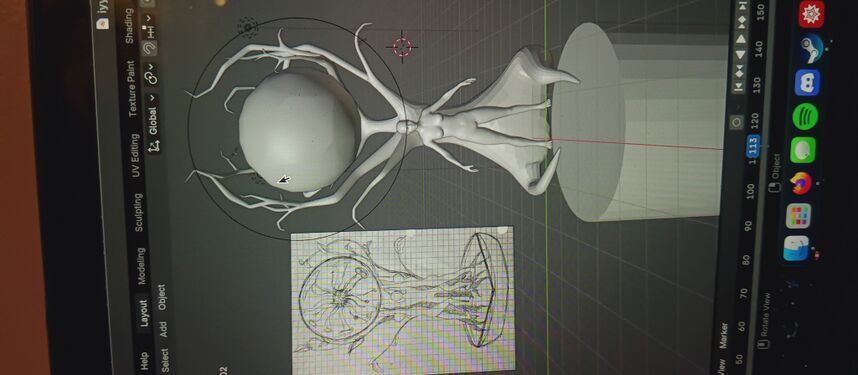
From these sketches, the team transitioned to digital modeling. Using design software, they began shaping their ideas into three-dimensional concepts. This step allowed them to test proportions and assess the feasibility of interactive elements.
With digital models in hand, the team constructed physical prototypes. Simple materials like cardboard and foam were used to test mechanics, dimensions, and the overall assembly. These prototypes uncovered practical challenges, such as ensuring stability for rotating elements or accommodating the intricate branches of the tree.
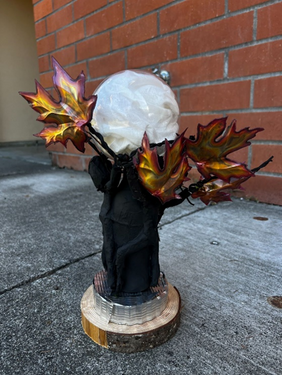
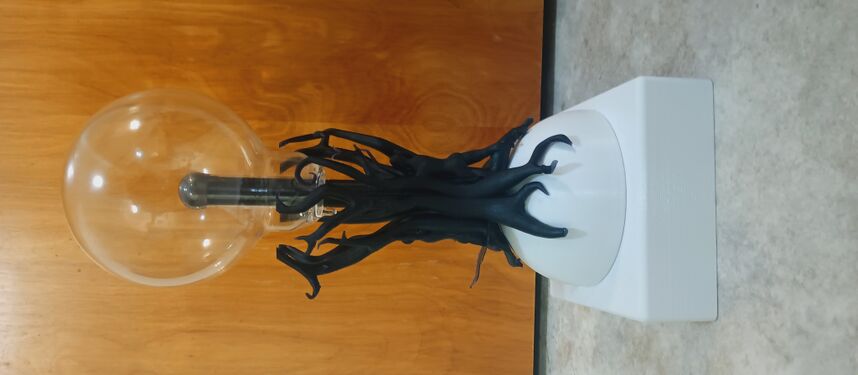
The process of iteration led to the emergence of the Tree of Unity, a design that embodied the project’s core values. Early iterations explored different ways to represent BSSPA. Over time, these ideas converged into a tree—a universal symbol of growth and interconnectedness. Its branches cradled a glowing plasma ball, symbolizing innovation and enlightenment, while rotating figures holding hands at the base represented teamwork and unity.
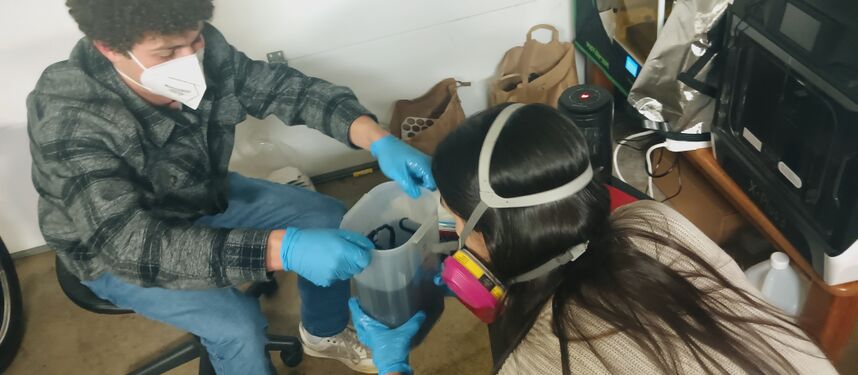
The prototyping process for the Tree of Unity Trophy was not without its challenges, and early attempts highlighted the steep learning curve involved in translating a design from digital models to physical prints. The initial printing sessions were marked by failures, such as misalignments and scaling issues.
- Sample gallery
-
-
-
-
-


Lessons Learned
[edit | edit source]- Plasma Ball Reliability: Testing revealed that the plasma ball’s battery-powered setup was more reliable than rechargeable options, providing consistent performance during operation.
- Plasma Ball Durability: Despite its reliability, the plasma ball could not endure desoldering processes, leading to challenges in its integration and prompting the need for a sturdier alternative.
- 3D Printing Challenges: Early 3D prints faced structural weaknesses and dimensional limitations. These issues led to design changes, such as rethinking tree branch geometry for accessibility and experimenting with alternative printing techniques.
- Material Selection: Meeting the aesthetic criteria proved challenging with available materials. Alternative options were explored to balance visual appeal and functional requirements.
- Interactive Features Optimization: Prototyping demonstrated the feasibility of dynamic elements, such as rotating figures and illuminated components, to improve user engagement. However, design iterations emphasized that simpler interactive features were more reliable and effective.
Final product
[edit | edit source]The Tree of Unity Trophy is the final design for the Hupods BSSPA Trophy Project, representing achievement in the Behavioral, Social Sciences, and Public Administration (BSSPA) category. The design combines symbolism, sustainability, and interactivity, making it a meaningful and engaging award for the recipients of the 39th Annual California State University Student Research Competition (CSU SRC).
Overview
[edit | edit source]The trophy features a central tree structure crafted from sustainably sourced wood or cast aluminum, symbolizing growth and collaboration. A plasma ball crowns the tree, representing innovation and creativity. The base includes a globe to highlight the global impact of BSSPA fields, along with a customizable nameplate for award categories or recipient names. Surrounding the globe, figures holding hands rotate via a wind-up mechanism, emphasizing unity and teamwork.
Labeled Diagram
[edit | edit source]| Key Components | Description |
|---|---|
| A. Plasma Ball | The centerpiece, symbolizing innovation and creativity, made from glass and inert gasses. |
| B. Tree Structure | Crafted to represent growth and collaboration, inspired by Carl Jung’s Tree of Life imagery. |
| C. Rotating Figures | 3D-printed figures holding hands, powered by a wind-up mechanism, symbolizing unity. |
| D. Globe Base | A wooden globe base highlighting the global influence of BSSPA disciplines. |
| E. Redwood Placard | A placard with the text "1st Place Winner, 39th CSU Student Research Competition." |
Features and Details
[edit | edit source]- Dimensions: Compact design (1 ft. x 1 ft. x 1 ft.) for easy transport and display.
- Interactivity: Rotating figures and illuminated plasma ball engage recipients and the audience.
- Sustainability: Integrates some repurposed materials, aligning with Cal Poly Humboldt’s values.
- Durability: Built to last as a lifetime display piece, ensuring the recipient’s achievements are honored for years to come.

This final product combines functional and aesthetic elements, reflecting the hard work, innovation, and societal contributions of the award recipients.
Construction
[edit | edit source]The construction of the Tree of Unity Trophy involves a series of detailed steps to transform the gathered materials into a visually striking and functional award. Below, we provide a comprehensive guide for each step, referencing the materials listed in the Bill of Materials for clarity and consistency. This process integrates the use of 3D-printed components, wooden elements, and a plasma ball to create a rotating, illuminated centerpiece symbolizing unity and innovation.
The construction steps are categorized for ease of navigation and include details on tools and techniques required for each phase. Images accompanying each step (when available) provide a visual reference to aid understanding and replication of the design.
| Step | Details | Images/Video |
|
To construct the Tree of Unity Trophy, gather the following materials and tools:
|
 |
|
|
 |
|
|
|
|
|
 |
|
|
 |
|
|
 |
|
|
 |
|
|
 |
|
|
Bill of materials
[edit | edit source]The table below outlines the proposed materials and components required for constructing the Tree of Unity Trophy. It includes descriptions of each item, links to suggested sources, and associated costs. This list is designed to provide a clear understanding of the resources necessary for fabrication. Note that some items, such as the metallic paint and PLA filament, were donated, reducing the overall cost of the project. The total estimated cost for the purchased items is $204.75, with additional tools and materials sourced from the Swetman Makerspace at Cal Poly Humboldt, a campus facility equipped with various tools and equipment to support student projects.

Operation
[edit | edit source]The Tree of Unity Trophy is designed to operate as both a decorative and functional award with interactive features. Below is a guide on how to properly use and showcase the trophy.
How to Operate
[edit | edit source]- Setup:
- Place the trophy on a stable, flat surface for display.
- Powering On:
- Switch on the plasma ball using the power button located on the bottom of the base.
- Observe the plasma ball's light-up effect, which creates an engaging centerpiece, plasma ball will automatically turn off after 5 minutes.
- Rotating Feature:
- Gently turn the trophy base to activate the Lazy Susan bearing, allowing the tree to rotate. This feature symbolizes unity and collaboration, with the tree's branches and details visible from all angles.
- Viewing and Display:
- Position the trophy in a well-lit area to highlight its metallic finish and engraved details or for an enhanced visual effect, dim the surrounding lights to emphasize the plasma ball's illumination.
Maintenance
[edit | edit source]The Tree of Unity Trophy is designed to be durable and low maintenance; however, periodic care is essential to preserve its functionality and aesthetic appeal. Below are guidelines for maintaining the trophy, including a schedule for specific tasks and who should perform them.
Questions to Consider
[edit | edit source]- Are there any needed actions for maintenance? Yes, cleaning and ensuring the interactive elements function properly.
- How often should maintenance be performed? Varies by task (daily, weekly, monthly, or yearly).
- Who should perform maintenance? The owner or event organizers responsible for the display and upkeep.
Maintenance schedule
[edit | edit source]Daily
- Dust the exterior components, including the plasma ball and figures.
Weekly
- Inspect the Lazy Susan bearing for smooth rotation and remove any debris.
Monthly
- Wipe the plasma ball with a soft, dry cloth to maintain its clarity.
- Check the battery pack for power and replace batteries if necessary.
Yearly
- Apply a small amount of lubricant to the Lazy Susan bearing to ensure smooth operation.
- Inspect the wood and painted components for wear, applying a protective finish if required.
Every 5 Years
- Perform a full inspection of the lazy Susan bearing for wear or rust and replace it if needed.
- Check all electronic components, including the plasma ball, and replace any worn-out parts.
- Reassess the structural integrity of the trophy, reinforcing joints as necessary.
Conclusion
[edit | edit source]Testing results
[edit | edit source]Overview Testing ensured the trophy met the criteria for aesthetic appeal, durability, transportability, cost constraints, and intuitive interaction.
Key Testing Observations
[edit | edit source]- Lighting: The plasma ball effectively delivered a striking visual element, meeting aesthetic goals.
- Durability: The design withstood repeated handling during testing, confirming its structural integrity.
- Transportability: Compact dimensions and sturdy construction allowed smooth transport, including compliance with TSA guidelines.
- Cost: The project stayed within the $500 budget by reusing components and opting for cost-effective solutions.
Discussion
[edit | edit source]The testing phase highlighted the strengths of the final design while revealing areas for improvement. For instance, the plasma ball provided an innovative visual effect, but its integration required several iterations to ensure compatibility with the power source and circuitry. Durability and transportability tests confirmed the design was robust and travel-friendly, aligning with client expectations.
Lessons learned
[edit | edit source]- Iterative Prototyping: Early failures in 3D printing and lighting integration emphasized the importance of testing small components before final assembly.
- Material Selection: Sustainable materials added value to the project but required careful planning to ensure longevity.
- Team Collaboration: Effective communication and task delegation were critical for managing the project's complexity within the time constraints.
What We Would Do Differently
[edit | edit source]- Allocate more time for prototyping to refine interactive features.
- Explore alternative power sources to improve sustainability.
- Conduct additional user testing to gather feedback on interactivity and usability.
Next steps
[edit | edit source]- Document the assembly and maintenance process on Appropedia for future replication.
- Share the design at engineering showcases and competitions.
- Explore options for enhancing the design, such as integrating more advanced interactive features or upgrading materials for longevity.
Troubleshooting
[edit | edit source]| Problem | Suggestion |
|---|---|
| Trophy does not turn on | Ensure the battery pack is properly connected and batteries are charged |
| Lazy Susan bearing does not rotate smoothly | Clean the bearing to remove debris and apply a small amount of lubricant. |
| Plasma ball lighting is dim | Replace the batteries or inspect the wiring for loose connections. |
| Paint or stain appears worn | Apply a fresh coat of protective finish to restore the appearance. |
Team
[edit | edit source]This project was completed by Team Hupods during the Fall 2024 semester at Cal Poly Humboldt.

- Stephanie Barajas
- Aubrey Cooper
- Kaden Smith
- Chanelle Vaillancourt
References
[edit | edit source]
| License | CC-BY-SA-4.0 |
|---|---|
| Organizations | Cal Poly Humboldt |
| Cite as | Stephanie Barajas, Lonny Grafman (2024–2026). "CSU Research Competition 2025 Behavioral, Social Sciences & Public Administration trophy". Appropedia. Retrieved October 23, 2026. |