


Community action/France

France was one of the first countries to create an environment ministry, in 1971. According to the 2012 Environmental Performance Index conducted by Yale and Columbia, France was the sixth-most environmentally conscious country in the world, one place higher than the previous report in 2010. [1]
France community action
Sustainability initiatives
- Nantes Green Capital - Nantes 2013, European Green Capital


Climate action
Version française du site internet de la CCNUCC (United Nations Framework Convention on Climate Change)
Communities online

Community currencies activism
SoNantes, complementary currency, Nantes region.
Community energy
Wikipedia: France National Renewable Energy Action Plan, Solar power in France, Wind power in France
Ekopedia: Propositions énergétiques pour la France
Community involvement
Wikipédia: Commission nationale du débat public
Cycling activism
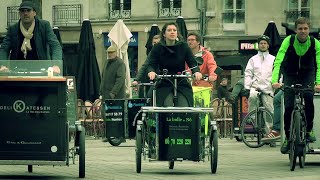
Critical Mass bicycle rides in France
Environment quality
Food activism
Creating a vibrant local food ecosystem through government-NGO collaboration
Up until a few years ago, the residents of Loos-en-Gohelle, a small town in rural northwestern France with over 6,000 residents, consumed imported industrial food products despite significant local production. In addition to the negative health impacts of their diet, this practice also hurt the local economy. In 2013, the town government of Loos-en-Gohelle started a project called VITAL as part of an ambitious program to improve the diets of Loos-en-Gohelle residents.
The project was built on an existing initiative called Anges Gardins, run by a local association that has worked on community gardens and food education for years. It is also part of a long-term, comprehensive transition to a diverse, sustainable local economy from one dependent on coal mining — an industry that vanished when the French government closed the region's coal mines in 1990, in favor of cheaper imports. Food is viewed as a cross-cutting issue, capable of supporting transition in other sectors.
The policy has a two-pronged strategy to meet the goal. First, to stimulate the demand for local, organic food through education, gardening ambassadors, free produce from open food gardens, and more. The town government led by example, by shifting to 100 percent organic food procurement for schools and 15 percent for retirement homes.
Second, to encourage farmers to convert to organic farming and support food distribution. To help achieve this, the town offered farmers free access to land on the condition that they grow organically and that they convert some of their own existing agricultural land to organic as well, thus raising the share of lands grown organically to 10 percent. Terre d'Opale, another local association, coordinates the farmers to ensure diversity of local production and manage distribution. Distribution is handled weekly through a combination of an online store, delivery of food boxes to local collection points, and procurement through catering businesses.
The program has operated successfully for three years. As the program benefits the entire local food ecosystem, including consumers, farmers, food kitchens, and distributors, it continues to grow and serve more and more of the community. [2]
Other links
Archives de Cuisson Solaire - Incredible Edible Fréland - La Ruche qui dit Oui ! - Open Food France - Solar cooking resources in France
Networks: Les Incroyables Comestibles
Ekopedia: Association Végétarienne de France
Open spaces
Wikipedia: List of national parks of France, Regional natural parks of France
Reduce, reuse, repair and recycle
Zero Waste Challenge, Roubaix
With an annual average of 243 kg (over 535 pounds) of waste per capita, citizens of Roubaix, in the north of France, were producing less than half their country's average Municipal Solid Waste (MSW). Yet their aim to reduce it even further has brought about the Zero Waste Challenge.
Despite having no executive power on separate collection and other waste-related activities, the city has started a program to lead the zero waste movement in France. The initiative challenges around one hundred volunteer families to reduce the amount of solid waste produced at household level by 50 percent over the course of a year. Offering support through an array of events like workshops, coaching initiatives, and other activities such as food exchanges, the program gives no directions — only suggestions. Interestingly, the program bypasses any intermediaries, therefore creating a direct channel between the city and the families taking part.
After the first year, results were more than encouraging, with 70 percent of participating families having reduced their waste production by around 40 percent, while 25 percent of them had achieved an 80 percent reduction. The policy is now also replicated to target other actors such as public offices, four schools, and shopkeepers in the urban area of Roubaix. [3]
Sustainable transport activism
Tramway de la Communauté Urbaine Nice Côte d'Azur
Wikipedia: Rail transport in France, Trams in France
- Waterways & Canals: The French natural and man-made waterways network is the largest in Europe extending to over 8,500 kilometres (5,300 mi). Approximately 20% of the network is suitable for commercial boats of over 1000 tonnes and the VNF (English: Navigable Waterways of France, the French navigation authority) has an ongoing programme of maintenance and modernisation to increase depth of waterways, widths of locks and headroom under bridges to support France's strategy of encouraging freight onto water.
Resources
Apps for sustainability
City Gardens, maps over 400 green spaces in Paris and has expanded to provide similar services to the French cities of Metz, Lille, Lyon, Montpellier, Strasbourg and the European Green Capital of 2013, Nantes. [4]
Citizens data initiative
open data 71, le Département de Saône-et-Loire libère ses données - keolis-rennes.com, open data, Rennes
Maps
Video
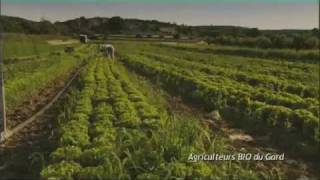
More video: Grand Designs, Brittany Groundhouse, Channel 4, 26 Feb 2009
News and comment
See separate article: France news
Local communities in Community action/France


Interwiki links
Wikipedia: France, France, Environment, Haute Qualité Environnementale
Ekopedia, French / Français
References
- ↑ wikipedia:France#Environment
- ↑ Shareable, Nov 8, 2018
- ↑ Shareable, Feb 14, 2019
- ↑ European Green Capital