


Community action/Massachusetts

Massachusetts community action
Sustainability initiatives
- Environment Massachusetts, statewide, citizen-supported environmental advocacy organization, working towards a cleaner, greener, healthier future.
- Sustainable South Shore
Biodiversity
Wikipedia: Massachusetts, Ecology
Climate action
350 Massachusetts - Greenovate Boston, community-driven movement to get Bostonians involved in reducing the city’s greenhouse gas emissions 25% by 2020 and 80% by 2050

Climate change in Massachusetts affects both urban and rural environments, including forestry, fisheries, agriculture, and coastal development. The Northeast is projected to warm faster than global average temperatures; by 2035, the Northeast is "projected to be more than 3.6°F (2°C) warmer on average than during the preindustrial era."
Community energy
Brewster Community Solar Garden - Resonant Energy, Dorchester, Boston
The U.S. state of Massachusetts has vast wind energy resources offshore, as well as significant resources onshore. The 2016 update to the states's Clean Energy and Climate Plan had a goal of reducing 1990 baseline greenhouse gas emissions levels by 25% by 2020. Current goals include installing 3,500 megawatts (MW) of offshore wind power in the state by 2035. However, as of Q4 2021, the state had only 120 MW of wind powered electricity generating capacity, responsible for generating 0.9% of in-state electricity production. The state has awarded contracts to two offshore projects, the 800 MW Vineyard Wind project and 804 MW Mayflower Wind project. Construction began on the Vineyard Wind 1 project on November 18, 2021, after a long fight for approval.Commonwealth Wind was selected for development in 2021, but the developer has attempted to cancel the project due to increased costs. There are eight projects planned for off the southern coast of Massachusetts, though some will deliver power to Rhode Island, Connecticut, and New York.
After courts blocked the Trump administration's attempt to shut it down, Vineyard Wind I was completed in March 2026 and has been supplying power to the New England grid.
Wikipedia: Solar power in Massachusetts
Community involvement
Dudley Street Neighborhood Initiative
Dudley Street Neighborhood Initiative, nonprofit, community-run organization based in Roxbury, Massachusetts. It was founded in 1984 by residents of the Dudley Street Neighborhood, along with members of the Riley Foundation, as an effort to rebuild the poverty-stricken community surrounding Dudley Square. It is known as the first community-run grassroots organization to gain "the power of eminent domain" by the Boston Redevelopment Authority, meaning the community controls its own development and the use of the land. W
Via the Dudley Street Neighborhood Initiative, residents worked with city and state officials to transfer ownership of 15 acres to a Community land trust (CLT), in which 1,300 parcels of land were placed. Now, those lots boast 225 new affordable homes, a 10,000-square-foot greenhouse, urban farm, playground, gardens, and other amenities one would only expect in more privileged, resource-rich neighborhoods. [1]
Cycling activism
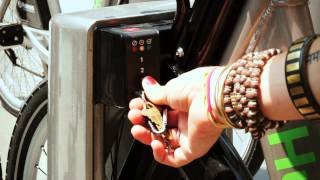

Hubway bike sharing system for Metro-Boston
Education for sustainability
wikipedia:List of nature centers in Massachusetts
Environment quality
Mystic River Watershed association - wikipedia:Pollution on Cape Cod
Food activism
League of Urban Canners
Planting an urban fruit tree is more than a lifetime commitment — it is an intergenerational civic responsibility. Each summer, in Greater Boston, a huge amount of backyard fruit falls to the ground and sidewalk, where it rots and creates a mess. Property owners and municipalities are often pressured to remove these "nuisances," while many urban residents are struggling to access local and organic food sources. The League of Urban Canners has developed a network of individuals to map, harvest, preserve, and share this otherwise wasted fruit. They make agreements with property owners to share the work of fruit harvesting and preserving, as well as tree and arbor pruning. The preserved fruits are shared between property owners (10 percent), preservers (70 percent), and harvesters (20 percent). Each season the completely volunteer-run enterprise harvests and preserves about 5,000 pounds of fruit from a database of more than 300 trees and arbors. Myriad acts of cooperation sustain this urban commons, in which harvesters, property owners, preservers, and eaters learn to share responsibility, resources, and care for each other and their urban environment. —Oona Morrow [2]
Other links
Higher Ground Farm, Boston’s first rooftop farm, facebook page
Open spaces
Department of Conservation and Recreation (mass.gov) - Greater Worcester Land Trust - Kestrel Land Trust - Mount Grace Land Conservation Trust - Mystic River Reservation - Sudbury Valley Trustees
Sharing
Reading Public Library’s Library of Things
Sustainable transport activism
With nearly a third of Bostonians using public transit for their commute to work, Boston has the fifth-highest rate of public transit usage in the country. Nicknamed "The Walking City", Boston hosts more pedestrian commuters than do other comparably populated cities. Owing to factors such as the compactness of the city and large student population, 13% of the population commutes by foot, making it the highest percentage of pedestrian commuters in the country out of the major American cities. As of 2013, Walk Score ranks Boston as the third most walkable US city. [3]
Wikipedia: Hiking trails in Massachusetts (category)
Towards sustainable economies
Wellspring Cooperative, "creating an engine for new, community-based, worker-owned companies in inner-city Springfield, based on the purchasing power of area anchor institutions."
Resources
Citizens data initiative
Energy Profile for Massachusetts- Economic, environmental, and energy data
Commons
Senior Village Movement, Boston
The first senior village began in Boston's Beacon Hill neighborhood in 2001 when about a dozen elders wanted to avoid going to a nursing home. They founded a nonprofit to co-purchase the services retirement communities provide, but get them where they already live. They became the first "virtual retirement community" offering services such as transportation, food delivery, home repairs, dog walking, and social activities. After four years of successful operation, The New York Times published a feature story about Beacon Hill Village. The idea began to spread.
To support those who were interested in following their example, Beacon Hill Village published a how to manual and began helping other elders set up villages. Eventually, the Village to Village Network was formed to launch these villages. Today there are over 200 villages around the world with more than 150 forming.
Rita Kostiuk, national coordinator of the Village to Village Network, says:
"People are excited and want to move to where villages are, I think villages benefit the whole person; mind, body and soul. As we educate the federal government on how well it’s working, we’ll start seeing even more." [4]
Community resources
News and comment
2021
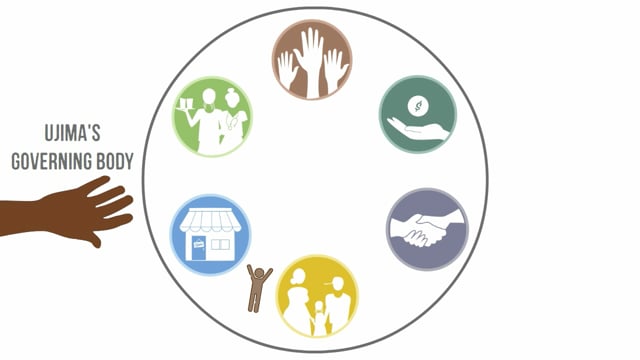

Racism in finance has sparked a grassroots response. Meet the Boston Ujima Project. Jan 5 [5]
2017
Check Out This Seed Library in Boston and Learn How to Start Your Own, Nov 27 [6]
Boston outlines its plans to adapt to rising sea levels, Oct 30 [7]
This Massachusetts Town Shows What a Sustainable Economy Looks Like, Jul 12 [8]
Church solar project inspires solar for neighborhood, May 2 [9]
2016
Boston Resilience Blueprint Leads With Discussions of Race, Equity, Nov 21 [10]
Teenagers force Massachusetts to act on greenhouse gases via lawsuit, May 19 [11]
2015
How One Boston Neighborhood Stopped Gentrification in Its Tracks, January 28 [12]
2014
How Boston is rethinking its relationship with the sea, October 27 [13]
Massachusetts to open area the size of Rhode Island to offshore wind power, June 18 [14]
A Worker Cooperative That Proves Alternative Economic Systems Aren’t Only For The Privileged, Apr 14 [15]
Boston Doctors Can Now Prescribe You a Bike, April 9 [16]
Campaigns
Interwiki links
Wikipedia: Massachusetts