


Artificial reefs

Artificial reefs are human-made structures placed on the seabed to encourage marine life and mimic the characteristics of natural reefs. They serve as habitats for fish, corals, and other ocean organisms, while also supporting coastal communities by enhancing fisheries and tourism.
Why Artificial Reefs Are Built
[edit | edit source]Marine Habitat Creation
Artificial reefs provide shelter, food, and breeding grounds for fish and invertebrates in areas where natural habitats may be scarce.
Fisheries Support
By attracting and concentrating fish, these reefs help boost local fishing opportunities while reducing pressure on natural reefs.
Coastal Protection
Some artificial reefs are designed to reduce wave energy, protecting shorelines from erosion.
Tourism and Recreation
Divers and snorkelers are drawn to artificial reefs, particularly shipwrecks, making them hotspots for eco-tourism.
What Artificial Reefs Are Made From
[edit | edit source]Artificial reefs can be created using a variety of materials, but they must be safe, durable, and non-toxic. Common examples include:
- Decommissioned Ships and Aircraft: Sunken vessels become iconic dive sites and thriving marine habitats.
- Concrete Structures: Specially designed reef balls or blocks provide long-lasting homes for marine organisms.
- Subway Cars, Bridges, or Old Vehicles: Repurposed structures, cleaned of pollutants, are sometimes deployed to create reefs.
- Purpose-Built Modules: Engineered materials designed specifically to mimic coral reef surfaces.
Benefits of Artificial Reefs
[edit | edit source]- Ecological: Encourage biodiversity by providing habitat and surfaces for coral growth.
- Economic: Support local economies through fishing and diving tourism.
- Protective: Reduce coastal erosion by absorbing wave impact.
- Educational: Offer opportunities for marine research and awareness.
Challenges and Concerns
[edit | edit source]- While artificial reefs have many benefits, they are not without risks:
- If poorly planned, they can damage natural ecosystems instead of helping them.
- Toxic materials (like paint, oil, or metals) may harm marine life.
- They can concentrate fish populations, making them vulnerable to overfishing.
- Not all structures remain stable, storms can shift or damage them.
Artificial Reefs Around the World
[edit | edit source]Artificial reefs can never fully replace natural coral reefs, but when designed responsibly, they can play an important role in marine conservation, sustainable fisheries, and coastal resilience. With ongoing innovation, these “underwater cities” may help support ocean ecosystems in a changing climate.
- USS Oriskany, Florida, USA: A retired aircraft carrier sunk in 2006, now one of the largest artificial reefs.
- Osborne Reef, Florida, USA: An early failed project where discarded tires caused environmental damage.
- Japan: A pioneer in artificial reef construction, using thousands of reef modules to enhance fisheries.
- Australia’s Great Barrier Reef Region: Hosts multiple artificial reef projects to support diving tourism.
-
 USS Oriskany Ship Wreck Artificial Reef Dive Underwater
 -
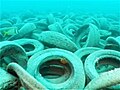 The Osborne Tire Reef
 -
 Twuishi rock reef Yonaguni, Okinawa Aerial photograph.2012
 -
 Aerial view of The Great Barrier Reef, Queensland


_02.jpg)
| License | CC-BY-SA-4.0 |
|---|---|
| Cite as | "Artificial reefs". Appropedia. 2025. Retrieved October 17, 2026. |