There are several types of water filtration systems on the market for the consumer, but which one shown above is the best for your health, your wallet, and the environment?
This page provides an analysis comparing Multipure's Aquadome with Brita's Aquaview. The information investigates a deeper look into the true cost of the systems including some of the externalities, which are often left off the price tag of many products. The cost will vary based on where the consumer lives and their proximity to the production and disposal of each system. To decide which system is best for you click on the link under instructions and follow the directions of how to calculate the impact you will have by purchasing either system.
Background
For our class project, we chose to compare home water filtration devices. We decided upon Brita's Aquaview model and Multipure's Aquadome AQDOME model. We wanted to see which filter was best for the environment, your health, and your money. As you will see, one system costs much more than the other, one system filters much more than the other, and one leaves a gigantic carbon footprint compared to the other.
This Comparison/Analysis was conducted for Engr308 Technology and the Environment, at Cal Poly Humboldt by: Bryan Thomson, Dana Martin, Kristi Morton and Kristy Method.
Brita has been mass producing water filtration systems for the average consumer since 1966 based on creating the best tasting, healthy water with the simplest filtering system. In recent years, the company has moved its production off United States soil and into China and Malaysia. Brita has recently announced that they are starting a recycling program for all of their replaceable filters, which is based in Massachusetts.
Multipure is a water filtration company based out of Las Vegas that has been producing custom, advanced water filtration systems on a customer-by-customer basis since 1970. There is a single independent business owner that supplies Multipure water filtration systems to the greater part of Humboldt County and probably one in most cities too. This company produces all of its water filtration systems in Las Vegas and ships these systems via UPS Ground or UPS Air depending on how far the customer is from Las Vegas.
Problem statement
Which system is the best for Arcata, Humboldt County, California residents, or anyone else, who wants to make the least impact on their wallet and the environment while receiving the healthiest water that they can?
Our project compares water filtration systems by Multipure and Brita. We are comparing the two types of water filtration systems on financial cost, CO2 released in transport and contaminants released into a person, in order to discover which is most appropriate for people living in Arcata, California. Brita and Multipure filtering systems both offer similar technology to filter the water, but what does it take for those filters to make it to a consumer's home?
We are assuming that a household will have four people in it, that the flow of water will stay constant and no additional contaminants will be introduced into the system other than what our data supplied by Humboldt Municipal Water District provided. Brita provided basic information, through a phone interview, on where and how their filtering system is produced and shipped. We will also consider, if assembled in another country, any information on what the filter is made of; how many gallons does it filter before replacement is recommended; and any other relevant information that we request. It is assumed that this company will not give us all the information in detail that we want. Multipure provided similar data and information about its product as Brita, yet more personal and in depth and offered additional insight that Brita wouldn't comment on.
Instructions
To find out your carbon footprint associated with each type of water filtration system click the following link. *this only considers transportation and disposal.Media:CalculatingYourCarbonFootprint.xls
Click on the excel tab titled "Calculating Carbon Footprint", this can be located at the bottom of the sheet.
Answer the first question at the top of the page in pink. Enter your answer in the green boxes located to the right of the question for each system to determine what percentage of the time you plan on recycling each filter. (As of 12/12/08, Multipure has no recycling program instituted.)
Answer the second question as to how far away you live from each location for recycling of each systems filter. Brita's recycling plant is currently located in Massachusetts. You can either guesstimate or use an internet distance calculator like the one located at InfoPlease (https://www.infoplease.com/atlas/calculate-distance). (As of 12/12/08, Multipure has no recycling program instituted.)
For the third question, you have to find out how far away you live from the landfill used for your county or city. This can be determined by contacting your local city hall or contacting your local waste management company. Once this information is obtained, enter the distance (in miles)in each box to the right of the question. The numbers should be the same for both filters.
For the fourth question, enter what your distance is from Las Vegas, Nevada, which is where Multipure is produced. Next enter how far away you are from Oakland, California. Once again, InfoPlease (https://www.infoplease.com/atlas/calculate-distance) is a great resource for determining the distance between two places. Brita is not actually manufactured here, but all of the filtering systems that are shipped to the U.S. come here from China by an ocean freight ship. The transit distance for the freight ship from China to Oakland is automatically factored in to the amount of CO2 produced during transportation.
Once all of this data has been entered, take a look at the graph toward the bottom right of the sheet to see how much CO2 is being emitted from each filter being transported to and away from you.
Next you can click on the page titled "disposal distance" to see how far the distance is for disposal per filter per year to see the mileage to dispose of each filter. You can manipulate these numbers by changing the data in the charts at the top. Only change the colors that are the same as the graph. This can change due to how far one is from disposal, how long the filters are expected to last, and the difference of what disposal method is chosen.
If you should find data that differs from our assumptions this can be changed on the sheet titled "assumptions for data." This could include a different density for each type of fuel, gas mileage/transportation method, etc.
The last sheet titled "impurities" shows a list of all the impurities that each product will filter out of your drinking water.
Justifications
The materials list is included for your information, we did not incorporate it into our analysis.
We assumed a household of 4 people, and filter to be changed (at 750 gallons for Multipure & 300 gallons for Brita) per manufacture recommendations, based on filter life/time (gallons/year)
Assume average of 15 mpg from big rig and the rugged terrain from SF Bay to Arcata, CA
Assume reserve tanks not used and airplane 3/4 filled with packages. (Packages weigh less than passengers.) Information from Boeing website.
Assuming both disposal vehicles are using C12H26 Diesel
We are assuming the molecular formula for diesel is C12H26
We are assuming the combustion formula for diesel is: C12H26 + 18.5 O2 + 69.6 N2 --> 12CO2 + 13 H2O *69.6N2
Molecular weight of diesel: C12H26 = 170 g (diesel) & 528 g (CO2)
We are assuming the molecular formula for jet fuel is C12H23
we are assuming the combustion formula for jet fuel is: C12H23 + 17.8 O2 + 66.8 N2 --> 12 CO2 + 11.5 H2O + 66.8 N2
Molecular weight of jet fuel: C12H26 = 167 g (jet) & 528 g (CO2)
We are assuming the molecular formula for fuel oil is C20H42
We are assuming the combustion formula for fuel oil is: C20H42 + 30.5 O2 + 114.7 N2 --> 20 CO2 + 21 H2O + 114.7 N2
Molecular weight of fuel oil: C20H42 = 282 g (oil) & 880 g (CO2)
Density of diesel:.85 Kg/L = 850 Kg/m3 Wikipedia
Density of jet fuel: 6.76 lb/gal = 811Kg/m3 www.aviationweek.com/aw/generic/story_generic.jsp?channel=bca&id=news/fuel0606.xml
Density of fuel oil:.784 g/cm3 = 784 Kg/m3 www.chemspider.com/Chemical-structure.393886.html
For Multipure, we are assuming that each system gets shipped when it is ordered.
For Brita we calculated that only one filter is being shipped at a time even though this skews the data since this calculation is the whole shipment of Brita filters (they don't send one at a time)
The prices for Brita's Aquaview and replacement filters was obtained from www.brita.com, before Brita updated their website. Brita's Aquaview is no longer listed on the company's website.
Results
The results we found are fairly conclusive.
When comparing costs, the Multipure system costs $224.95 and each filter costs $56.95. So over a 5 year period, you would spend ~$509.70 (not including tax and shipping.) The Brita system costs $49.99 and each filter costs $29.99, of which you will need ~4 filters/year. So over a 5 year period, you would spend ~$649.79 (not including tax and shipping.)
When comparing impurities that are filtered out, Multipure filters out 64 contaminants and Brita filters only 5 (to see a list of the impurities, click on the link below and go to the 'Impurities' sheet.) Neither company filters out, Copper, Aluminum, Barium, Fluoride, Iron or Manganese; all of which are listed on the City of Arcata Drinking Water 2006 Water Quality Report.
When comparing the amount of CO2 emitted, the graphs below are configured for recycling 100% versus 0% of the time, for one year. Over a five year period, recycling the Multipure would emit ~995 Kg CO2 and for Brita, if you recycle every filter, you would emit ~4120 Kg CO2. If you don't recycle any of the filters, you would emit ~3170 Kg CO2 (based on 4 filters/year.) This does not take into consideration the benefits of recycling and the impacts on landfills.
To figure how much CO2 you would emit, your disposal distance, and impurities each system filters, click here:Media:CalculatingYourCarbonFootprint.xls and follow the instructions written above under the instructions section.
CO2 output if not recycling Multipure = 199 Kg CO2 & Brita = 634 Kg CO2
CO2 output with recycling Multipure = 199 Kg CO2 & Brita = 824 Kg CO2
Comparison Graph: cost, health, and pollution
Conclusions
In conclusion, by living in Arcata, California the Multipure would be the preferred filter. Due to the proximity of Arcata to Las Vegas, where the system is made, this helps to reduce the carbon footprint substantially. The data could dramatically change if one were to be located in China and were debating which system may be better. Another factor that could alter the preference of system would be how close one lives to Massachusetts, where Brita filters are recycled, as this could substantially help in reducing the carbon footprint. Multipure is more expensive, but you get what you pay for. This system purifies more contaminants than the Brita, but if you lived in an area that had clean water with little impurities, perhaps high up in the mountains, then Brita may be more appropriate.
Discussion and next steps
One section of this analysis that was not explored, was in regard to the materials used to produce the water filtration systems. We were able to get some information about what each filtration system was made of, but were unable to explore how those materials were manufactured, what goes into them, whether they can be recycled and what their impact to the environment is during disposal. We also didn't look at what happens after disposal. If they are placed in a landfill, what is the rate of deterioration? Or what additional leachates are emitted in the landfill? Additionally, we didn't look at the labor that goes into producing, transporting and distributing the systems and didn't calculate any other pollution, besides CO2, that is emitted during all of these processes.
Dustin Poppendieck - for his valuable information in helping us to realize the best molecular formula to use for fuel oil.
Peer Reviewed Articles:
Huerta-Fontela, Maria. "Stimulatory Drugs of Abuse in Surface Waters and Their Removal in a Conventional Drinking Water Treatment Plant." Environmental science & technology 42.18 (2008):6809-6816
Enting, IG. Future Emissions and Concentrations of Carbon Dioxide: Key Ocean/atmosphere/land Analyses. (1994)
Books Used:
Activated Carbon in Drinking Water Technology Cooperative Research Report, KeuringsInstituut Voor WaterLeidingArtIkelen, AWWA Research Foundation 1983.
Ingram, Colin. The Drinking Water Book: A Complete Guide to Safe drinking Water. Ten Speed Press, Berkeley, California, 1991.
Lewis, Scott Alan. The Sierra Club Guide to Safe Drinking Water. Sierra Club Books San Francisco, 1996.
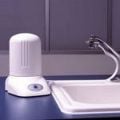 Multipure's Aquadome
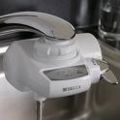 Brita's Aquaview


