| Authors | W. Kongcharoen S. Nuchitprasitchai Y. Nilsiam Joshua M. Pearce |
|---|---|
| Location | Michigan, USA |
| Status | Designed Modelled Prototyped Verified |
| Verified by | MOST |
| Links | https://www.academia.edu/43821713/Real_Time_Eye_State_Detection_System_for_Driver_Drowsiness_Using_Convolutional_Neural_Network| https://ieeexplore.ieee.org/document/9158265| |
| Design files | https://github.com/wissarutkong/cnn_eyedetection GitHub |
|---|---|
| Hardware license | CERN-OHL-S |
| Certifications | Start OSHWA certification |


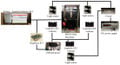
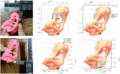
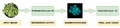
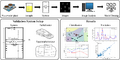
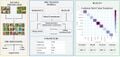
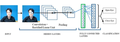
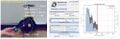
One of the top reasons for road accidents that result in injuries and deaths is the dozing off of drivers. In this study eye tracking using a novel open source Internet of Things (IoT)-based system has been developed. This study evaluated three driver's eye recognition algorithms to be integrated into the open source solution to wake drivers as they begin to dose off: 1) Convolutional Neural Network (CNN) with Haar Cascade, 2) 68 facial landmark points and 3) gaze detection in three different face positions for both day and night driving conditions as well as with and without glasses. Each combination of those factor is tested 100 times. The best algorithm is chosen based on the numbers of correct detections and then this algorithm is tested again based on light (day and night), angle of face (left, right, and center), angle of camera (left and right), and glasses (on and off) to detect both blinking and closed eyes. The results show that the most accurate algorithm to detect a driver's eyes is CNN with Haar Cascade algorithm with 94% accurate. The system can detect the status of the eyes of drivers during driving and if drivers close their eyes longer than two seconds, it sounds an alert to wake the driver and avoid the accident. The proposed open source system costs about US$100 and could be widely deployed to help reduce accidents on the road throughout the world.
- Free and open source cod https://github.com/wissarutkong/cnn_eyedetection