Appropedia's focus is on original research, but this page provides useful context and helps navigate the site. You can help Appropedia by improving this page.
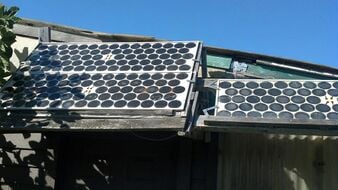
Photovoltaics (PV) is a method of generating electrical power by converting solar radiation into direct currentelectricity using semiconductors that exhibit the photovoltaic effect.[1] Photovoltaic power generation employs solar panels comprising a number of cells containing a photovoltaic material. Materials presently used for photovoltaics include monocrystalline silicon, polycrystalline silicon, amorphous silicon, cadmium telluride, and copper indium selenide/sulfide.
Due to the growing demand for renewable energy sources, the manufacturing of solar cells and photovoltaic arrays has advanced considerably in recent years.[2][3][4] This article explores the components of a photovoltaic system, describes their role and importance, and works as a beginning guide to those wishing to invest in a photovoltaic system.
Background
To Catch the Sun is the first book created from this much exclusive Appropedia content on photovoltaics. It is was successfully crowdfunded on Kickstarter. See http://tocatchthesun.com to get your own copy.
Every day across the globe, the sun shines down on the earth more than enough energy to power the world.[5] The energy in the photons from the sun can be converted to electrical energy. The term for this process is the photovoltaic effect. So the more photovoltaic panels to collect the power the better in fact the USDOE has reported multiple times that if 9% of the Mohave Desert had solar on it, they can power the US regularly. As well, if you took 1% of sub Saharan Africa and put panels on it you can power the world forever.
The first photovoltaic cell was built by Charles Fritts, who built a 30-cm cell from selenium and gold in 1883.[6] Modern silicon photovoltaic technology was discovered in 1954 by researchers in Bell Labs, who accidentally developed the pn-junction that enables photovoltaics to produce useful electricity.[7] In 1958, NASA began using photovoltaics as backup power systems for its satellites.[6] The first solar-powered residence was constructed at the University of Delaware in 1973, and the first megawatt-scale photovoltaic project was installed in California in 1984.[6]
Since the first commercially available solar panel in the 1960s, photovoltaic (PV) technology has continued to be explored and developed throughout the world (Pratt & Schaeffer 51).[8] The constant development of this technology has resulted in an increasing level of efficiency and PV panels that are more affordable than ever before, though still initially expensive. Today, humans continue to search for new ways to make photovoltaic technology a viable option for everyone throughout the world. Since most of us are not studying the atomic level of this technology, we can help in other ways - by gaining an understanding and spreading that understanding of photovoltaics, as well as by helping others to gain access to solar, or photovoltaic, systems.
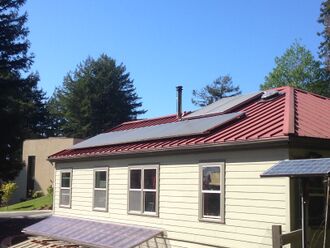
As of 2010, solar photovoltaics generates electricity in more than 100 countries and, while yet comprising a tiny fraction of the 4.8TW total global power-generating capacity from all sources, is the fastest growing power-generation technology in the world.[9] Between 2004 and 2009, grid-connected PV capacity increased at an annual average rate of 60 percent, to some 21GW.[10] Such installations may be ground-mounted (and sometimes integrated with farming and grazing)[11] or built into the roof or walls of a building, known as Building Integrated Photovoltaics or BIPV for short.[12]Off-grid PV accounts for an additional 3–4GW.[10]Driven by advances in technology and increases in manufacturing scale and sophistication, the cost of photovoltaics has declined steadily since the first solar cells were manufactured.[13]Net metering and financial incentives, such as preferential feed-in tariffs (e.g.[14]) for solar-generated electricity, have supported solar PV installations in many countries.
Advantages
Photovoltaic technology holds a number of unique advantages over conventional power-generating technologies. PV systems can be designed for a variety of applications and operational requirements, and can be used for either centralized or distributed power generation. PV systems have no moving parts, are modular, easily expandable, and even transportable in some cases. Sunlight is free, and no noise or pollution is created from operating PV systems. Solar panels don't even need direct sunlight to generate electricity.[15] PV panels do not require the use of fossil fuels such as coal, oil or natural gas in the energy production process. Alternatively, conventional fuel sources have created an array of environmental problems, namely global warming, acid rain, smog, water pollution, rapidly filling waste disposal sites, destruction of habitat from oil spills, and the loss of natural resources (Solar Energy International 2004).
PV modules use silicon as their main component. The silicon cells manufactured from one ton of sand produce as much electricity as burning 500,000 tons of coal (Solar Energy International 2004). PV systems that are well designed and properly installed require minimal maintenance and have long service lifetimes. If properly maintained[16](cleaned and protected), pv panels can last up to thirty years or longer. Other aspects of the system, such as the battery, have much shorter life spans and may need to be replaced after several years of use.
Solar Energy International (2004) indicates that there are many other benefits to consider when choosing photovoltaic technology:
Reliability: Even under the harshest of conditions, PV systems maintain electrical power supply. In comparison, conventional technologies often fail to supply power in the most critical of times.
Durability: In general modules carry a warranty of 80% of their rated power for 20 or more years. Thus the worst case is an expected 1% decrease in performance per year. There have been several studies showing even less degradation than this at around 0.2%/year. PV modules produce more energy in their lifetime than it takes to produce them.[17]
Low Maintenance Cost: PV systems do not require frequent inspection or maintenance. Transporting supplies may get costly, but these costs are usually less than with conventional systems.
No Fuel Cost: Since there is no fuel source, there is no required expenditure on the purchasing, storing, or transporting fuel.
Reduced Sound Pollution: PV systems operate silently and with minimal movement.
Photovoltaic Modularity: Unlike conventional systems, modules may be added to photovoltaic systems to increase available power.
Safety: PV systems do not require the use of combustible fuels, and are very safe when properly designed and installed.
Independence: PV systems may operate independent of grid systems. This is a large advantage for rural communities in nations lacking basic infrastructure.
Electrical Grid Decentralization: Small-scale decentralized power stations reduce the possibility of power outages, which are often frequent on the electric grid. See:Distributed generation
High Altitude Performance: When using solar energy, power output is optimized at higher elevations. This is very advantageous for high altitude, isolated communities where diesel generators must be de-rated due to the loss in efficiency and power output.
By offsetting the need for conventional power, distributed solar power delivers measurable benefits from a grid perspective, including:[18]
Lower conventional electricity market prices due to reduced peak demand
Valuable price hedge from using a free, renewable fuel rather than variably-priced fossil fuels
Avoided costs of new transmission and distribution infrastructure to manage electricity delivery from centralized power plants;
Reduced need to build, operate and maintain natural gas generating plants
Reduced outages due to a more reliable, distributed electric power system
Reduced future costs of mitigating the environmental impacts of coal, natural gas, nuclear, and other generation
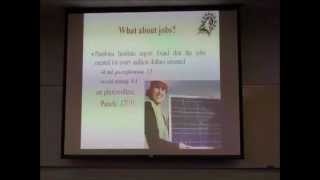
Enhanced tax revenues associated with local job creation, which is higher for solar than conventional power generation. See this example of revenue generation for the Canadian government by supporting PV manufacturing.[19]
Disadvantages
Solar energy is a fairly inexhaustible source of energy, but that does not necessarily translate to PV being the same. PV systems are:
Must pay all at the beginning. Prices for modules, the generators, are going down 20-40% every year for the last 7 years. What was once an expensive tech and subsidized (1995-2009) is now affordable and cost effective in sunny regions of even USA and Southern Europe (2012). Soaring energy prices have also made solar panels more cost effective, as their payback period has gone down.[20] On average, UK households see solar panels pay for themselves 2.5 years faster following the implementation of Ofgem's April 2022 price cap,[21] which saw the cost of energy increase by 54% for a majority of households.[22] System components are expensive to replace. The cost of a typical PV system in the U.S. is running between $2 and $6 per Wp[23] To power a typical US home with a 5kW system thus costs between $10,000 and $30,000. For more efficient homes and those that have more modest electric loads (e.g., a few high efficiency LEDs) the costs are considerably less. A recent shortage in solar grade silicon halted the decades long reduction in cost as manufacturing capacity increased. The trend in costs decreasing is being restored as more solar grade siliconW plants come online. In addition, as truly large scale manufacturing utilizing industrial symbiosis is initiated solar PV is slated to be cost competitive with grid provided electricity.[24]
High Tech- Require a skilled labor force to create, although operation and maintenance of PV cells themselves is relatively easy. There are currently no good methods for people to make their own PV systems from local materials. The high tech nature gives a large advantage to scale of production with current technologies.
Some PV materials are toxic. E.g. the Cadmium in Cadmium Telluride solar cells. Many authors have argued that in the panel itself the Cd is secure from the environment -- but then it demands careful end of life treatment.
Intermittent- Solar cells only produce electricity when the sun is shining and does not tolerate shading, so it is inconsistent as a energy source for power-demanding devices. At night or in bad weather, you need either storage batteries or a secondary power source. (On the other hand, solar panels are excellent for load balancing because maximum electricity usage and peak solar generation both occur on hot sunny days.)
There are two disadvantages often used in the environmentalist camps concerning high tech PV:
Production Pollution- Fossil fuels are extensively utilized to extract, produce and transport PV panels.[25] These processes also entail corresponding sources of pollution. This is true of just about any product made today. Fortunately, the life cycle analysis of a PV system is a net positive for the environment because it can offset fossil fuel energy production over its approximately 25+ year lifetime.
High energy cost- Require much energy to produce. In the past it was even argued that it took more energy to produce than they consume. This is just wrong.[26] In this paper the authors clearly show that the three types of photovoltaic (PV) materials, which make up the majority of the active solar market: single crystal, polycrystalline, and amorphous silicon solar cells pay for themselves in terms of energy in a few years (1-5 years). They thus generate enough energy over their lifetimes to reproduce themselves many times (6-31 reproductions)depending on what type of material, balance of system, and the geographic location of the system.
Battery Energy Storage Systems added to solar is an example of a microgrid. It can be stored during the day and utilized at night
When sizing off-grid photovoltaic systems, battery capacity must account for real-world efficiency losses. Advertised watt-hour ratings represent stored energy, not usable output after inverter conversion losses (typically 10-15%). Load-based calculations help determine appropriate capacity. A portable power station calculator can simplify this estimation for smaller off-grid and emergency preparedness setups.
This page provides a guide on how to install a photovoltaic system.
Here you will find information on how a site analysis should be carried out in order determine the best location for it, as well as how the sizing should be done.
Photovoltaic solar thermal (PVT) hybrid systems purpose is to produce both heat and electricity in a smaller area than if you were to have both a photovoltaic panel and a solar thermal system. The current design for PVT is to have a solar panel glued to a solar thermal system. PVTs purpose is to use the solar thermal system to cool the photovoltaic cells to perform better, as solar cells degrade with temperatures greater than 25C. This means however, that the thermal aspect of the PVT has a significantly lower efficiency compared to just a solar thermal system (max 50% eff compared to 70+% eff).
Notes
There are far more cost-effective changes than implementing PV-systems in domestic houses. For example, spending it on solar hot water and energy efficiency, and possibly even on carbon offsets has a far greater effect in reducing your carbon/ecologic footprint.[verification needed]
PVTOM - A software developed to simulate and optimize hybrid photovoltaic and trigeneration energy systems based on technical, economic, and emissions performance.
↑ A good role of thumb is to double the price of the module to account for system components and installation - for uptodate averages on panel costs see the retail price survey here.
↑ Pearce, J.M. 2008. "Industrial Symbiosis for Very Large Scale Photovoltaic Manufacturing", Renewable Energy 33, pp. 1101–1108.
↑ Fthenakis, V. M., & Kim, H. C. (2011). Photovoltaics: Life-cycle analyses. Solar Energy, 85(8), 1609–1628. DOI: 10.1016/j.solener.2009.10.002.