
| Location | London, ON |
|---|---|
| Status | Designed Modelled Prototyped Verified |
| Verified by | FAST |
| Uses | 3D Printing |
| Links | https://doi.org/10.1371/journal.pone.0288696 |
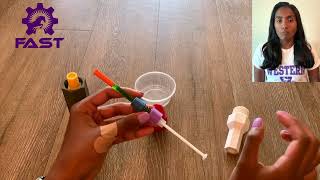
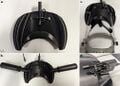
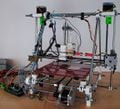
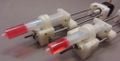
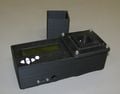
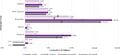
Autoinjectors have become popular modern injectable medical devices used as drug delivery systems. Due to their ease, capability and reliability compared to other conventional injectable medical devices, the market and manufacturing demand for autoinjector devices are increasing rapidly and expected to reach a market of $37.5 billion globally by 2025. Although autoinjectors can offset healthcare treatment costs through self-administered medication, they can be expensive for consumers, which limit their accessibility. This study describes the design and manufacture of a spring-driven and 3-D printed autoinjector to overcome this economic accessibility challenge. The digitally replicable device is released as open-source hardware to enable low-cost distributed manufacturing. The bill of materials and assembly instructions are detailed, and the effectiveness of the autoinjector is tested against the current standard (ISO 11608–1:2022) for needle-based injection systems. The safety and dosing accuracy was tested by measuring the weight of 100% ethyl alcohol expelled from six BD Insulin syringes with varying capacities or needle lengths. A one-way analysis assessed the variability between the dose delivery efficiency of 1mL, 0.5mL, and 0.3mL syringes. Testing indicated that the entire dose was delivered over 97.5% of the time for 1mL and 0.5mL syringes, but the autoinjector’s loaded spring force and size exceeded structural limitations of 0.3mL or smaller syringes. Components can be manufactured in about twelve hours using an open-source desktop RepRap-class fused filament 3-D printer. The construction requires two compression springs and 3-D printed parts. The total material cost of CAD$6.83 is less than a tenth of comparable commercial autoinjectors, which makes this approach promising. The autoinjector, however, is a class two medical device and must be approved by regulators. Future work is needed to make distributed manufacturing of such medical devices feasible and reliable to support individuals burdened by healthcare costs.'
Source code: https://osf.io/b4cfw/