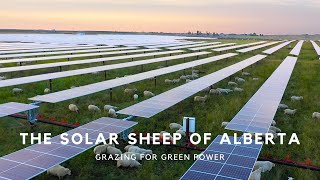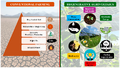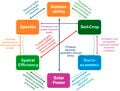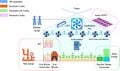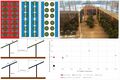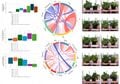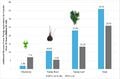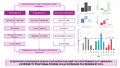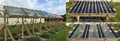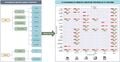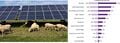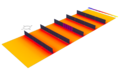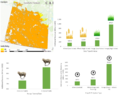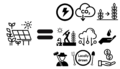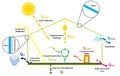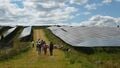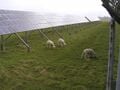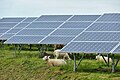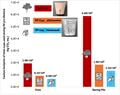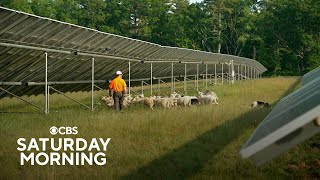

Controlling vegetation on photovoltaic (PV) farms with sheep grazing is a mature form of agrivoltaics with massive potential to accelerate growth in the sheep farming industry. Agrivoltaic systems are environmentally superior to conventional PV systems, but sheep grazing business models have not been explored in detail. Thus, this study assesses profitability of agrivoltaic sheep grazing and lamb husbandry business models using case studies at two scales (200 kW to 465 MW) for breeding ewes for lambs on the farm and purchasing lambs from auction. For each model, revenue streams, costs and investments are investigated using sensitivity analyses. The results show that despite differences in operational approaches, both base cases, earnings before interest, tax, depreciation and amortization (EBITDA) margins are higher than agriculture industry values due to the increased and reliable revenue source of grazing services. Return on investments (ROIs) for the breeding model range for 16–31 % and the auction model 22–43 % for identical scenarios. While the breeding model exhibits higher EBITDA margins, the auction model offers greater ROI potential, reflecting trade-offs between operational efficiency and initial investments. The results clarify the resilience of agrivoltaics to economic fluctuations, while highlighting sheep agrivoltaics as a stable and profitable investment.