


Performance of Off-grid Floating Photovoltaic-Battery System Powering an Anion Exchange Membrane Electrolyser for Green Hydrogen Production


| Authors | Koami Soulemane Hayibo Giorgio Antonini Md Motakabbir Rahman Joshua M. Pearce |
|---|---|
| Location | London, ON, Canada |
| Status | Designed Modelled Prototyped Verified |
| Verified by | FAST |
| Uses | renewable energy |
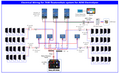
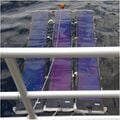
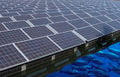
This study investigates the integration of floating photovoltaic (FPV) systems with an anion exchange membrane (AEM) electrolyser for green hydrogen production. The experimental setup involves a 5 kW FPV system that powers an AEM electrolyser under outdoor environmental conditions. The results show that the system achieves up to 86% energy efficiency and hydrogen purity exceeding 99%, demonstrating both operational stability and high performance being driven by renewable energy. FPV technology, when integrated with AEM electrolyser, offers several key advantages: improved cooling efficiency, enhanced land use efficiency, reduced resource consumption compared to traditional ground-mounted solar systems, and alternative excess energy storage for PV systems. The ability of FPV systems to mitigate land use conflicts makes them particularly suitable for regions with limited available land for traditional solar energy production. Furthermore, the integration addresses the intermittency issues associated with PV, as the FPV systems are equipped with a lithium-ion battery bank that supplies the electrolyser during low irradiation conditions. While the results highlight the potential of FPV-AEM systems, several challenges remain, including the high initial capital costs of FPV installations and their reliance on favorable weather conditions for optimal energy production. To address these limitations, further research is needed into cost optimization strategies, scalable designs, and effective energy storage solutions that can ensure system operation during periods of low solar irradiance. Additionally, future work should focus on improving the durability of FPV systems in harsh weather conditions, as well as exploring advanced materials for floatation, anchoring, and system longevity. Real-time monitoring systems could also enhance operational reliability and predictive maintenance. This study lays the foundation for FPV-AEM systems to play a significant role in the global transition to sustainable energy through green hydrogen production.






See also
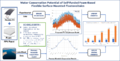
[edit | edit source]- Design and thermal-energy performance analysis of foam-based floating photovoltaic systems in a cold climate: experimental results from a 7 kW floatovoltaics in Canada
- Experimental integration of a foam-based floating photovoltaic (floatovoltaic) system with an anion exchange membrane electrolyzer for 5 kW-Scale green hydrogen production
- Comparative techno-environmental analysis of grey, blue, green/yellow and pale-blue hydrogen production
- Open-Source DC-DC Converter Enabling Direct Integration of Solar Photovoltaics with Anion Exchange Membrane Electrolyzer for Green Hydrogen Production
- Open-source Hardware Design of Modular Solar DC Nanogrid
- Modular Open Source Solar Photovoltaic-Powered DC Nanogrids with Efficient Energy Management System
Floatovoltaics
[edit | edit source]The Western Innovation for Renewable Energy (WIRED) system is currently under construction to test out new open source methods to reduce PV systems costs and enable novel forms of floatovoltaics, BIPV and agrivoltaics including the world's first agrivoltaic agrotunnel.




| Authors | Joshua M. Pearce |
|---|---|
| License | CC-BY-SA-4.0 |
| Organizations | FAST, Western |
| Cite as | Joshua M. Pearce (2025–2026). "Performance of Off-grid Floating Photovoltaic-Battery System Powering an Anion Exchange Membrane Electrolyser for Green Hydrogen Production". Appropedia. Retrieved November 9, 2026. |